Your marketing tech stack probably includes email, CRM, analytics, and maybe a CDP. But if automated direct mail isn't in the mix, there's a significant gap in your omnichannel strategy. The real power of a martech stack isn't having more tools — it's making sure the tools you have share data and show results in one place. Automated direct mail connects to your other tools and feeds performance data back into the same dashboards. According to the 2022 State of Direct Mail:
- About 50% of marketers use a software/tech platform to execute campaigns
- 42% work with in-house teams who write/design campaigns
- One-third or less use an agency for various parts of the strategy/design/execution of direct mail campaigns
Direct mail used to lag behind digital channels. The workflows were manual, personalization was clunky, and attribution was nearly impossible without a hefty budget. That's no longer the case. Automated direct mail now works the way the rest of your martech stack does — moving data between systems and triggering actions based on buyer behavior. That shift means direct mail can trigger from the same data as your email and ads — and you can track all three in one place.
Here's what makes direct mail especially valuable in a multi-channel stack: it doesn't just perform on its own — it increases response rates and conversions across your other channels. When digital and direct mail work together, marketers see:
- 40% conversion rates
- 68% increased website visits
- 63% increased response rates
- 60% increased ROI
- 53% increased leads
67% of marketers say direct mail has thehighest ROI of any channel they use. And here's the telling part: only 5% use direct mail as a stand-alone tactic. The real ROI comes from integration.
How to connect direct mail to your marketing tech stack
Direct mail fits right alongside your CRM and automation platform, but only when it's connected. When your direct mail platform integrates with your marketing automation and CRM platforms, they share audience data. Sends trigger based on real behavior. Results show up where you measure everything else.
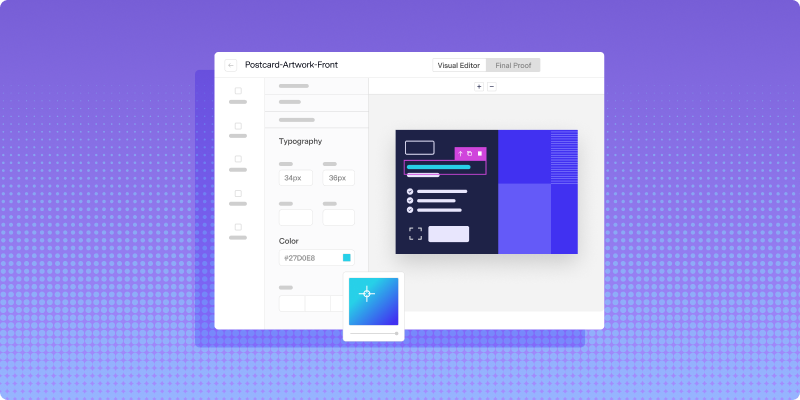
Integration means your direct mail campaigns pull from the same data driving your email, ads, and website personalization. In practice, this looks like: a customer makes a purchase, your CRM logs the transaction, and your automation platform triggers a direct mail piece with a personalized offer related to that purchase — no manual list pulls, no CSV exports, no lag time.

Direct mail connects what someone does online to what shows up in their mailbox. A customer browses your site, gets retargeted via email, and then receives a personalized postcard — that repetition across channels makes your message stick.
When your mail platform connects to your CRM and automation tools, you can see which sends drove action and tie results to specific segments — without manual reconciliation.
Direct mail can target based on specific behaviors — recent purchases, browsing activity, engagement history — pulled directly from your CRM. From there, you can trigger mailpieces based on cart abandonment, last purchase date, birthdays, renewal windows, and dozens of other signals. When mail reflects what someone actually did — not just who they are — response rates climb.
Personalization isn't optional — it determines whether someone responds. Here's what the data shows:
- 79% of consumers are only likely to engage with a brand's offer if that offer has been personalized to reflect previous interactions that the consumer has had with the brand
- Consumers are 40% more likely to view items recommended based on information they have shared with a brand
- 71% of consumers, on average, feel frustrated when a shopping experience is impersonal
- 36% of consumers believe that brands should offer more personalization in their marketing
Automation cuts production time from weeks to days and gets mail delivered while the trigger event is still relevant. You design once; the system handles the rest. More time on creative, less on logistics.
What direct mail automation adds to your marketing tech stack
- Higher ROI — and it increases conversion rates across your other channels. Lob customers have reduced direct mail costs by up to 85% by cutting out manual workflows.
- Speed that manual workflows can't touch. Automated direct mail is produced 150% faster than legacy approaches. Project timelines shrink from six weeks to two weeks — or even days. That's the difference between sending a win-back offer while a customer is still considering alternatives — and sending it after they've already switched.
- Trigger-based sends mean you mail less and convert more. Instead of blasting a list, you can trigger direct mail based on specific behaviors — cart abandonment, lapsed engagement, a renewal window. Fewer mailpieces, more targeted sends, measurably higher response rates.
- Personalization drives measurably higher engagement. Today, over 50% of marketers are personalizing both the type of direct mail sent (letters vs. postcards) and the text/copy within each piece. When the mail feels like it was made for the recipient, conversion rates climb.
- Real-time tracking and analytics, built in. Automated direct mail platforms track send date, delivery date, and recipient response — in real time. You see delivery confirmation, not assumptions. You get the same tracking you expect from email and ads — open rates, response rates, conversions — in one dashboard.
See how direct mail automation works
See how Lob connects with your CRM and automation platforms to trigger, personalize, and track direct mail — all from one place.Schedule a demo.
Don't send it. Lob it.
Frequently asked questions
FAQs

What is a marketing tech stack?
A marketing tech stack — sometimes called a martech stack — is the set of software tools your team uses to run campaigns, reach customers, and measure results. A basic stack usually includes a CRM, a marketing automation platform, and analytics. From there, teams add tools for email, paid ads, and increasingly, direct mail automation. A disconnected stack means manual exports and reconciliation by hand. A connected one means campaigns that trigger automatically and results you can actually compare.
What does a marketing tech stack do?
Your stack handles the operational work of marketing: capturing customer data, triggering campaigns based on behavior, personalizing outreach, and measuring what actually drives conversions. When your stack shares data across channels, a cart abandonment can trigger an email and a postcard from the same signal.
What is an example of a marketing tech stack?
A typical stack might include a CRM like Salesforce or HubSpot, a marketing automation platform, an email tool, analytics, and paid ad management. Teams running omnichannel campaigns often add direct mail automation — like Lob — so physical mail can be triggered by the same customer data driving their digital channels. In practice, this looks like a customer abandoning a cart and receiving both a retargeting ad and a personalized direct mail piece within the same campaign window — triggered automatically from a single CRM signal. What matters most: whether your tools actually share data with each other.
Answered by:

Sam Melero