Direct mail works. The problem isn't the channel—it's the workflow behind it. Too many teams still rely on manual processes, disconnected tools, and outdated print vendors to run campaigns that should be fast, personalized, and trackable. That's a lot of friction for a channel that consistently outperforms digital on response rates.
If your direct mail program still feels slow, expensive, or hard to scale, the issue usually isn't strategy. It's infrastructure. The right automation platform removes the bottlenecks—so you can focus on the creative and targeting decisions that actually move results.
Why personalization in direct mail is harder than it looks
Many marketers still struggle with personalization in direct mail. Not because they don't want to do it—but because their tools make it painfully difficult. Legacy workflows often require manual data pulls, static templates, and batch processing that strips away any chance of real 1:1 relevance.
Personalization goes beyond adding a first name. The strongest programs use behavioral and trigger-based data—like a recent purchase, a cart abandonment, or a policy renewal date—to determine both the content and the timing of each mail piece. That's where most teams hit a wall. Without a platform designed for dynamic content and clean data, personalization stays surface-level.
And none of it matters if the mail doesn't arrive. Bad address data is one of the fastest ways to burn budget. You need a system that validates addresses proactively—before print, not after—so every personalized piece actually reaches the person it was built for.
Where direct mail workflows slow your team down
Workflow complexity slows down nearly every direct mail team—and for good reason. In a typical legacy setup, a single campaign can involve separate teams for data, design, print vendor coordination, and delivery tracking. Each handoff introduces delays, errors, and cost.
Here's what that usually looks like in practice: a marketer pulls a list from one system, sends a design file to an agency, coordinates with a print vendor over email, and then waits days (or weeks) to learn whether anything actually landed. No real-time visibility. No ability to iterate quickly. And no connection to the digital campaigns running in parallel.
That integration gap is where a lot of value gets lost. When direct mail operates in a silo—disconnected from your CRM, email platform, or marketing automation tools—you can't coordinate timing, use behavior-based mail triggers, or measure how it fits into the broader journey. The most effective programs treat direct mail as part of the omnichannel workflow, not a separate project managed on the side.
You don't need to outsource to agencies or wrestle with legacy print vendors to get this right. The right platform handles production, delivery logistics, and tracking in one place—and plugs directly into the tools your team already uses.
Automate your direct mail workflow
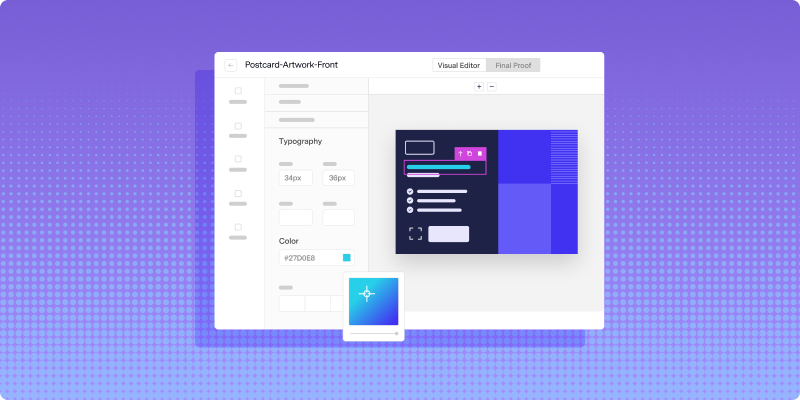
Automation turns direct mail into a scalable channel—one that responds to customer behavior instead of waiting on manual processes. At Lob, we handle the entire production and delivery workflow so your team can focus on strategy, creative, and results.
Start with clean data. Our address verification services validate every address before print, so you're not spending budget on mail that never arrives. That alone can improve your response rates by reducing undeliverable mail to near zero.
From there, automation means you can set triggers that fire direct mail based on real customer actions—an abandoned cart, a subscription renewal, a missed appointment, or a lapsed purchase cycle. The timing, content, and delivery are all driven by data, not guesswork. Letters, postcards, self-mailers—each piece is personalized and sent automatically, with full tracking from print through delivery.
Direct mail fits into a modern marketing stack when it connects to your existing tools. Lob's API and integrations connect directly to your CRM, CDP, or marketing automation platform, so direct mail runs alongside your email, SMS, and paid campaigns—not as an afterthought. We already work with more than 10,000 companies.
Frequently asked questions
FAQs

What are automated direct mail services?
Automated direct mail services let you trigger, personalize, and send physical mail based on customer behavior or data — without manually managing print runs or mailing lists. You connect your CRM or marketing platform to a direct mail API, set your rules, and the mail goes out on its own. A customer abandons a cart, a postcard ships. A prospect hits a scoring threshold, a letter follows. Lob handles print, address verification, and delivery tracking, so your team stays focused on strategy, not logistics.
Is direct mail part of CRM?
Not by default — but connecting them changes how you can use the channel. Most CRMs don't handle direct mail natively. Automation closes the gap by connecting your CRM data to your direct mail platform, so physical mail triggers based on real customer behavior: a new sign-up, a lapsed purchase, a loyalty milestone. Lob integrates with your existing marketing stack so you can use the customer data you already have to drive what gets sent, when, and to whom.
What are the four steps in a direct mail strategy?
Direct mail strategy follows four steps—audience, design, timing, tracking—but automation changes how you execute each one. You can personalize pieces at scale instead of sending one version to everyone. You can trigger sends based on behavior instead of locking to a fixed calendar. And you can tie delivery data back to campaign performance so you know what's working. Teams that skip tracking struggle to prove direct mail's ROI—and end up cutting budgets that were driving conversions they couldn't seedriving conversions they couldn't see.
Answered by:

Sam Melero