
Direct mail costs include more than printing and postage. Manual work, disconnected vendors, inaccurate addresses, reprints, missed campaign windows, and limited reporting can all increase the true cost of running a program.
Lob brings customer data, creative, production, postal logistics, and tracking into one workflow. This helps teams reduce unnecessary work and waste while maintaining the quality, timing, and measurement their programs require.
What makes a direct mail platform cost efficient?
A cost-efficient direct mail platform helps you control the complete cost of running the channel, including:
- Platform or subscription fees
- Printing
- Postage
- Creative development
- Personalization
- Address verification
- Vendor management
- Internal labor
- Reprints
- Undeliverable mail
- Tracking and reporting
- Integrations
- Specialty formats or services
The cheapest per-piece quote may not produce the lowest total program cost. A quote that excludes address checks, tracking, integrations, or campaign management can require additional vendors and internal work.
Four capabilities have a particularly strong effect on cost efficiency: automation, connected production and logistics, address quality, and measurable campaign performance.
Automation that reduces manual work
Manual direct mail workflows often require someone to export a customer list, reformat it for production, transfer creative files, request proofs, coordinate revisions, and compile reports after the send.
Automation can reduce those repeated steps. Customer data can populate approved templates, campaign rules can determine when mail is initiated, and production events can flow into a dashboard or connected system.
This does not eliminate the need for creative, data, and approval controls. It gives teams a repeatable process instead of rebuilding the workflow for every campaign.
Consolidated production and logistics
Vendor coordination has its own cost. A direct mail program may involve separate providers for creative, data processing, printing, postage preparation, delivery tracking, and reporting.
Each additional handoff creates another contract, timeline, file requirement, and potential point of failure.
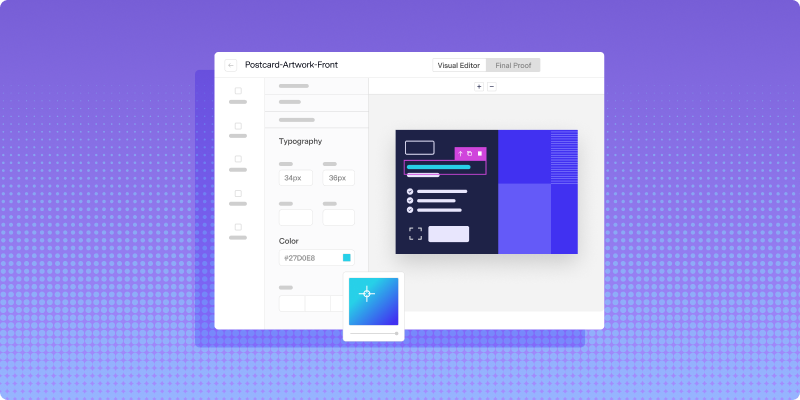
Lob brings campaign creation, data-driven personalization, print production, postal logistics, and tracking into one platform. This can reduce the time teams spend coordinating separate systems and vendors.
More predictable pricing
Direct mail pricing depends on the format, dimensions, paper, color, page count, mail class, postage, volume, plan, and optional services.
Lob publishes plan pricing and starting per-piece rates for supported formats. Some plans combine a monthly subscription with unit costs, while enterprise programs use custom pricing. Reviewing the current Lob pricing structure can help teams estimate costs before committing to a campaign.
Pricing can still change when campaign specifications or USPS rates change. Build budgets around the complete campaign rather than one headline rate.
Personalization and measurement
Cost efficiency is not only about spending less. It is also about directing spend toward audiences and campaigns that support business goals.
Customer data can determine who receives a piece and how the offer, message, imagery, or CTA changes. Response tools such as QR codes, personalized URLs, offer codes, and dedicated phone numbers can help connect the mailpiece to measurable actions.
These capabilities give teams more information about which audiences and campaigns warrant continued investment.
Hidden costs in traditional direct mail workflows
Some direct mail costs are easy to see on an invoice. Others appear through additional labor, delays, and preventable waste.
Vendor sprawl
Managing separate design, print, mail, and tracking providers requires time. Teams need to coordinate schedules, resolve file issues, reconcile reports, and determine which vendor owns each problem.
These responsibilities may not appear in the print quote, but they still affect the program’s total cost.
Manual handoffs and rework
Manual file transfers increase the likelihood of errors and version-control problems.
A late data update, incorrect personalization field, outdated address file, or creative change can trigger another proofing cycle. If the error is not identified before production, it may require a reprint.
Reusable templates, test records, approval controls, and automated data connections can help teams identify problems earlier.
Undeliverable mail
Every undeliverable piece consumes print and postage resources without creating an opportunity for response.
Common address problems include:
- Missing apartment or suite numbers
- Incorrect ZIP Codes
- Inconsistent formatting
- Duplicate records
- Outdated addresses
- Invalid street information
Address verification can identify potential problems before production. It cannot confirm a recipient’s identity, prove current occupancy, or guarantee delivery.
Missed campaign windows
A mailpiece can be accurate and attractive but still underperform if it arrives after the moment that made it relevant.
Renewal reminders, seasonal promotions, event invitations, and deadline-driven communications all depend on timing. Delays during creative review, production, or vendor coordination can reduce the value of the campaign.
Plan around the desired arrival window and account for production and postal delivery time.
How direct mail automation lowers campaign costs
Direct mail automation connects customer data, templates, campaign rules, production, and tracking.
It can reduce work associated with:
- Preparing and transferring mailing lists
- Reformatting customer data
- Building repetitive creative variations
- Coordinating separate production vendors
- Manually initiating recurring campaigns
- Checking campaign status across several systems
- Compiling operational reports
- Connecting mail activity with customer records
The effect depends on the original workflow. A team already using connected systems may see a different benefit from one relying on spreadsheets, email chains, and separate print vendors.
Start by measuring the time and cost required to launch a campaign today. That baseline will help you evaluate whether automation is reducing labor, delays, errors, or vendor overhead.
How Lob pricing keeps direct mail budgets predictable
Lob’s pricing combines platform access with per-piece costs that vary by plan and mail format. Published rates for supported formats include printing and postage, while optional services and enterprise requirements may carry separate pricing.
Important pricing factors include:
- Postcard, letter, self-mailer, check, or specialty format
- Dimensions and weight
- Black-and-white or color printing
- Number of pages
- First-Class Mail or Marketing Mail
- Monthly or annual subscription
- Campaign volume
- Address-verification usage
- Certified or registered mail services
- Custom envelopes or finishing
- Enterprise support and integration needs
USPS rate changes can affect postage costs even when the rest of the production workflow remains unchanged. Review current rates and campaign specifications before finalizing a budget.
How the Lob Print Delivery Network reduces print and postage costs
Lob’s nationwide Print Delivery Network distributes production across qualified print partners instead of relying on a single facility.
Postal IQ then evaluates how and where each mailpiece should enter the USPS network. Its routing and presort capabilities can help shorten travel distance, support available postal discounts, and improve delivery predictability.
This approach can support cost efficiency through:
- Distributed production: Jobs can be routed across a nationwide print network based on factors such as location, capacity, and campaign requirements.
- USPS entry-point planning: Mail can enter the postal network closer to recipients when the campaign and mail class support it.
- Presort optimization: Mail is prepared according to USPS requirements to access eligible discounts and entry options.
- Consistent quality controls: Lob requires Print Delivery Network partners to meet established print-quality standards.
- Centralized oversight: Teams can manage production and postal activity without coordinating each print facility independently.
The savings and timing for a particular campaign depend on format, volume, destination, mail class, and other specifications. Postal IQ is designed to select an efficient route using those campaign details.
How API and CRM integrations cut operating costs
When direct mail is disconnected from customer systems, teams must repeatedly export, format, and upload audience data.
APIs and CRM integrations allow customer and campaign information to move directly into the mail workflow. A customer event or account change can initiate a mailpiece without a new spreadsheet.
For example:
- A first purchase triggers a welcome postcard.
- An approaching renewal triggers a reminder.
- A customer reaching an inactivity threshold triggers a reengagement offer.
- A qualified lead who stops responding digitally receives a follow-up letter.
A CRM-triggered direct mail workflow can reduce manual preparation while using current customer data. The workflow should also include address checks, suppression rules, timing controls, and approval requirements.
How address verification prevents direct mail budget waste
Address verification checks address information against postal data before production. Depending on the record, the process may standardize formatting, identify missing information, or flag potential deliverability problems.
Building address verification into the direct mail workflow can help teams:
- Catch address errors before printing
- Standardize address formats
- Identify missing secondary information
- Reduce duplicate or invalid records
- Improve mailing-list quality over time
Address verification is one part of address hygiene. Teams may also need change-of-address processing, duplicate removal, suppression management, and procedures for updating customer records.
How real-time tracking protects every direct mail dollar
Tracking gives teams visibility into what happens after a mailpiece is submitted.
Lob surfaces production and USPS scan events that can help teams understand when a piece is created, printed, entered into the mailstream, and moving through expected postal checkpoints.
These events do not prove that a specific person received, opened, or read the mailpiece. They can help estimate arrival timing, identify potential issues, and create a more accurate campaign-response window.
For campaign measurement, combine postal information with:
- QR code scans
- Personalized URL visits
- Offer-code redemptions
- Dedicated phone numbers
- CRM activity
- Conversion data
- Match-back analysis
- Control groups
This creates a clearer connection between operational performance and business outcomes.
How direct mail personalization improves ROI
Personalization can make a mailpiece more relevant by changing the message, offer, imagery, or CTA using customer data.
One reusable template can support variations such as:
- Different offers by lifecycle stage
- Product imagery based on purchase history
- Local store or representative information
- Personalized URLs or QR codes
- Renewal or account-specific messaging
- Different CTAs by audience segment
The cost of personalization depends on the platform, data preparation, creative complexity, and campaign requirements. It should not be assumed that every personalized campaign costs the same as a static one.
Measure whether personalization improves response, conversion, revenue per recipient, or another campaign goal enough to justify the additional setup.
How Lob compares to other direct mail platforms on cost
Lob vs traditional print vendors
Traditional print vendors may require separate workflows for creative, data preparation, printing, postal logistics, and reporting. Each relationship and file handoff can add time and complexity.
Lob consolidates these functions within one platform, reducing the need to coordinate several providers for each campaign.
Lob vs legacy direct mail software
Some older direct mail systems have limited integration, address-processing, or tracking capabilities. Teams may need to add other tools or manually move information between systems.
Lob connects campaign data, production, postal events, and integrations in a more unified workflow. Compare the capabilities included in each plan rather than evaluating subscription price alone.
Lob vs in-house print and mail operations
In-house programs require equipment, supplies, employees, maintenance, postal expertise, quality controls, and capacity planning.
Lob provides access to a distributed production and delivery network without requiring teams to maintain that physical infrastructure themselves. Whether this is more cost efficient depends on volume, format, internal resources, and program requirements.
Get more from every direct mail dollar with Lob
Direct mail cost efficiency depends on the entire workflow, not only the price of printing or postage. Address quality, automation, production routing, campaign timing, personalization, and measurement all affect what you receive from your investment.
Lob connects these functions in one platform so teams can reduce manual work, manage logistics, and make more informed campaign decisions. Book a demo to see how Lob can help you build a more efficient direct mail program.
Frequently asked questions about cost-efficient direct mail with Lob
FAQs

Does Lob require a minimum mail volume to be cost efficient?
Lob offers plans for different program sizes, including a Developer plan with no monthly subscription fee and enterprise plans for high-volume programs.
Supported volume, features, and per-piece pricing vary by plan. Choose the plan that fits your expected annual volume and workflow requirements.
How does Lob pricing compare with sending mail directly through USPS?
USPS provides postal delivery, but businesses sending mail directly still need to create the mailpiece, prepare customer data, print the campaign, meet postal requirements, transport or submit the mail, and manage reporting.
Lob combines direct mail software, printing, postage preparation, postal logistics, and tracking within one platform. The most cost-efficient option depends on campaign volume, format, internal resources, and required capabilities.
Can small marketing teams benefit from Lob?
Yes. Automation can help small teams reduce repetitive list preparation, vendor coordination, campaign setup, and reporting work.
The financial benefit depends on campaign frequency, volume, current labor requirements, and the systems being replaced.
How quickly can you launch a direct mail campaign with Lob?
Campaign timing depends on creative readiness, data quality, approvals, format, production requirements, mail class, and destination.
Once the workflow and templates are established, automation can reduce the manual preparation required for repeat or triggered campaigns. Teams should still plan around production and postal delivery timelines.
Answered by:

Sam Melero