
Direct mail can expand an agency’s services, but it can also introduce printers, proofs, mailing lists, production schedules, and reporting requirements for every new client.
Lob brings those moving parts into one platform. Agencies can offer direct mail under their own brand, connect campaigns to client data, automate production, and monitor mailstream activity without building their own print infrastructure.
Why scaling direct mail is difficult for agencies
One campaign may be easy to manage manually. The model becomes harder to sustain when several clients have different audiences, creative standards, data sources, and deadlines.
Common points of friction include:
- Separate print and fulfillment vendors
- Manual list exports and file transfers
- Repeated proofing and approval cycles
- Inconsistent production standards
- Limited visibility after mail enters the postal network
- Reporting assembled from disconnected systems
Each new client can add another version of the same operational process. Eventually, account teams spend more time coordinating production than developing campaign strategy.
A platform designed for agencies and consultants changes that model by managing production, routing, and tracking behind the scenes.
What direct mail automation changes for agencies
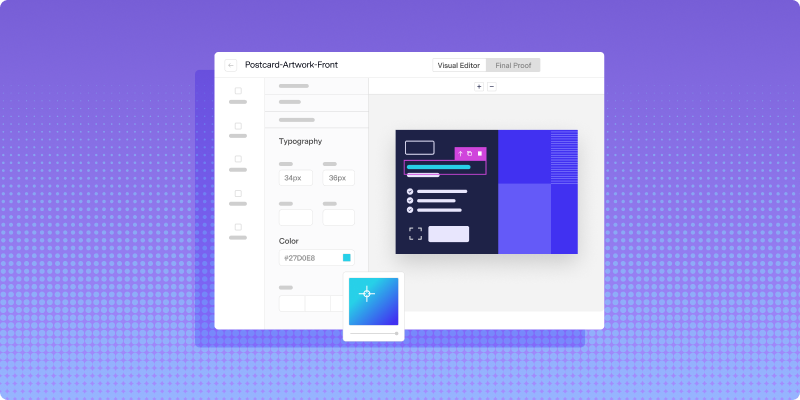
Direct mail automation connects campaign data, creative, production, and tracking in one workflow. Instead of manually handing files to a printer, an agency can schedule campaigns or trigger individual mailpieces from customer events.
For example, a client’s CRM could initiate a postcard when a lead requests a quote, a customer abandons a purchase, or an account approaches renewal. Templates and rules determine what gets sent without requiring the agency to rebuild the campaign each time.
Traditional direct mail vs. direct mail automation
The main benefit is repeatability. Once the agency has built a campaign framework, it can reuse the underlying workflow while changing the client’s branding, audience, offer, and timing.
That makes it easier to increase client volume without increasing manual work at the same rate. It also reduces the number of handoffs where errors or delays can occur.
Why Lob works for multi-client agency programs
Deliver direct mail under your agency’s brand
Lob supports white-label direct mail programs, allowing agencies to keep their brand and client relationship at the center of the service.
The agency manages the strategy, creative, and client experience. Lob supports production, postal routing, and tracking in the background. This allows an agency to add direct mail without presenting a separate print vendor as another partner the client must manage.
Support both no-code and API workflows
Not every client needs the same implementation.
Campaign teams can create and manage sends through the Lob dashboard. Clients with more advanced technical requirements can use Lob’s APIs and integrations to connect direct mail to CRMs, marketing automation platforms, CDPs, or custom applications.
This flexibility allows an agency to begin with a straightforward campaign and introduce more advanced automation as the client’s program develops.
Connect mail to client data
Lob can use CRM and marketing data to determine who receives a mailpiece, when it is sent, and which content appears.
Agencies can build workflows around events such as:
- A new lead entering the CRM
- A customer reaching an onboarding milestone
- A shopper abandoning a cart
- A subscription approaching renewal
- A previously active customer becoming unresponsive
- A recipient failing to respond through digital channels
With direct mail integrations, agencies can reduce manual exports while making mail part of the customer journeys they already manage.
Run production through one coordinated network
Managing several regional printers creates inconsistent processes and gives agencies more vendor relationships to oversee.
Lob’s nationwide Print Delivery Network coordinates production across vetted facilities. Jobs can be routed according to format, destination, capacity, and other delivery requirements without the agency selecting and managing each printer independently.
Shared production controls also help agencies maintain print quality across facilities. That matters when an agency is responsible for protecting several clients’ brand standards at once.
Support clients with sensitive data
Agencies working with healthcare, insurance, or financial-services clients must consider how personal information moves through the mailing workflow.
Lob protects data with encryption in transit and at rest, account controls, audit and API request logs, and defined retention practices. Lob also undergoes annual SOC 2 Type 2 audits and supports HIPAA-aligned workflows, including Business Associate Agreements for eligible customers.
Agencies should review the specific mail format, data, and regulatory requirements for each client. Lob’s security and compliance resources can support that review, but the agency and client remain responsible for determining their legal obligations.
How Lob helps agencies manage campaign visibility
A printer confirming that a job was completed is not enough when a client wants to understand what happened next.
Lob surfaces production and USPS mailstream events at the mailpiece level. These events help agencies monitor when a piece was created, processed, and expected to reach its destination.
USPS tracking events do not prove that a recipient personally received, opened, or read a mailpiece. They provide operational visibility that agencies can use to:
- Monitor campaign progress
- Identify delivery exceptions
- Coordinate follow-up messages
- Compare performance across regions or segments
- Answer client questions without contacting a printer
Agencies can also send tracking events to other systems through APIs or webhooks. This helps keep direct mail reporting connected to the dashboards clients already use.
How agencies can measure results for clients
Delivery information and campaign performance are related, but they are not the same.
Delivery tracking shows how mail moved through the postal network. Response tools show whether recipients took an observable action. Conversion data shows whether that response produced the desired outcome.
Agencies can measure responses with:
- Unique QR codes
- Personalized URLs
- Campaign-specific offer codes
- Dedicated phone numbers
- Landing-page activity
- Matchback analysis
- Test and holdout groups
A strong client report separates these stages instead of treating delivery as a conversion. It should show how many pieces entered the mailstream, which responses were observed, and which business outcomes can reasonably be associated with the campaign.
Lob’s guidance on improving direct mail reporting explains how delivery, response, and conversion data can work together.
What to evaluate before choosing an agency direct mail platform
An agency should evaluate more than print price. The platform must support the way the agency sells, operates, and reports on its services.
Ask these questions:
- Can we manage campaigns across multiple client accounts while keeping data separated?
- Can clients receive an agency-branded experience?
- Can we launch campaigns through both visual tools and APIs?
- Can mail be triggered from the systems our clients already use?
- Can the platform support personalized content without manual file preparation?
- What production and print-quality controls are documented?
- What security reviews and compliance documentation are available?
- Can we access mailpiece-level tracking events?
- Can reporting data flow into client analytics systems?
- Can the workflow support both recurring campaigns and event-triggered mail?
The right platform should make it easier to repeat successful programs without forcing every client into an identical campaign.
Scale agency direct mail with Lob
Lob gives agencies one platform for campaign creation, personalization, production, routing, and mailstream visibility. Agencies can offer direct mail under their own brand while choosing the dashboard, integration, or API workflow that fits each client.
That means fewer vendor handoffs, more repeatable delivery, and more time for the work clients hire an agency to do: strategy, creative, and performance improvement.
Book a demo to see how Lob can support your agency’s direct mail services.
Frequently asked questions about Lob for agencies
FAQs

Can agencies offer Lob under their own brand?
Yes. Lob supports white-label implementations that allow agencies to provide a branded client experience while Lob manages the underlying production, routing, and tracking.
Can an agency manage automated campaigns for several clients?
Yes. Agencies can create repeatable campaign workflows across client accounts while keeping each client’s data, creative, and reporting organized separately.
Does every client need engineering support to use Lob?
No. Agencies can manage campaigns through the Lob dashboard and supported no-code integrations. API access is available when a client needs custom triggers or deeper system integration.
Can Lob confirm that a recipient opened a mailpiece?
No. USPS mailstream events provide visibility into processing and estimated delivery activity. They do not prove that a specific person received, opened, or read the piece. QR codes, personalized URLs, offer codes, and other response mechanisms are needed to measure engagement.
Does Lob support agencies serving healthcare clients?
Lob supports HIPAA-aligned mailing workflows and offers Business Associate Agreements for eligible customers. Agencies should confirm that the selected mail format, content, and workflow meet each client’s specific compliance requirements.
How can agencies measure direct mail ROI?
Agencies can connect campaign costs with responses and conversions captured through QR codes, personalized URLs, offer codes, phone numbers, or matchback analysis. Holdout testing provides stronger evidence when the goal is to measure incremental impact.
Answered by:

Sam Melero