
Most lifecycle marketing programs treat direct mail like a separate project. Think batch lists, manual uploads, and weeks of lead time. By the time the mail arrives, the moment has passed.
We do direct mail differently. With Lob, direct mail triggers from the same data and systems as your email and SMS, so it becomes an integrated lifecycle channel instead of an afterthought.
This guide covers how that works in practice, from customer relationship management (CRM) and tracking to personalization and omnichannel campaigns.
What multichannel lifecycle marketing looks like when direct mail is built in
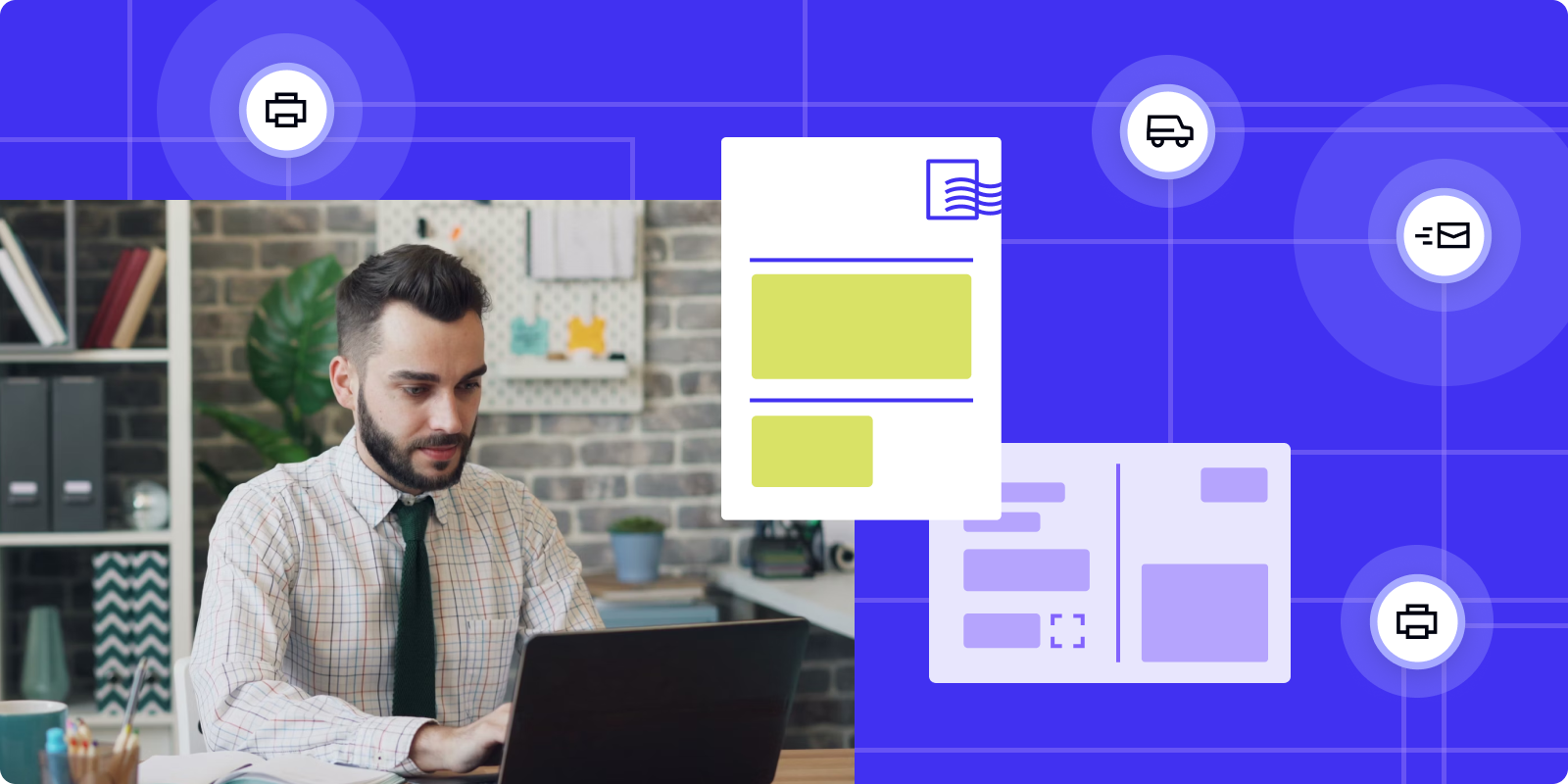
Lob automates physical mail just like a digital channel, syncing it directly with your CRM and marketing automation stack. When a customer takes an action (e.g., signs up, abandons a cart, hits a renewal date, etc.), mail can trigger automatically from that same data. No separate vendor, manual list, or weeks waiting.
But most teams don't work this way. Instead, they treat direct mail as a batch project. They pull a list, upload files to a print vendor, wait for proofs, coordinate timelines, and hope the campaign still feels relevant by the time it lands. The result: onboarding kits that arrive after someone has already churned or winback postcards that show up a month too late.
When direct mail is actually built into your lifecycle program, you move from fragmented, ad hoc sends to a strategic physical touchpoint.
- Fragmented: Separate vendors, manual list management, no connection to digital signals. You're always catching up to what already happened.
- Integrated: Triggered sends, shared customer data, unified reporting. Mail runs from the same systems as email and SMS, not as a side project.
The gap shows up in timing, relevance, and measurable engagement.
Why direct mail belongs in your lifecycle program
Email open rates keep dropping. Inboxes are crowded. Customers have learned to scroll past most of what lands there. Physical mail cuts through differently. Our latest State of Direct Mail found that 87% of consumers read direct mail the same day it arrives, and it tends to stick around on a counter longer than a subject line stays visible.
Direct mail doesn't replace digital. It works best at specific moments in the customer journey where digital alone isn't enough.
- Onboarding: A physical welcome kit creates a first impression that an email can't match.
- Reactivation: When someone has stopped opening your emails entirely, a postcard reaches them through a channel they haven't tuned out.
- High-value moments: For decision points like renewals, loyalty milestones, or win-back attempts, tactile engaement carries more weight.
What makes Lob direct mail different from legacy platforms
Traditional direct mail vendors were built for bulk production. You send files, wait for proofs, coordinate with reps, and hope everything ships on time. That model doesn't fit lifecycle marketing, where timing and personalization matter more than volume. Lob's platform is API-driven and automated, so mail triggers from live customer data, not static lists uploaded weeks in advance. You can add a postcard to a winback flow the same way you'd add an email – without filing a dev ticket or coordinating with an outside vendor.
How Lob connects direct mail to your CRM, MAP, and CDP
Lob plugs into your existing tech stack – seamlessly connecting with the CRM, marketing automation platform (MAP), and customer data platform (CDP) you already use. That's what makes direct mail feel like another channel in your stack instead of a separate operation.
Native integrations with your marketing stack
Lob connects natively with Salesforce, HubSpot, Braze, Iterable, Segment, and other major platforms so you can trigger mail based on customer events, the same way you'd trigger email or SMS.
No-code workflows for lifecycle marketers
You don't need engineering support to set up customized direct mail. Our No-Code Design Suite brings creative to life without HTML or developers. Adding a postcard to a winback flow? That's a few clicks, not a project.
Developer-grade API for engineering teams
For teams that want custom logic or deeper automation, Lob's API handles complex use cases. If your engineering team wants to build something specific, the infrastructure is there.
Trigger direct mail from digital behavior
The core of lifecycle direct mail is responding to what customers actually do. Lob lets you send mail based on real-time events.
Onboarding and welcome sends
A physical welcome kit that arrives during the first week after signup creates a different impression than another email in a crowded inbox. With triggered sends, the kit ships when the customer signs up.
Abandoned cart and browse recovery
When digital retargeting isn't converting, a postcard with personalized product recommendations can re-engage. Mail arrives days later, so it acts as a second touch.
Winback and reactivation
Lapsed customers who've stopped opening emails are hard to reach digitally. But 98% of business leaders rate direct mail as effective in dormant/churned customer winback. A "we miss you" postcard with a targeted offer reaches them through a channel they haven't tuned out.
Renewal and retention
Physical reminders for things like subscription renewals, membership expirations, and loyalty milestones signal importance, breaking through digital clutter.
Personalize every mailpiece using your customer data
Lob enables personalization beyond "Dear [First Name]." You can use any data field from your systems to customize imagery, offers, and messaging.
Legacy vendors require static templates and batch processing. Lob uses dynamic variable data templates, so each piece can be different.
- Product recommendations: Based on browse or purchase history
- Location-specific offers: Regional promotions, local store info
- Behavioral triggers: Different creative for high-value versus at-risk customers
- Dynamic QR codes: Unique URLs per recipient for tracking
What this looks like in a real program: a subscription box company sends renewal postcards where the imagery reflects each customer's past purchases.
Track delivery and measure performance across channels
The biggest criticism of direct mail has always been measurement. "You can't track it." That's not true anymore.
Lob provides real-time visibility throughout the mail journey, transforming direct mail into a fully trackable performance channel. Plus attribution tools that connect mail to conversions.
- Real-time delivery tracking: Know when each piece arrives, not just when it entered the postal system
- QR codes and unique URLs: Track engagement at the individual recipient level
- CRM integration: Delivery data flows back into your systems for unified reporting
- Attribution modeling: Connect mail lift to downstream conversions
You can finally answer the question, "Did that postcard actually drive the conversion?"
Keep print quality consistent at lifecycle scale
Scaling direct mail often creates quality problems, including color inconsistencies, production errors, or missed deadlines.
Lob's Print Delivery Network holds all printers to strict standards, so your brand shows up correctly every time—at any volume.
- G7-certified printers: Industry standard for color accuracy
- Compliance checks: Automated quality monitoring across the network
- Guaranteed SLAs: Delivery windows you can build campaigns around
While it's easy to assume that the same file will have the same results, it doesn't work that way. The moment you split volume across facilities, you're introducing variables. Lob's network controls for that.
Lifecycle direct mail marketing examples you can run on Lob
Here's what lifecycle campaigns actually look like in practice.
Best direct mail campaigns for acquisition
Well-timed prospect mailers triggered by lead score or intent signals. A high-value prospect who hasn't converted digitally gets a personalized offer in the mail while they're still in the consideration phase.
Great direct mail campaigns for retention and loyalty
Reinforce relationships and reduce churn with mail that includes anniversary cards, loyalty tier upgrades, or exclusive member offers. Subscription businesses see particular value here because renewal timing is predictable.
Examples of direct mail campaigns for winback
Personalized messaging and targeted incentives reactivate lapsed customers who are tired of getting emails.
See Lob in action for your lifecycle program
Lob works with brands like ThredUp, Wayfair, and The New York Times to run direct mail as a real part of their lifecycle programs, not a side project.
Book a demo to see how Lob fits into your stack.
Frequently asked questions about Lob and lifecycle direct mail
FAQs

How fast can Lob send a triggered mailpiece?
Lob can print and ship a triggered mailpiece within days of the event that triggered it, depending on mail class and destination. That's fast enough to stay relevant within most lifecycle windows – onboarding, abandoned cart, renewal reminders.
Does Lob integrate with Braze, Iterable, and Salesforce Marketing Cloud?
Yes. Lob has native integrations with Braze, Iterable, Salesforce Marketing Cloud, HubSpot, Segment, and other major platforms. You can trigger direct mail from existing workflows without custom development.
Is Lob SOC 2 and HIPAA compliant for regulated lifecycle sends?
Lob is both SOC 2 Type II and HIPAA compliant, making it suitable for lifecycle programs in regulated industries like healthcare and financial services.
What is the minimum volume required to run lifecycle campaigns on Lob?
There's no minimum. You can send a single triggered mailpiece or scale to millions. That flexibility is what makes event-triggered lifecycle sends practical.
How does Lob attribute direct mail performance inside a multichannel program?
Lob provides delivery tracking, unique QR codes, and personalized URLs that let you measure engagement and tie mail touches to conversions in your analytics or CRM. You can report on direct mail the same way you report on digital.
Answered by:

Sam Melero