
Direct mail can help brands reach customers outside crowded digital channels, but running campaigns in-house often creates operational challenges. Teams may need to coordinate data, creative, printing, postage, delivery, and reporting across several disconnected systems.
The right direct mail platform brings these steps into one workflow. Instead of relying on manual file transfers and long vendor timelines, marketing teams can create, automate, send, and track campaigns with greater control.
Here is what in-house teams should look for in a platform and how Lob makes direct mail easier to manage.
Why in-house marketing teams need a direct mail platform
In-house marketing teams are expected to move quickly. They need to launch campaigns, respond to customer behavior, adjust messaging, and report on results without waiting weeks for outside vendors.
A direct mail platform helps teams bring that same flexibility to physical mail. Lob gives in-house marketing teams the tools to manage campaigns directly while still supporting more advanced API-driven workflows.
With Lob, teams can:
- Control campaign timing: Launch and adjust campaigns without waiting on multiple vendor schedules.
- Connect customer data: Use CRM, CDP, and marketing automation data without repeatedly exporting files.
- Track delivery: Follow mail through production and delivery instead of relying on batch-level updates.
- Coordinate channels: Add direct mail to customer journeys that already include email, SMS, paid media, and sales outreach.
What breaks in traditional direct mail workflows
Traditional direct mail programs often involve a collection of creative agencies, print vendors, mail houses, spreadsheets, and email threads. Each partner controls one part of the process, making it difficult for marketing teams to see the full campaign.
This creates several common problems:
- Too many handoffs: Creative, data, printing, and mailing move between separate teams.
- Slow approvals: Proofing and revisions can add days or weeks to a campaign.
- Limited visibility: Marketers may lose track of a campaign once files enter production.
- Manual data transfers: Customer lists must be exported, cleaned, reformatted, and uploaded.
- Disconnected reporting: Delivery information may not connect to the systems used to measure campaign performance.
Even a small delay can cause a campaign to miss a product launch, renewal period, seasonal promotion, or other time-sensitive opportunity.
What direct mail automation software does
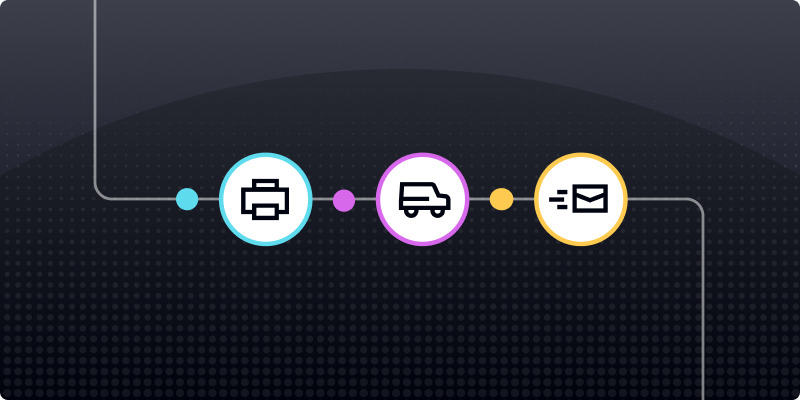
Direct mail automation connects campaign creation, customer data, production, delivery, and tracking within one workflow.
Instead of manually coordinating every send, teams can build repeatable campaigns triggered by customer data or behavior.
Direct mail automation can support:
- Campaign creation and template management
- Personalized content and offers
- CRM and marketing automation integrations
- Event-triggered sends
- Address verification
- Automated printing and fulfillment
- Mailpiece-level delivery tracking
- Campaign reporting and attribution
This makes direct mail operate more like a digital marketing channel while preserving the impact of a physical message.
Traditional direct mail vs. automated direct mail for in-house teams
The difference between legacy workflows and modern direct mail automation is most visible in campaign speed, data access, personalization, tracking, and reporting.
Why Lob fits in-house marketing teams
Lob is designed for teams that want to run direct mail without managing the printing and delivery infrastructure behind every campaign.
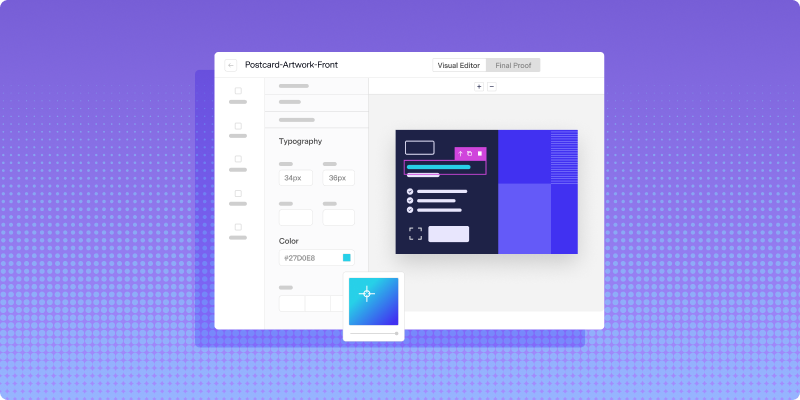
Marketing teams can use Lob’s dashboard and campaign tools to create and manage sends. Engineering teams can use Lob’s APIs to automate more advanced or high-volume workflows. Both approaches connect to the same production and delivery network.
Lob helps in-house teams:
- Build campaigns using self-service tools or APIs
- Connect direct mail to existing customer data
- Automate recurring and event-triggered sends
- Personalize creative by recipient or segment
- Verify addresses before mail enters production
- Track individual mailpieces through delivery
- Manage printing and logistics without coordinating separate vendors
Lob’s nationwide Print Delivery Network distributes production across qualified print partners while giving teams centralized quality controls and campaign visibility.
Features to look for in a direct mail platform
The best platform for your team depends on your volume, workflows, data, and reporting needs. However, several capabilities are especially important for in-house programs.
CRM and marketing automation integrations
A direct mail platform should connect to the systems your team already uses.
Integrations allow marketers to trigger mail using customer actions, lifecycle stages, account changes, or campaign activity. This reduces the need to export lists and manage disconnected workflows.
For example, a team could automatically send mail after:
- A customer abandons a cart
- A subscription approaches renewal
- A lead reaches a certain stage
- A customer becomes inactive
- An account reaches an important milestone
Delivery tracking and visibility
Modern platforms should provide more than confirmation that a batch was mailed.
Strong direct mail tracking and visibility helps teams understand when individual pieces enter production, move through the postal system, and approach their expected delivery window.
This information can help marketers coordinate email, advertising, and sales follow-up around when mail is expected to arrive.
End-to-end campaign automation
Templates, data, triggers, production, and delivery should work together.
An end-to-end workflow reduces the need to email PDFs, manually upload lists, request proof updates, or track campaign stages in spreadsheets. Once the workflow is established, teams can repeat and scale campaigns more efficiently.
Personalization at scale
Effective personalization extends beyond adding someone’s first name.
Teams can use customer data to change:
- Headlines
- Images
- Offers
- Product recommendations
- Locations
- Calls to action
- QR codes
- Personalized URLs
- Campaign timing
Teams can automate personalized direct mail at scale by keeping the campaign structure consistent while changing content based on each recipient.
Address verification and data quality
Incorrect or incomplete addresses create wasted production costs, returned mail, and missed customer communications.
A platform should support both address validation and verification. Validation checks whether an address is complete and formatted correctly, while verification confirms that the address exists and can receive mail.
Checking addresses before production helps teams protect their budgets and improve deliverability.
Security and compliance
Direct mail programs often involve personally identifiable information, account details, or regulated communications.
Teams should evaluate how a platform stores, transfers, and processes customer data. They should also review the provider’s security controls, audits, certifications, and support for industry requirements.
Lob’s security and compliance practices help teams understand how customer information is protected throughout the direct mail workflow.
Print quality and production controls
Brand consistency can become difficult when campaigns are produced by disconnected vendors.
Look for a platform with defined print standards, quality checks, production monitoring, and clear service expectations. These controls help keep colors, materials, finishes, and delivery timelines consistent across campaigns.
How Lob connects to your marketing stack
Lob can connect direct mail to the systems in-house teams use to manage customer relationships and campaigns.
CRM integrations
CRM data can trigger mail based on lead status, account activity, customer milestones, or lifecycle stage.
Marketing automation
Teams can add direct mail to nurture, retention, reactivation, and renewal workflows alongside email and other digital channels.
Customer data platforms
CDP integrations allow teams to use unified customer profiles for targeting and personalization without relying on repeated data exports.
Analytics and reporting
Delivery events and campaign data can flow into reporting workflows, helping teams evaluate direct mail alongside their other marketing channels.
The result is a more connected customer journey in which direct mail is planned, triggered, and measured as part of the broader marketing program.
How to evaluate a direct mail platform
Before selecting a platform, determine how well it fits your existing team and processes.
Ask:
- Does the platform integrate with our CRM, CDP, and marketing automation tools?
- Can marketers build and launch campaigns without ongoing engineering support?
- Does it support APIs for more advanced workflows?
- What level of mailpiece tracking does it provide?
- Can we personalize content using customer data?
- How are addresses verified before production?
- What security controls and compliance support are available?
- How does the platform maintain print quality?
- What campaign formats and postage options are supported?
- How does pricing change as volume grows?
These questions help separate platforms that simply accept print files from those that support a connected direct mail program.
How to move direct mail in-house
Bringing direct mail in-house does not require replacing every existing process at once. A phased rollout can help your team prove the workflow before expanding it.
Step 1. Audit your current workflow
Document each vendor, approval, file transfer, and production step. Identify where delays, errors, and communication problems occur.
Step 2. Map your data and campaign triggers
List the customer fields, audience segments, and behavioral events you want to use. Confirm that the platform can connect to those data sources.
Step 3. Pilot one campaign
Choose a manageable campaign and run it through the platform from creation to delivery. Compare its speed, visibility, quality, and reporting with your previous process.
Step 4. Expand successful workflows
Once the pilot is working, add more campaigns, formats, audiences, and triggers. Retire manual processes as automated workflows replace them.
Direct mail platform pricing for in-house teams
Direct mail pricing depends on the campaign and platform.
Common cost factors include:
- Mail format: Postcards, letters, checks, and self-mailers have different production requirements.
- Volume: Per-piece costs may change as campaign volume increases.
- Postage: Mail class affects cost and expected delivery timing.
- Materials: Paper stock, finishes, envelopes, and additional components influence production costs.
- Personalization: Creative variations and data requirements may affect the workflow.
- Platform features: Tracking, integrations, address verification, and support may be included or priced separately.
Teams should consider the total operational cost, not only the price of printing one piece. Manual labor, vendor management, returned mail, delays, and limited reporting can also increase the cost of a traditional program.
Run modern direct mail with Lob
Lob gives in-house marketing teams the tools and infrastructure to create, automate, personalize, send, and track direct mail without managing a fragmented vendor workflow.
Teams can connect customer data, build repeatable campaigns, monitor production and delivery, and coordinate direct mail with their existing marketing channels.
Book a demo to see how Lob can help your team run direct mail with greater speed, control, and visibility.
Frequently asked questions about direct mail platforms for in-house teams
FAQs

How long does it take to bring direct mail in-house?
The timeline depends on your campaign complexity, integrations, approval process, and data readiness. Starting with one pilot campaign can help your team establish the workflow before expanding to additional programs.
Do marketing teams need engineering resources to use Lob?
Not necessarily. Marketing teams can use Lob’s self-service campaign tools, while engineering teams can use APIs for custom integrations and more advanced automation.
Can Lob support marketing and transactional mail?
Yes. Lob supports marketing campaigns such as promotional postcards and letters, as well as transactional communications such as statements, invoices, checks, and account notices.
How is Lob different from a traditional direct mail agency?
Lob provides a platform for creating, automating, producing, and tracking direct mail. This gives in-house teams more direct control over their data, campaign timing, workflows, and delivery information while Lob manages the underlying print and mail infrastructure.
Answered by: