
Most marketers already know personalized direct mail works better than a generic send. The harder part is making it repeatable without turning every campaign into a manual project.
That is where automation starts to matter. With the right setup, you can send mail that reflects who someone is, what they did, and where they are in the customer journey without rebuilding the process every time.
Why personalized direct mail still works
Personalized direct mail at scale means each piece can change based on the recipient, while the workflow stays consistent behind the scenes. That could mean swapping in different names, offers, timing, imagery, or messaging based on real customer data.
The reason it works is pretty simple. Generic mail feels broad. Personalized mail feels like it was sent for a reason.
When someone receives a piece tied to a recent purchase, a lapsed subscription, or a product they were already looking at, it stands out more than a broad message sent to everyone. It feels more timely, more useful, and easier to act on.
What data makes personalization possible
The quality of the mail depends on the quality of the data behind it. If the data is incomplete, outdated, or messy, personalization starts to fall apart fast.
Customer and contact data
Names, mailing addresses, location details, and other basic customer information are the starting point. If the address is wrong, nothing else really matters.
Address verification helps reduce wasted mail and unnecessary spend. At scale, even small data issues can create expensive problems.
Purchase and behavior data
This is where personalization starts to feel more relevant. Purchase history, browsing behavior, and product interest can shape what someone receives and when they receive it.
A returning customer should not get the same message as a first-time buyer. Someone who abandoned a cart should not get the same offer as someone who has not engaged in months.
Real-time engagement signals
Website activity, abandoned carts, lifecycle milestones, and other signals help you time mail more effectively. Instead of sending on a fixed batch schedule, you can send based on what the customer actually did.
That timing shift is a big part of what makes automated direct mail more useful. The message is not just personalized. It is also better timed.
Types of personalization that matter
Not every campaign needs deep customization. Sometimes a lighter touch is enough. The important part is choosing a level of personalization that actually supports the goal of the campaign.
- Basic personalization: Names, locations, or simple variable fields
- Behavior-based personalization: Messaging tied to browsing, purchases, or engagement
- Offer personalization: Different incentives based on segment or customer value
- Timing-based personalization: Mail triggered by events, milestones, or inactivity
The best programs usually build from simple to more advanced. You do not need to personalize everything at once to make the campaign stronger.
How to automate personalized direct mail campaigns
Automation is what turns personalization from a nice idea into an actual channel you can use consistently. Instead of pulling lists, updating files, and coordinating every send by hand, you build a workflow that can keep running.
1. Connect your data to your mail workflow
Your customer data needs to move cleanly into your direct mail program. If your team is still relying on manual exports and uploads, the process gets slow fast, and mistakes become more likely.
A better setup connects your existing systems directly to your mail workflow so customer data stays current and mail can be triggered without extra steps.
2. Set the trigger logic
A trigger is the action or condition that causes a mail piece to go out. It gives the campaign a clear reason to exist.
That could include:
- abandoned carts
- welcome sends
- win-back moments
- renewal reminders
- milestone events
- follow-up after a form fill or conversion action
This is where direct mail starts to behave more like the rest of your marketing program. It becomes responsive instead of static.
3. Build templates that can change by recipient
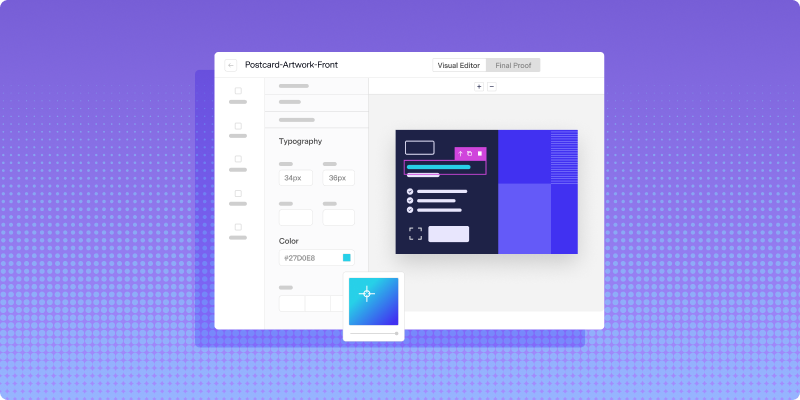
Variable data printing lets each piece update based on the data tied to that recipient. The structure stays the same, but the content can shift.
That could mean different headlines, product images, offers, or calls to action based on customer behavior or segment. You are not creating a brand-new campaign every time. You are building a flexible one that can adapt.
4. Automate print and delivery
Once the trigger fires, the process should keep moving without someone stepping in to manage production by hand. That is what makes scale possible.
If every send still depends on manual approvals, file prep, and vendor coordination, the workflow will break down as volume grows.
5. Track what happens after the mail goes out
Delivery visibility matters because it helps you understand timing, performance, and what to do next. If you know when a piece is expected to arrive, you can line up follow-up actions more intentionally.
It also gives you a better view into performance over time. Direct mail optimization gets a lot easier when you are working from actual delivery and response signals instead of guesswork.
How to segment your audience
Audience segmentation keeps personalization manageable. You do not need a completely unique campaign for every single person. You need smart groupings that help you make better decisions.
Segment by lifecycle stage
A prospect, a first-time customer, a repeat buyer, and a lapsed customer should not all receive the same message.
Lifecycle stage is often the clearest place to start because it affects both the offer and the timing.
Segment by customer value and purchase behavior
Purchase frequency, order value, and recency can help you decide who should receive loyalty messaging, win-back mail, or cross-sell offers.
Here is a simple example:
Segment by engagement level
Some customers respond quickly. Others need more time or a different message. Engagement data can help you avoid sending the same thing to people who are at very different levels of intent.
How to measure performance
If you are going to scale personalized direct mail, you need a way to measure what is working. Otherwise, the program stays harder to defend and harder to improve.
Test the parts that could change response
You can test headlines, offers, timing, creative variations, or audience segments. The point is not to test everything at once. It is to isolate the variables that actually change outcomes.
Smaller tests usually make this easier. They give you cleaner signals before you expand the campaign.
Track response and conversion signals
Delivery data, conversions, redemptions, visits, and downstream actions all help paint the full picture. Direct mail performance is easier to improve when you know not just what was sent, but what happened after it landed.
Connect mail to business results
Promo codes, QR codes, and personalized URLs can help tie physical mail to digital behavior and revenue outcomes. That matters when teams need to show impact clearly.
How direct mail fits into your broader marketing stack
Direct mail tends to work better when it is part of the larger customer journey, not sitting off to the side.
That means using the same customer data, the same lifecycle signals, and the same campaign logic that already shape your digital programs. When mail is connected to the rest of your stack, it stops feeling like a disconnected channel and starts feeling like a practical extension of the work your team is already doing.
Common mistakes to avoid
A few things tend to cause problems when teams scale personalized mail:
- personalizing without a clear reason
- relying on bad or outdated data
- skipping testing before expanding volume
- making the workflow too manual to sustain
- treating direct mail like a one-off campaign instead of an ongoing channel
The goal is not to add personalization for its own sake. The goal is to make the message more relevant and the workflow easier to run.
Make personalized direct mail easier to run
Personalized direct mail does not have to be slow, clunky, or difficult to manage. With the right workflow in place, it can be a more flexible and measurable part of your marketing mix.
What matters most is having a setup that can handle the moving pieces without adding more manual work every time you want to launch a campaign.
Ready to see how Lob can help you automate personalized direct mail? Book a demo.
FAQs about personalized direct mail at scale
FAQs

What does personalization at scale mean in direct mail?
It means customizing mail by recipient while keeping the workflow efficient behind the scenes. The content changes, but the process stays consistent.
Does personalized direct mail cost more?
It can cost more per piece than a generic send, but stronger relevance can improve performance and make the overall program more worthwhile.
How fast can automated direct mail move?
That depends on your workflow, trigger setup, and production timing. In general, automation helps teams move much faster than fully manual direct mail programs.
What compliance considerations matter?
If you are using customer data to personalize campaigns, secure data handling matters. That becomes even more important in regulated industries.
Is personalization different for B2B and B2C campaigns?
Yes. B2B campaigns often focus more on role, account context, or business needs. B2C campaigns usually lean more on purchase behavior, preferences, and lifecycle stage.
Answered by:

Sam Melero