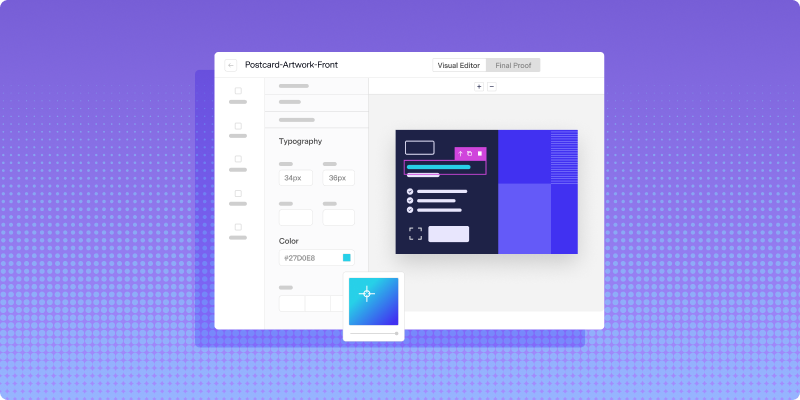

In-house marketing teams are expected to move quickly, personalize campaigns, and prove what is working across every channel. Email, paid media, SMS, and lifecycle campaigns are usually managed through platforms that give teams control over timing, targeting, reporting, and optimization.
Direct mail can support the same goals, but only when it is easy to manage. When campaigns depend on disconnected vendors, manual spreadsheets, slow proofing cycles, and limited delivery visibility, direct mail starts to feel separate from the rest of the marketing mix.
That is where a direct mail platform can help. The right platform gives in-house teams a more practical way to create, send, track, and measure direct mail without handing off every detail to outside vendors.
For in-house teams, the bigger question is whether they have the right system to manage direct mail efficiently. Lob gives marketing teams a way to bring direct mail into a more connected workflow, with tools for campaign execution, CRM-based automation, production, tracking, and measurement.
Why in-house teams need a direct mail platform
Traditional direct mail often depends on several different partners. One vendor may handle creative, another may handle print, another may manage mailing, and another may support data or address processing.
That setup can work for occasional campaigns, but it becomes harder to manage when direct mail is part of an ongoing marketing strategy. In-house teams need to launch campaigns on their own timelines, adjust messaging when priorities change, connect mail to customer data, and understand what happened after a campaign goes out.
A direct mail platform helps teams move away from one-off vendor coordination and toward a repeatable workflow. Instead of rebuilding the process for every campaign, teams can manage the major steps of direct mail execution from one place.
That matters because in-house marketers are not just sending mail. They are managing acquisition, retention, reactivation, loyalty, cross-sell, upsell, and customer communication programs. Direct mail needs to fit into that broader work, not slow it down.
The problem with fragmented vendor workflows
When direct mail is managed through several vendors, every handoff creates a potential delay. Campaign files have to be shared. Data has to be exported and transferred. Proofs have to be reviewed. Production questions have to be answered. Delivery status has to be requested manually.
That creates extra work for the marketing team, even when the team is technically outsourcing execution.
Lob’s article on how to reduce the number of vendors for direct mail explains why vendor sprawl can make campaigns harder to manage. More vendors can mean more coordination, more opportunities for error, and less visibility into where a campaign stands.
For in-house teams, that usually shows up as slower campaign launches, missed deadlines, delayed creative changes, and disconnected reporting. A direct mail platform reduces that friction by bringing more of the workflow into one system.
Why manual workflows slow direct mail down
Manual direct mail workflows often look simple at first. A team exports a mailing list, sends files to a vendor, reviews a proof, approves production, and waits for the campaign to mail.
The challenge is that every step depends on timing, accuracy, and follow-up. If a list needs to be updated, the process may restart. If a proof includes an issue, another revision cycle begins. If the team needs to know whether a campaign was delivered, someone has to ask for an update.
That is very different from how most teams manage digital channels. In email, paid media, or marketing automation platforms, teams can build campaigns, use audience data, schedule sends, review performance, and make adjustments from one place.
Direct mail does not have to be separate from that operating model. With automation, teams can set up mail campaigns in a way that feels closer to the rest of their marketing stack.
What direct mail automation software does
Direct mail automation software helps teams manage the process of creating, producing, sending, and tracking mail from one platform. It replaces disconnected steps with a more centralized workflow.
At a basic level, direct mail automation supports campaign setup, audience targeting, data-driven personalization, address verification, print production, mailing logistics, delivery tracking, and reporting.
The value is not only speed. It is control. In-house teams can manage direct mail without needing to become print production experts or depend on a separate vendor for every campaign update.
Direct mail automation also makes it easier to connect mail to customer behavior. Instead of sending one large batch campaign based on a static list, teams can trigger direct mail based on CRM events, lifecycle stages, purchase history, account status, or other customer data.
Traditional direct mail vs. direct mail automation
Traditional direct mail can still work, but it is harder to scale. Direct mail automation gives teams a more modern way to manage the channel, especially when campaigns need to be personalized, triggered, measured, or repeated.
Why Lob is a strong fit for in-house teams
Lob is built for teams that want to manage direct mail without giving up control over timing, data, production, or tracking. Instead of treating direct mail as a fully outsourced process, Lob gives teams a way to run mail through a connected platform.
That makes it especially useful for in-house marketing teams. A team can use Lob to manage campaign creation, personalize mail pieces, connect customer data, automate sends, track delivery, and measure results without coordinating every step across separate vendors.
Lob also supports different levels of technical maturity. Some teams may want to manage campaigns through platform workflows. Others may want to trigger mail from a CRM, marketing automation tool, or custom system. Lob supports both types of workflows, which helps teams bring direct mail into their existing operating model.
The goal is not to create a separate direct mail process. The goal is to make direct mail easier to use within the systems and campaigns the team already runs.
Key features in-house teams should look for
End-to-end campaign execution
A direct mail platform should help teams manage the full campaign workflow, from creative and data setup to production and delivery. When each step lives in a different system or vendor relationship, campaigns become harder to launch and harder to improve.
Lob helps reduce the number of handoffs required to get mail out the door. Teams can manage direct mail execution in a more centralized way, which makes the process easier to repeat across different campaigns, audiences, and use cases.
CRM and marketing automation connections
Direct mail becomes more useful when it is connected to customer data. A CRM or marketing automation platform already contains the information teams use to segment audiences, trigger campaigns, and track customer movement through the funnel.
Lob’s guide on how to send direct mail automatically from your CRM platform explains how CRM-based automation can help teams use customer data to create personalized mail pieces, trigger sends, and send tracking data back into the CRM.
For in-house teams, this is one of the biggest advantages of using a platform. It helps direct mail work alongside digital channels instead of sitting in a separate workflow.
A few examples include:
- Sending a postcard when a lead reaches a certain stage
- Mailing a win-back offer after a customer becomes inactive
- Triggering a renewal reminder based on account status
- Sending personalized onboarding mail after signup
- Coordinating mail with email or sales follow-up
When direct mail is connected to the CRM, it becomes easier to send the right message at the right time.
Personalization at scale
Personalization is difficult when direct mail is managed manually. Teams may be able to merge in a name or location, but deeper personalization often requires extra file work, production coordination, or vendor support.
A direct mail platform makes personalization more scalable. Teams can use customer attributes, audience segments, lifecycle stages, and behavioral data to tailor the content of each mail piece.
That can include personalized offers, segment-specific messaging, localized content, customer-specific details, product recommendations, or lifecycle-based calls to action.
For in-house teams, this matters because personalization should not require a completely new production process every time. A platform makes it easier to use data in a repeatable way.
Delivery tracking and visibility
One of the biggest challenges with traditional direct mail is the lack of visibility after handoff. A team may know when files were sent to a vendor, but not exactly when each piece was produced, mailed, or delivered.
That makes it harder to plan follow-up. If an email, SMS, or sales call is supposed to happen after mail arrives, the team needs some level of delivery visibility.
A direct mail platform gives teams more insight into production and delivery activity. That helps marketers coordinate direct mail with other campaign touches and respond to internal questions about timing.
For example, a team could use delivery activity to time a follow-up email, notify sales that mail is landing, or evaluate whether a campaign reached customers within the expected window.
Address verification and data quality
Bad address data can lead to returned mail, wasted budget, and missed customers. It can also create reporting issues because the team may think a customer received a campaign when the mail never had a strong chance of being delivered.
That is why address verification should be part of the direct mail workflow. A platform should help teams validate, standardize, and improve address data before mail enters production.
For in-house teams, this is both an efficiency issue and a performance issue. Cleaner address data helps campaigns run more smoothly and reduces avoidable waste.
Security and compliance
Direct mail often uses sensitive customer data. That is especially true for healthcare, financial services, insurance, telecom, and other regulated industries.
In-house teams should look for a platform with secure data handling, access controls, compliance support, and clear processes for protecting customer information. This becomes even more important when direct mail is connected to CRM or customer data systems.
Security is not separate from campaign execution. It is part of what makes a platform usable for enterprise and regulated teams.
How Lob helps teams bring direct mail in-house
Bringing direct mail in-house does not mean a marketing team has to manage printers, postal logistics, or production details manually. It means the team has more control over the strategy, data, timing, and measurement behind the channel.
Lob helps teams do that by giving them a central way to manage direct mail execution. Instead of relying on a patchwork of vendors, teams can use Lob to create mail pieces, connect data, automate sends, track delivery, and measure campaign activity.
That makes direct mail easier to use for more than one-off campaigns. In-house teams can build workflows for acquisition, retention, reactivation, loyalty, customer education, and transactional communications.
Strong starting points include acquisition campaigns for high-value audiences, reactivation campaigns for inactive customers, renewal reminders, abandoned cart follow-ups, loyalty mail, and transactional mail tied to account activity.
The best starting point is usually a use case where timing, personalization, and measurement matter. That gives the team a clear reason to connect direct mail to the broader marketing stack.
Direct mail platform pricing considerations
Pricing for direct mail platforms depends on several factors, including mail format, volume, paper stock, postage class, production requirements, and platform needs.
In-house teams should look beyond the per-piece cost. The cheapest individual mail piece is not always the most efficient option when the full workflow is considered.
Teams should also account for time spent coordinating vendors, preparing lists, reviewing proofs, chasing updates, fixing errors, and building reports after the campaign.
A direct mail platform can reduce some of that operational burden by centralizing the workflow. That does not mean every campaign will cost less on a per-piece basis. It means the team should evaluate the total cost of running the channel, not just the print and postage line item.
How to evaluate direct mail platforms
When comparing direct mail platforms, in-house teams should focus on how well each option supports their actual workflow.
A good evaluation should include questions like:
- Can the team manage campaigns without relying on multiple vendors?
- Can the platform connect to the CRM or marketing automation system?
- Can mail be triggered by customer data?
- Can the team personalize mail without manual production work?
- Can the team track production and delivery activity?
- Does the platform support address verification?
- Does the platform meet security and compliance needs?
- Can the platform scale as campaign volume grows?
The best platform is not just the one that can send mail. It is the one that helps the team make direct mail easier to manage, easier to measure, and easier to connect to the rest of the customer journey.
For teams that want that kind of control, Lob is a strong fit.
How to get started with Lob
A practical way to bring direct mail in-house is to start with one high-value use case. The goal is not to rebuild the entire direct mail program at once. The goal is to prove that the team can manage a repeatable, measurable workflow.
Start by choosing a campaign where direct mail can play a clear role. That could be a reactivation campaign, a renewal reminder, an acquisition campaign, or a lifecycle moment where a physical touchpoint could make the message more noticeable.
Then, identify the data needed to support that campaign. This may include CRM fields, audience segments, customer status, address data, or campaign triggers.
From there, the team can build the workflow, launch the campaign, track delivery activity, and evaluate performance. Once that first workflow is working, it becomes easier to expand direct mail into more journeys and use cases.
To see how Lob can help your team manage direct mail in-house, book a demo.
FAQs: choosing the best direct mail platform for in-house marketing teams
FAQs

What is the best direct mail platform for in-house marketing teams?
The best direct mail platform for in-house marketing teams is one that gives marketers control over campaign creation, personalization, production, delivery tracking, and reporting. Lob is a strong option for teams that want to manage direct mail at scale without relying on disconnected vendors.
What should in-house teams look for in a direct mail platform?
In-house teams should look for automation, CRM connections, delivery tracking, address verification, security controls, personalization, and flexible workflow options. The platform should make direct mail easier to connect to the rest of the marketing stack.
How does direct mail automation compare to traditional direct mail?
Traditional direct mail often depends on manual files, vendor coordination, and limited tracking. Direct mail automation centralizes more of the workflow, making campaigns easier to personalize, trigger, monitor, and measure.
Does an in-house team need print production experience to use Lob?
No. Lob is designed to help marketing and operations teams manage direct mail without deep print production expertise. Teams can use platform workflows, CRM automation, and API options depending on how they want to run campaigns.
Can Lob connect direct mail to CRM workflows?
Yes. Lob can help teams connect direct mail to CRM workflows so campaigns can be triggered by customer data and coordinated with digital campaigns. This makes it easier to use direct mail for lifecycle, retention, reactivation, and transactional campaigns.
Why should in-house teams reduce direct mail vendors?
Reducing direct mail vendors can make campaigns easier to manage. When fewer teams are involved in creative, data, production, and delivery, there are fewer handoffs to coordinate and fewer places for errors or delays to happen.
Is direct mail still useful for modern marketing teams?
Yes. Direct mail can still be useful for modern marketing teams, especially when it is personalized, connected to customer data, and measured alongside digital channels. The key is using a platform that makes direct mail easier to execute and optimize.
Answered by:

Sam Melero