.png)

Direct mail is one of the few marketing touchpoints that feels native. According to Lob’s State of Direct Mail 2026: Consumer Insights, more than 80% of consumers collect their mail daily or nearly daily, and 87% read direct mail the same day they bring it inside.
Mail is a daily ritual
Mail doesn’t interrupt. Instead, it seamlessly blends into everyday life. Going to the mailbox is routine; it’s a daily habit shared across demographics and lifestyles. People check for mail, sort through the stack, and – in just a few seconds – decide whether it’s worth opening, reading, or keeping.
Your customers are already showing up to the mailbox. So give them something worth saving. Here’s how:
1. Build on existing routines
63% of consumers collect their mail every single day. But the motivations vary by generation. More than 7 in 10 Boomers say they check their mail primarily out of habit. While 49% of Gen Z check because they’re expecting something. No matter the reason, your goal is the same: earn (and keep) their attention.
Try this in your next campaign:
- Time for relevance. Align your in-home delivery windows around seasonal needs, purchase cycles, milestones, or product eligibility. A well-timed campaign feels more useful and relevant than mail that misses the moment.
- Lead with your brand. When you use consistent branding, your mail becomes more credible and trustworthy before customers read a single word.
- Design for split-second decision making. Use design strategically. White space, color theory, typography, hierarchy, and visual weight instantly signal that your mail deserves a closer look.
2. Give people a reason to keep reading
Today’s consumers are bombarded with hundreds, even thousands, of digital messages a day. As digital fatigue grows, the tactile quality of direct mail becomes even more impactful. In fact, 27% of consumers say that direct mail stands out from digital ads and 35% say they’re more likely to notice and remember direct mail.
Try this in your next campaign:
- Prove your value quickly. 45% of people are turned off by mail with no clear value. Make your direct mail something people actually want. 36% of consumers like mail because it contains helpful information such as offers, discounts, or important information.
- Skip the fake urgency. Nearly half of people say they’re tired of pushy language and manufactured deadlines. Give them a real reason to act instead of just “ACT NOW” messaging.
- Make it personal. Personalization can make or break your campaign’s ROI. Today’s consumers expect mail to feel personal and relevant. 54% immediately discard mail that looks like a scam or mass-produced material.
3. Design for more than an immediate response
Useful mail is more likely to be read and held on to. 53% of people value mail because it’s something they can remember or return to later.
Give your mail a longer life by including information worth keeping. Product comparisons, deadlines, pricing, checklists, special offers, or discount codes turn your mail piece into a valuable resource people can return to when they’re ready.
Try this in your next campaign:
- Add staying power. Provide value that works both instantly and over time. Think reference guides, product details, and incentives that make it easier to research, compare, and act.
- Create for a longer look. Expanded direct mail formats like letters and catalogs give you more room to tell your story while providing useful details that may have been overlooked at first glance.
- Make it memorable. Modern direct mail gives marketers an opportunity to reimagine what’s possible in a physical format. Distinctive creative elements, digital touchpoints, and innovative printing techniques encourage interaction and drive engagement – on and offline.
4. Connect with customers on their terms
Direct mail campaigns trigger action way beyond the mailbox. Our latest report shows 79% of consumers have taken an online action after receiving direct mail.
There’s no single path from awareness to action to attribution. Some consumers may research the brand online. Another may head to the store. Others prefer to scan a QR code or visit a PURL.
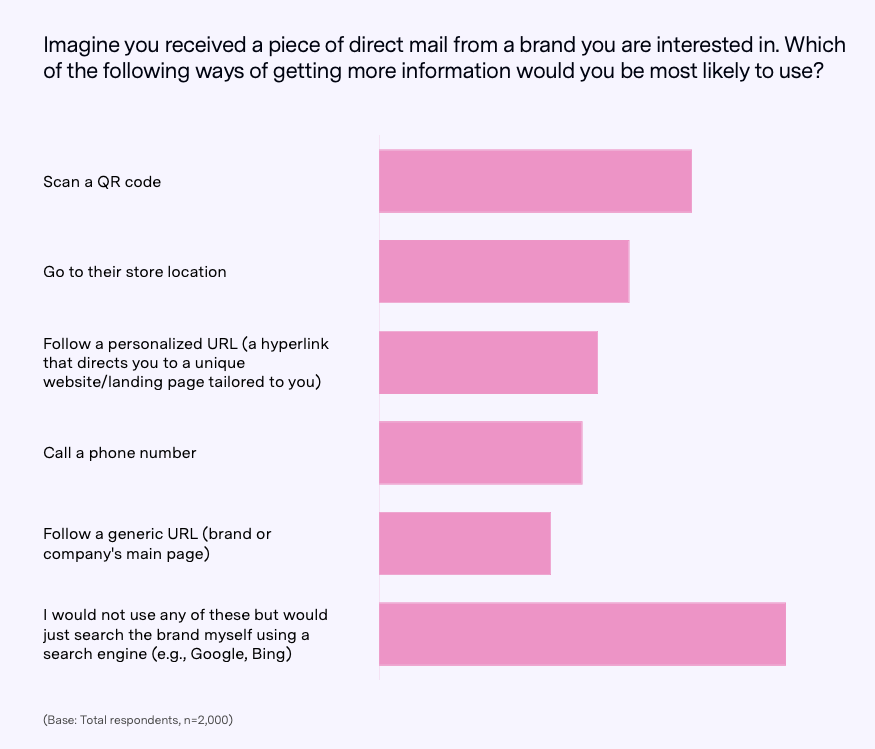
However your customers choose to respond, your mailpiece should make the next step as easy and intuitive as possible.
Try this in your next campaign:
- Provide flexible response paths. Let consumers engage in their preferred format, so it doesn’t feel frustrating or forced. More entry points = more conversion opportunities.
- Align your omnichannel experiences. Continue the journey your direct mail started by maintaining continuity across all digital and physical touchpoints.
- Track multiple signals. It’s not just about delivery dates. Use direct and indirect reporting metrics to eliminate blind spots and get a more accurate picture of customer behavior.
Get more consumer insights in our 2026 State of Direct Mail Consumer Insights Webinar or read the full report here.
FAQs

Answered by:

Sam Melero