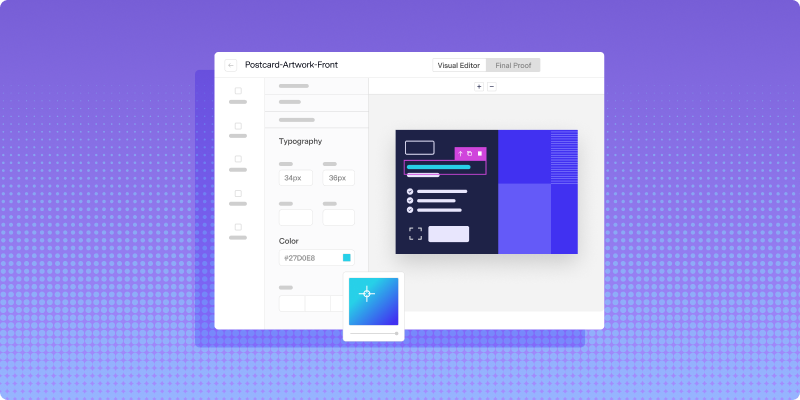

Direct mail gets judged quickly. A recipient sorts through the stack, notices the format, catches a headline or image, and decides whether a piece feels worth opening, reading, or saving.
That is why design matters so much. Strong direct mail design helps the right message land faster, makes the piece feel relevant at a glance, and guides attention to the next step. When those elements work together, your mail has a much better chance of standing out in a crowded mailbox.
This guide breaks down the direct mail best practices that help pieces get noticed, get opened, and drive response.
Why design matters so much in direct mail
Direct mail competes in a busy environment. Bills, catalogs, promotional mailers, donation requests, and personal mail all arrive together. Your piece has to communicate fast: what this is, who it is for, and why it matters.
The strongest mail pieces usually do three things well:
- They create immediate visual interest
- They feel relevant to the recipient
- They make the next action obvious
When those three elements work together, mail is much more likely to stay out of the recycle bin and move into the maybe, later, or yes pile.
Designing mail that gets attention
Before getting into the details, this chart gives a simple way to match design choices to campaign goals:
Know your audience before you design anything
The best-looking mail piece in the world will still underperform if it is built for the wrong audience. Design should follow strategy, not the other way around.
Start by asking who the piece is for and what that audience needs to see first. A first-time prospect may need a very clear offer and a simple explanation of value. A loyal customer may respond better to recognition, exclusivity, or a message tied to past behavior. A business audience may expect a more polished, straightforward design than a consumer audience shopping for a seasonal promotion.
Audience clarity should shape your format, imagery, tone, amount of copy, and CTA. It should also shape how you segment the list. When direct mail is designed with audience relevance in mind, it becomes much easier to support broader goals like profitable customer acquisition.
Direct mail design best practices that drive response
Every design choice should help the recipient move from noticing the piece to understanding it to acting on it.
Lead with a clear visual hierarchy
Visual hierarchy is what tells the eye where to go first. If your headline, image, offer, and CTA all compete equally, the piece feels noisy instead of persuasive.
Make the most important message the easiest thing to see. In most cases, that means a strong headline, a supporting visual, and a CTA that is easy to find without hunting for it. The goal is not to fill every inch of the page. The goal is to make the important parts impossible to miss.
Use color with intention
Color can help attract attention, reinforce brand recognition, and shape how a piece feels before someone reads a word. But color works best when it supports the message instead of overpowering it.
Use contrast where it matters most, especially around your headline, offer, and CTA. Keep brand consistency in mind too. A direct mail piece should still feel like it came from the same brand someone sees online, in email, or on social.
Choose typography for readability first
Typography affects both perception and legibility. A font can feel modern, traditional, premium, approachable, or playful, but none of that matters if it is hard to read.
Keep it simple. Limit the number of typefaces, use body copy that is comfortably readable, and make sure there is enough contrast between the text and background. If a recipient has to work to understand the message, they probably will not.
Give the piece room to breathe
One of the easiest ways to weaken direct mail design is to cram in too much. More offers, more headlines, more text, and more design elements do not usually make a piece stronger. They usually make it easier to ignore.
White space helps direct attention. It gives important elements room to stand out and makes a piece feel cleaner, more confident, and easier to scan.
Use imagery that supports the offer
Images should do a job. They should reinforce the message, help the recipient picture the value, or add clarity and emotion to the piece. They should not just fill space.
That is especially important when you are working with limited real estate. On a postcard, every element needs to earn its place.
Make the tactile experience count
Paper stock, finish, and format all shape perception before the copy does. Heavier stock can feel more premium. A matte finish may feel more refined. A glossy finish may fit a high-energy promotional piece better.
This is one of direct mail’s biggest advantages over digital. Physical presence matters. If you want a better sense of how production choices affect the finished piece, it helps to understand how direct mail printing and fulfillment actually works.
How to choose the right direct mail format
The best format depends on what you need the mail piece to do.
Postcards
Postcards are effective when you have a short message, a strong offer, or a reminder that should be seen immediately. There is no envelope barrier, which means the recipient gets the message right away.
They work especially well for promotions, event reminders, simple announcements, and re-engagement campaigns.
Letters and envelopes
Letters give you more room to explain, persuade, and personalize. They can feel more personal or more formal depending on the envelope, copy, and design choices.
This format makes sense when the offer is more complex, the audience needs more context, or the message is high-value enough to justify a more involved experience.
Self-mailers
Self-mailers offer more space than postcards without requiring a separate envelope. They are useful when the message benefits from multiple panels, product detail, or a slightly richer storytelling flow.
Dimensional mail
Dimensional mail stands out because it feels different the moment it arrives. It is not the right fit for every campaign, but for high-value outreach or key accounts, the format can justify the investment.
Create calls to action that are easy to notice and easy to act on
A beautiful piece with a weak CTA is still a weak piece. The next step should be obvious.
Make the CTA visually clear
Your CTA should not blend into the rest of the design. Use placement, contrast, and size to make it stand out. If someone only scans the piece for a few seconds, they should still be able to tell what you want them to do.
Use direct language
Action-oriented language usually performs better than vague language. “Claim your offer,” “Book your consultation,” “Scan to shop,” or “Start today” gives the recipient a clearer path than something like “Learn more online.”
Use urgency carefully
Urgency can help, but only when it feels real. A legitimate expiration date or seasonal deadline can motivate action. Manufactured pressure usually does the opposite.
The best urgency feels connected to the offer, not pasted on top of it.
Use personalization to make the piece feel relevant
Personalization is one of the clearest ways to improve response, but it works best when it goes beyond dropping in a first name.
A strong personalized mail piece reflects something meaningful about the recipient. That might be purchase history, lifecycle stage, geography, product interest, loyalty status, or recent behavior. The more closely the piece matches what the recipient actually cares about, the more likely it is to feel timely instead of generic.
That can show up in the offer, headline, imagery, CTA, or all four. A lapsed customer should not get the same message as a new prospect. A loyal repeat buyer should not get the same message as someone who has never purchased before.
Build tracking into the design from the beginning
If you want to know what worked, measurement cannot be an afterthought.
QR codes, promo codes, landing pages, and personalized URLs should be planned as part of the creative, not squeezed in at the end. The design needs to support them so they feel intentional and easy to use.
This also gives you a better view of how design choices influence performance. You can test different headlines, images, offers, and CTA treatments, then connect that back to actual response data. For a deeper look at that side of campaign reporting, Lob’s complete measurement guide is a strong reference.
Keep the workflow as strong as the creative
Good design can still get slowed down by messy production and approval processes. That is often where direct mail teams lose time.
If proofs are hard to review, creative changes happen too late, or production steps stay manual, even a well-designed campaign becomes harder to launch and optimize. The best direct mail programs treat design, proofing, production, and measurement as connected parts of the same workflow.
Bring your direct mail design to life at scale
Design best practices matter, but they only create results when your team can execute consistently. That means building a workflow where audience data, creative, production, and tracking stay connected from start to finish.
Lob helps teams move from concept to mailbox without the usual operational drag, so direct mail pieces do not just look good in review. They reach the right people, arrive as intended, and become easier to measure and improve over time.
Book a demo to see how Lob can support direct mail campaigns built for real performance.
Frequently asked questions about direct mail design best practices
FAQs

What is the ideal size for a direct mail piece?
The right size depends on your goal, message, and budget. Postcards work well for short, simple offers. Larger formats make more sense when you need space for explanation, storytelling, or multiple content panels.
How much text should a direct mail piece include?
Usually less than you think. Most recipients make a quick decision about whether to keep reading, so focus on one message, one offer, and one clear next step.
Should you use photos or illustrations?
Either can work. The better question is whether the visual supports the message. Use imagery that adds clarity, relevance, or emotion instead of treating it like decoration.
How long does it take to design and launch a campaign?
That depends on your workflow. Creative development and approvals often take the most time. Once the files are ready, automated systems can make production and mailing much faster than a traditional manual process.
What file format works best for direct mail printing?
PDF is usually the safest option for print-ready files, assuming the file is high resolution and built to the printer’s specs. It is also important to account for bleed, trim, and safe zones before sending anything to production.
Answered by:

Sam Melero