
Most direct mail can convert, but only when the offer gives someone a real reason to act now instead of later.
Urgency does that by making the “later” option feel risky. A clear deadline, limited availability, or exclusive access nudges recipients to respond while they are still holding your mail piece, not after it disappears into a pile.
Why urgency drives direct mail response
Urgency works because it reduces hesitation. When time feels unlimited, people postpone. When time feels limited, they prioritize.
Direct mail strengthens that effect because it sticks around. A postcard on the kitchen counter keeps the deadline visible in a way a digital message often does not.
Urgency also taps into loss aversion. People are more motivated to avoid missing out than to chase a potential gain, so messaging that highlights what someone could lose tends to outperform messaging that only lists benefits.
Time-sensitive language that compels action
The words you choose can either create a real deadline or accidentally signal there is no rush.
Deadline phrases that create pressure
Deadlines work best when they are specific. “Offer expires October 31” is stronger than “Limited time offer” because it gives the recipient a real countdown.
Examples that tend to drive action:
- Respond by [specific date]
- Offer expires [date] at midnight
- Last chance, ends this Friday
- Final notice, 48 hours remaining
Action words that accelerate response
Pair a deadline with an action verb to move someone from reading to doing. Verbs like claim, reserve, secure, and lock in imply something valuable is waiting, but only if they act.
Examples:
- Claim your spot before Friday
- Reserve your discount now
- Lock in your offer by [date]
Phrases that weaken urgency
Some language cancels out the urgency you are trying to create:
- When you get a chance
- No rush
- Feel free to respond
- You might want to consider
If you want a response today, write like today matters.
Using scarcity to boost direct mail conversions
Scarcity is urgency’s close cousin, but it focuses on availability. Time sensitivity answers when the offer ends. Scarcity answers how much is available.
Limited quantity messaging
When recipients believe supply is limited, they are more likely to act quickly.
Examples:
- Only [X] remaining
- Limited to the first 100 responders
- While supplies last
- Once it is gone, it is gone
Scarcity needs to be honest. If it is not real, it can damage trust fast.
Limited availability windows
Combine time and availability to increase pressure without making the offer feel pushy:
- Exclusive weekend offer
- One-day-only access
- Enrollment closes [date]
This works well for events, seasonal campaigns, and launches where the timing naturally supports a limited window.
Social proof that reinforces scarcity
Social proof helps recipients believe the scarcity is real:
- Selling fast
- Popular choice this month
- High demand in your area
Use this when you can support the claim with real demand, not guesswork.
How exclusivity creates immediate response
Exclusivity increases perceived value by making the offer feel reserved, not generic.
VIP and member-only offers
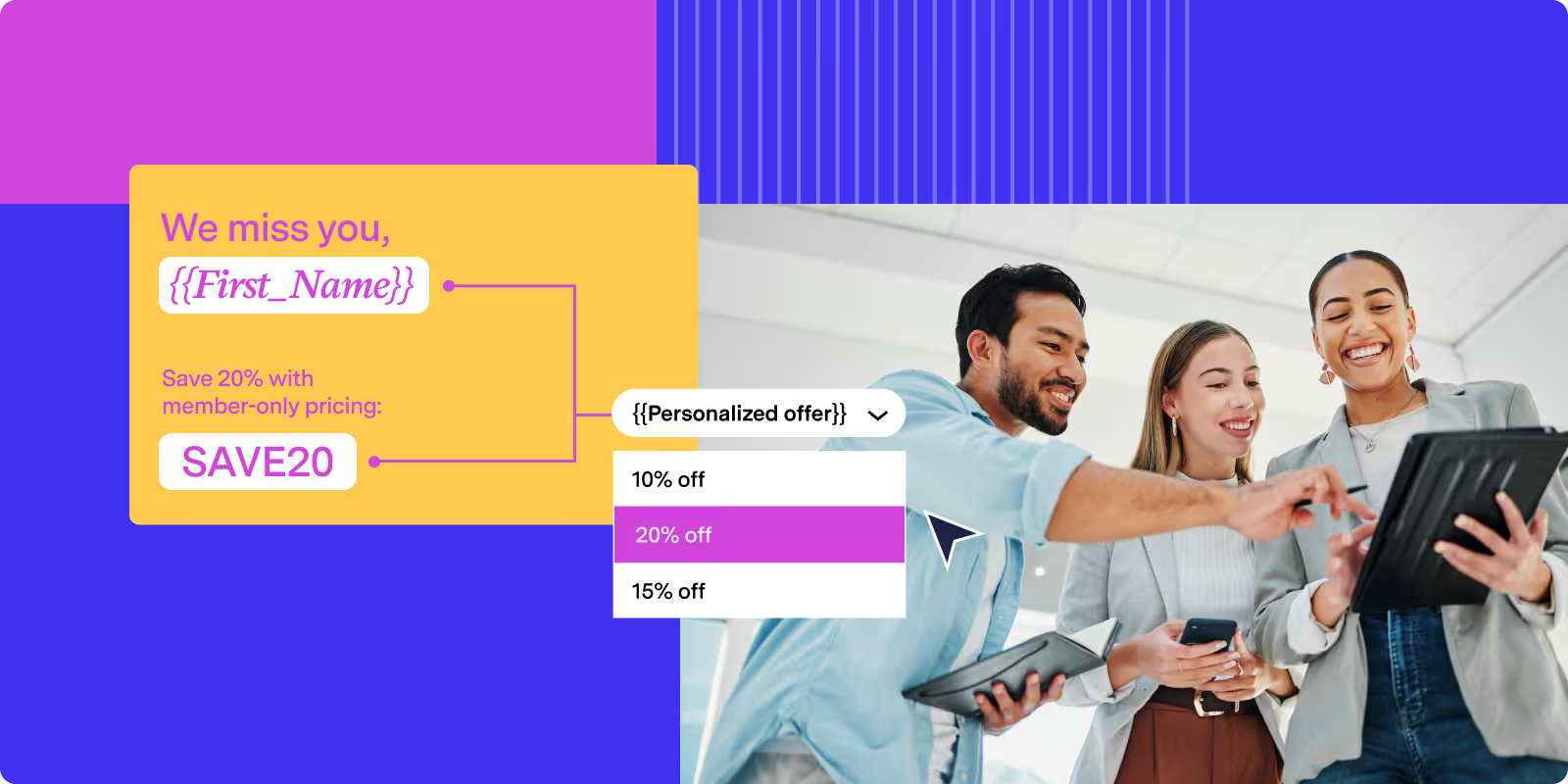
Language like “VIP access” or “member-only pricing” makes the recipient feel chosen. This is especially effective for retention campaigns where you are rewarding existing customers.
Early access messaging
Early access creates urgency without needing a discount:
- Be the first to get access
- Preview before it launches
- Priority access for select customers
This can protect margins because you are offering access, not a lower price.
Personalized exclusive incentives
When you use recipient data to create tailored exclusive offers, response rates often climb because the message feels relevant, not generic.
With Lob, you can personalize direct mail at scale, so each recipient gets an offer that feels 1:1 without manual work.
Visual design elements that signal urgency
Design should reinforce urgency, not bury it.
Color choices for urgency cues
Certain colors naturally draw attention to deadlines and CTAs. Use them strategically in a headline, deadline callout, or CTA area, instead of covering the entire piece.
Typography and layout hierarchy
Make the urgent elements easy to find:
- Use larger type for the deadline
- Bold the CTA
- Add whitespace around the deadline and response instructions
- Place key details in the top third and near the primary CTA
Deadline graphics and visual cues
Simple icons can reinforce time pressure for skimmers:
- Calendar icon next to the deadline
- Clock icon next to “expires”
- A “final days” badge used sparingly
Writing direct mail CTAs that drive immediate action
Urgency only converts when the next step is obvious.
Combine urgency with a clear action
Strong CTA examples:
- Claim your offer by [date]
- Reserve your spot, only [X] available
- Scan to lock in your access today
CTA placement and visibility
- Put the primary CTA where the eye lands early
- Repeat the CTA near the end of the piece
- Keep response instructions short and scannable
Reduce friction in how people respond
Make responding easy:
- QR code
- Personalized URL
- Dedicated phone number or extension
If responding feels complicated, urgency will not save it.
Matching urgency tactics to your campaign goals
Different campaigns need different urgency approaches.
Acquisition campaigns
New prospects typically need a clear deadline paired with a strong reason to try you now. The offer often needs to carry more weight because trust is still being built.
Retention campaigns
Existing customers respond well to loyalty-based urgency. A limited-time reward can feel personal instead of salesy.
Reactivation campaigns
Lapsed customers often respond to “last chance” or “we miss you” messaging, paired with a clear deadline to re-engage.
Event and seasonal promotions
Tying urgency to real-world timing, like holiday cutoffs or enrollment windows, makes deadlines feel credible instead of arbitrary.
Real urgency vs. implied urgency
Real urgency uses a genuine limit, like an actual deadline or a real supply constraint.
Implied urgency uses encouraging language without a hard limit, which can work for evergreen programs where strict deadlines do not make sense.
Real urgency typically drives stronger response, but overusing false urgency damages trust. Use real urgency when the offer truly ends, and implied urgency when you want momentum without making promises you cannot back up.
Testing and measuring urgency in direct mail
You will not know what works best for your audience until you test.
A/B test one variable at a time
Test one urgency element per experiment:
- Deadline length
- Scarcity framing
- CTA language
- Deadline placement in the layout
Track responses by tactic
Use unique codes, PURLs, or QR codes so you can attribute results to the specific urgency approach.
With Lob, you can also use delivery tracking and analytics to connect in-home timing to response behavior.
Optimize and repeat
Take the winning tactic and apply it to the next campaign. Urgency improves fastest when you treat every send as a learning loop.
Turn urgency into conversions with automated direct mail
Automation helps you deliver urgency at the right moment, consistently. With Lob’s platform, you can trigger personalized, urgent direct mail based on behavior like cart abandonment, renewal windows, or key milestones, and keep measurement clean through trackable response paths.
Book a demo to see how we help you build high-converting direct mail with urgency and performance visibility built in.
FAQs about creating urgency in direct mail offers
FAQs

How many urgency elements should you include in one direct mail piece?
Pick one primary urgency driver, like a deadline or scarcity message, then support it with design cues. Too many urgency angles can compete with each other and dilute the message.
Does urgency messaging work differently for B2B vs. B2C direct mail?
Often, yes. B2B audiences tend to respond better to value-based urgency and implied urgency, while B2C audiences often respond strongly to time-limited offers and scarcity. Testing is the best way to confirm what your audience prefers.
How can you create urgency in compliance-sensitive industries like healthcare or finance?
Anchor urgency in real deadlines, like enrollment periods, renewals, or required updates, and avoid aggressive or exaggerated claims. Keep language accurate, specific, and compliant with your organization’s review standards.
How can you create urgency without offering discounts?
Use exclusivity, limited availability, early access, or time-sensitive value-adds like a bonus, an upgrade, or a priority option that expires on a real date.
Answered by:

Sam Melero
.png)
.png)