
The strongest engagement starts with personalization. Year over year our State of Direct Mail study shows personalization and relevancy in direct mail drives conversion. The real challenge for financial services companies is that the same data that makes mail more personalized can also introduce unnecessary compliance risk. So how do you create mail that feels relevant without overstepping?
Personalization doesn’t have to be all or nothing. A practical approach is to build personalization in layers – starting with broad segmentation and narrowing in as data and compliance guardrails allow. Here’s how.
1. Let your data do the heavy lifting
Personalization has evolved. And it goes beyond just putting a name on a mailer; it can be geographic, demographic, behavioral, or timing specific, too. The strongest direct mail connects accurate data across channels – using predictive models to decide who to target, what to say, and when to send.
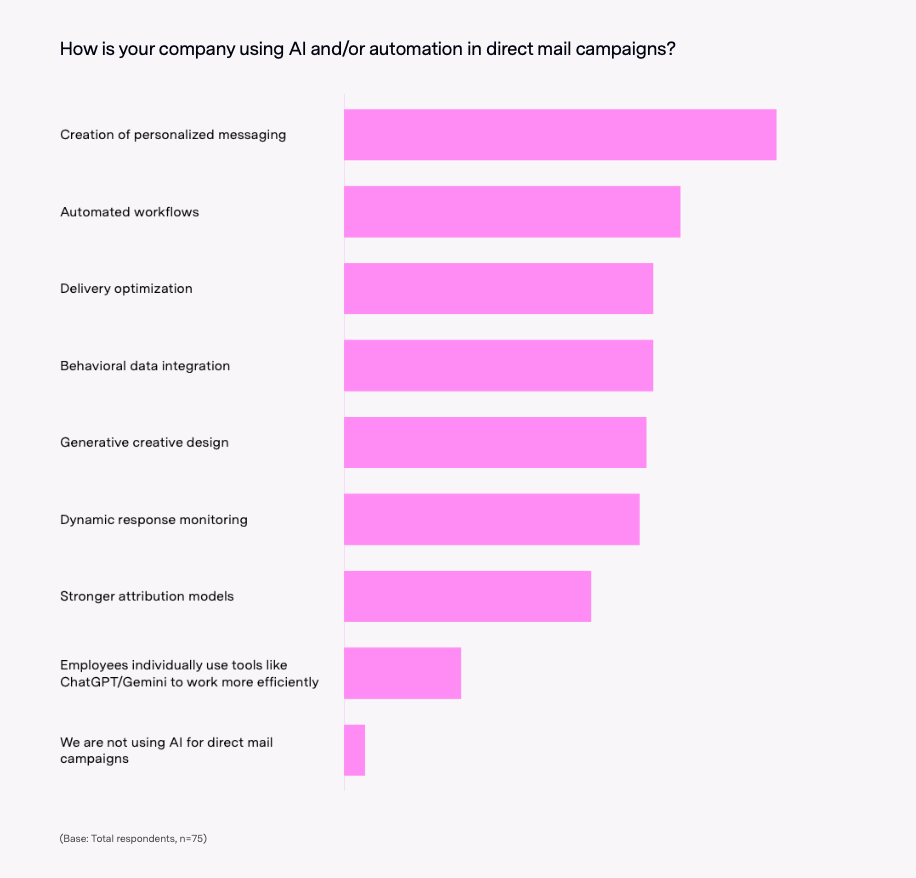
Up to 91% of consumers say they’re more likely to engage with brands that provide offers specific and relevant to them. That’s why the majority of financial services companies rely on data to make direct mail even more effective. Our latest State of Direct Mail Financial Services report shows that 64% of financial services leaders use AI for personalized messaging and 49% use it for automated workflows.
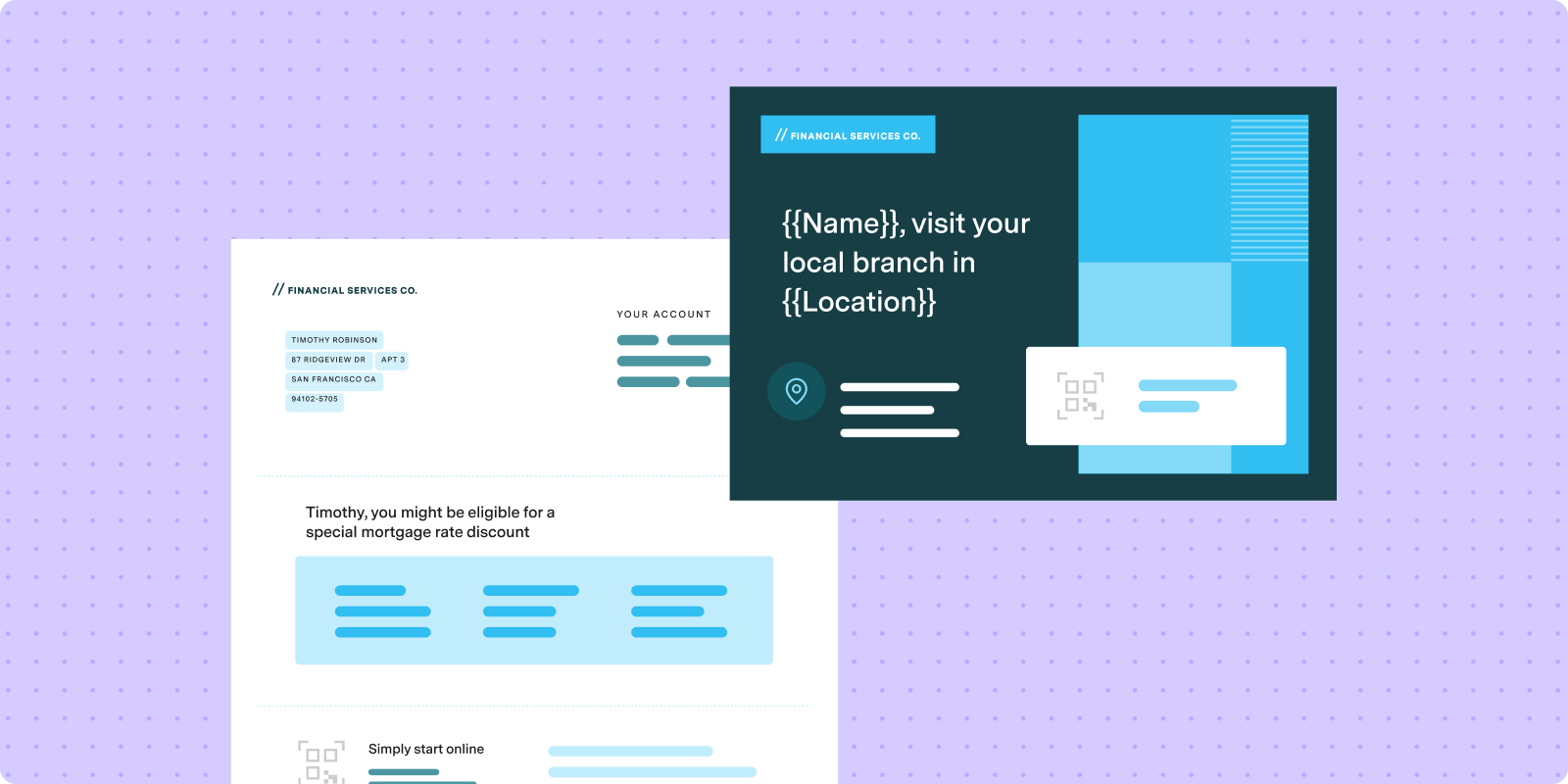
With modern direct mail automation systems that integrate across your stack, it’s easier (and more cost-effective) than ever to personalize mailer elements, including images, text, QR codes, personalized URLs, and promo codes, at scale.
2. Localize your message
Leveraging geography is one of the safest and most effective ways to personalize your direct mail. Instead of targeting individuals, start broader by building relevance at the market level. For example, you can localize your messaging by including things like local mortgage rate trends, regional housing supply, branch proximity, or city-specific messaging. This makes your message feel more tailored to your segment without adding compliance risk.
3. Segment by life stage
Reach people when they’re most receptive based on where they are in the customer lifecycle. Financial needs naturally evolve over time, and campaigns can be tailored to reflect common milestones, changing priorities, or product eligibility. The result is more relevant marketing without relying on one-size-fits-all messaging.
4. Use what you know
First-party, opt-in data is powerful because it comes directly from your customers. Information such as products already owned, stated communication preferences, and previous interactions can help tailor messaging and offers while supporting responsible, privacy-conscious marketing. These insights provide meaningful context for communication that is both relevant and compliant.
5. Verify what’s approved
Event-based triggers and API-driven automation allow mailers to automate direct mail campaigns just like digital – sending timely physical postcards and letters, based on specific customer actions or events. Trigger-based mail is one of the highest-performing direct mail formats for financial services companies. It’s also one of the most regulated. Build compliance into your workflow from the start by bringing in your compliance team early and verifying underlying data, permissions, and trigger criteria before any sends.
Striking the right balance
You don’t have to choose between personalization and compliance.
Compliance isn’t a constraint as much as it is a competitive advantage. It makes you use information with intention. When done right, personalization becomes less about the data points and more about the feeling you bring, the connection you make, and the trust you protect.
Send your financial services mail without tradeoffs. See how Lob’s industry-leading financial services mail solutions personalize, target, and track every send.
FAQs about keeping financial mail fast at scale
FAQs

Answered by:

Sam Melero
.png)