.avif)

Design helps a direct mail piece get noticed. Copy tells the recipient why it matters and what to do next.
Strong direct mail copy is specific, easy to scan, and written around one primary action. It does not need to explain everything about your company. It needs to give the right recipient a compelling reason to keep reading and respond.
Use these direct mail copywriting best practices to build a clear message from the headline through the call to action.
Decide what the mailpiece needs to accomplish
Before writing, answer three questions:
- Who is receiving this?
- What should they understand?
- What should they do next?
The answers should be specific. “Increase awareness” is too broad. “Encourage inactive customers to restart their subscriptions” gives you a defined audience, message, and action.
The campaign goal should also influence the format. A postcard may be enough for one offer and one CTA. A letter or self-mailer gives you more space when the recipient needs context before making a decision. Consider how different direct mail formats affect the amount and structure of your copy.
Know the offer before writing the headline
A strong offer gives the mailpiece a reason to exist. It answers the recipient’s immediate question: “What is in this for me?”
An offer might be:
- A discount or account credit
- Early access to a product
- A free consultation
- A renewal benefit
- A useful resource
- A faster or easier way to complete an action
Define the offer, eligibility requirements, deadline, and next step before writing the rest of the piece. When those details are unclear, the copy usually becomes vague.
You do not always need a financial incentive. Access, convenience, useful information, or recognition can also motivate action when they match the recipient’s needs.
Build the copy around four core elements
Most direct mail pieces need four things.
A benefit-led headline
The headline should communicate why the recipient should care. Avoid leading with your company name or a general announcement unless the brand itself is the reason for opening the piece.
Compare:
Generic: Introducing our new rewards program
Benefit-led: Earn rewards on purchases you already make
The second version gives the recipient a reason to continue reading.
Relevant supporting copy
The body should connect the headline to the recipient’s situation. Explain the offer, remove the most likely objection, and provide enough information to support a decision.
Keep the message centered on the recipient. Replace long descriptions of what your company offers with clear explanations of what the customer can accomplish.
Useful proof or details
Specific information makes the message more credible. Depending on the campaign, this may include:
- Offer terms
- A deadline
- Product or service details
- Eligibility requirements
- A brief customer result
- Account-specific information
- Contact or location details
Only include proof you can substantiate. Regulated claims, performance claims, testimonials, and promotional terms may require additional review before printing.
A direct call to action
Tell the recipient exactly what to do next. “Learn more” may work when the next step is exploratory, but action-oriented campaigns usually benefit from greater specificity.
Examples include:
- Scan to restart your subscription
- Visit your personalized page to review your options
- Call by June 30 to schedule your consultation
- Bring this card to redeem your account credit
The CTA should also explain what happens after the recipient acts.
Make the message easy to scan
Recipients often scan a piece before deciding whether to read it closely. Copy and design should work together to establish a clear path through the message.
The headline, offer, supporting details, and CTA should not compete for equal attention. Use short paragraphs, descriptive subheadings, bullets, and white space to make the priority clear.
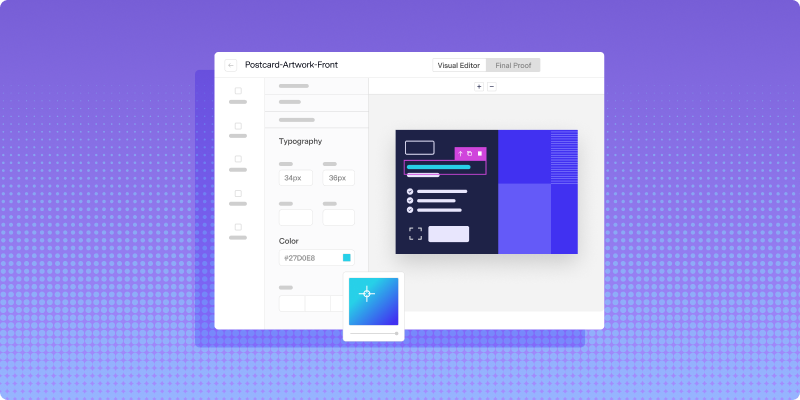
Current direct mail design practices can help your team coordinate the visual hierarchy with the copy. If the design emphasizes a secondary detail while hiding the offer, even strong writing will struggle.
Use a copywriting formula when you need structure
Copywriting formulas can help organize a message, but they should not make every mailpiece sound the same. Choose a structure that fits the campaign.
Problem, agitate, solve
This formula identifies a problem, explains its impact, and presents the solution.
- Problem: Managing unexpected home repairs can be stressful.
- Agitate: One unplanned repair can disrupt your schedule and budget.
- Solve: Our maintenance plan helps you prepare with scheduled service and predictable costs.
Use this structure carefully. The goal is to show that you understand the problem, not exaggerate fear.
Attention, interest, desire, action
AIDA guides the recipient from an initial hook to a specific response:
- Attention: Lead with the primary benefit.
- Interest: Explain why the offer is relevant.
- Desire: Show the value of acting.
- Action: Provide the next step.
This formula works well when the recipient needs some persuasion before responding.
Before, after, bridge
This structure contrasts the current situation with a better outcome, then shows how to get there.
- Before: Your team spends hours preparing recurring customer notices.
- After: Those notices are created and sent automatically.
- Bridge: Connect your customer data to an automated mail workflow.
It is a useful option when the improvement is easy to understand and demonstrate.
Match the copy to the recipient’s journey
The same message should not go to every recipient. A new customer, a loyal customer, and someone who has not purchased in six months have different relationships with your brand.
Adjust the copy based on information such as:
- Lifecycle stage
- Previous purchases
- Product usage
- Loyalty status
- Geographic location
- Account or renewal date
- Recent customer behavior
For example, a current customer should not receive copy that introduces the brand as if they have never purchased. A recipient in a warm climate should not receive seasonal language written for winter weather.
Data-driven direct mail personalization can change headlines, offers, images, account information, and CTAs without requiring a separate template for every recipient.
Personalization should make the message more useful. Adding a first name does not help if the offer remains irrelevant.
Reduce friction between the message and the response
The copy should make responding feel straightforward.
If you use a QR code, explain what the recipient will see after scanning. If you include a URL, keep it short and readable. If the action happens by phone, make the number easy to find and clarify when support is available.
A personalized URL can take each recipient to a relevant page rather than a general website. The landing page should continue the same message, offer, and visual identity established by the mailpiece.
Avoid making the recipient search for the promotion or re-enter information you already have.
Keep the mailpiece and digital experience consistent
Direct mail is often one step in a broader campaign. The message may begin in the mailbox and continue through a landing page, email, text, advertisement, or conversation with a sales representative.
Use consistent language across those touchpoints. If the mailpiece promises a personalized renewal offer, the landing page should display that offer immediately. If an expiration date appears on the postcard, the same date should appear online.
Teams can also orchestrate direct mail with email and digital channels so each message adds something useful instead of repeating the same copy.
Edit the copy before production
Direct mail cannot be corrected after it enters production. Give the final review more attention than you would a digital message that can be updated later.
Before approving the piece:
- Read the copy aloud to catch awkward phrasing
- Remove jargon and unnecessary adjectives
- Confirm the offer and deadline
- Check legal disclaimers and eligibility requirements
- Preview short and long personalized values
- Test every URL, QR code, and phone number
- Confirm that the CTA matches the landing page
- Review the final rendered proof, not only the source document
Ask someone unfamiliar with the campaign to review the piece. If they cannot explain the offer and next step after a quick scan, revise it.
Put direct mail copy into action with Lob
Lob helps teams turn customer data and dynamic templates into personalized postcards, letters, and self-mailers. Campaigns can be triggered from existing systems, while production and postal events help teams monitor each mailpiece and coordinate follow-up.
Explore the Lob direct mail platform or book a demo to see how your team can create and send more relevant direct mail.
Frequently asked questions about direct mail copywriting
FAQs

What is direct mail copywriting?
Direct mail copywriting is the process of writing headlines, offers, supporting messages, and calls to action for physical mail campaigns. The goal is to help a specific recipient understand the message and take the intended next step.
How long should direct mail copy be?
There is no universal word count. Use enough copy to explain the offer, answer the recipient’s main question, and provide the next step. A simple postcard may need only a headline and a few lines, while a complex service or high-consideration decision may require a letter.
What makes a strong direct mail headline?
A strong headline communicates a relevant benefit, outcome, problem, or offer. It should be understandable without requiring the recipient to read the rest of the piece first.
Should a direct mail piece have more than one CTA?
Most pieces benefit from one primary action. You can provide multiple ways to complete that action, such as a QR code, URL, and phone number, without introducing competing CTAs.
How should direct mail copy be personalized?
Use customer data that changes the usefulness of the message. Purchase history, lifecycle stage, location, account status, and renewal timing can shape the headline, offer, supporting copy, and CTA.
Answered by: