Direct mail can capture attention in ways crowded digital channels often cannot. But because every campaign requires an upfront investment in printing and postage, an underperforming send can quickly become expensive.
When direct mail fails to generate leads or conversions, the channel itself usually is not the problem. The issue often comes down to the creative, call to action, audience targeting, offer, or measurement strategy.
Here are five common reasons your direct mail marketing might not be converting—and how to fix them.
1. Your mailpiece doesn’t stand out
Your mailpiece has only a few seconds to earn attention. If it looks like every other envelope or postcard in the mailbox, recipients may overlook it before reading the message.
Consider what will make the piece noticeably different:
- Bold typography and recognizable branding
- An oversized postcard or distinctive format
- Imagery connected to the recipient’s interests or location
- Personalized content instead of generic messaging
- A clear headline that immediately communicates value
Standing out does not require adding more design elements. A simple mailpiece with one strong visual and a clear message can be more effective than a crowded design.
2. Your call to action isn’t clear
Every mailpiece should make the next step obvious.
When a postcard gives equal attention to a QR code, website, phone number, social account, and multiple offers, the recipient has to decide what to do. That additional friction makes it easier to do nothing.
Choose one primary call to action that supports the campaign goal. It might be:
- Scanning a QR code
- Visiting a personalized landing page
- Redeeming a promotional code
- Scheduling an appointment
- Calling a dedicated phone number
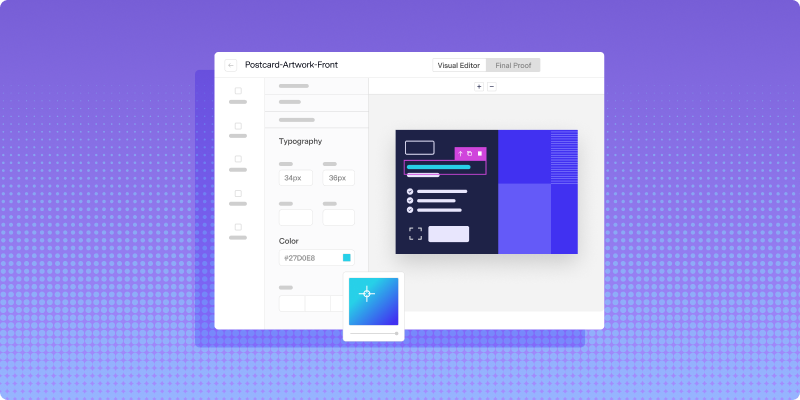
Make the CTA easy to find and repeat it where appropriate. Lob’s Create + Personalize tools support branded QR codes, personalized URLs, and coupon codes that connect physical mail with trackable digital actions.
3. Your call to action doesn’t match your campaign strategy
A clear CTA can still underperform when it does not support the campaign’s actual objective.
For example, asking recipients to follow your company on social media might increase awareness, but it will not necessarily generate qualified leads. A campaign intended to drive demos should direct recipients to a focused booking page. A reactivation campaign might use a personalized discount or renewal offer.
Before sending the campaign, define the desired outcome and work backward:
- What should the recipient do?
- Where should that action take place?
- How will the action be tracked?
- Does the offer provide enough motivation?
Your creative, copy, offer, and CTA should all point toward the same outcome.
4. Your copy isn’t relevant to the recipient
Strong design might earn attention, but the copy gives recipients a reason to keep reading.
Generic messaging often underperforms because it asks every recipient to care about the same problem. A first-time prospect, loyal customer, and lapsed customer are at different stages of the customer journey and should not receive identical messages.
Use customer and campaign data to personalize elements such as:
- Headlines
- Product recommendations
- Local information
- Images
- Offers
- Landing pages
- Customer milestones
Personalization should go beyond adding someone’s name. Behavioral data, purchase history, location, preferences, and lifecycle stage can help determine which message and offer each recipient receives.
Lob lets teams use merge variables, conditional logic, customer data, and dynamic templates to personalize direct mail at scale.
5. Your offer doesn’t provide a reason to act
A recipient can understand your message and still decide that responding is not worthwhile.
The strongest offer depends on the audience. A new prospect might value a free consultation or introductory incentive, while an existing customer may respond better to an upgrade, loyalty reward, or personalized recommendation.
Effective offers are usually:
- Specific: Clearly explain what the recipient receives.
- Relevant: Connect the offer to a real need or behavior.
- Easy to redeem: Minimize the steps required to respond.
- Time-sensitive: Provide a legitimate reason to act soon.
Test different offers across audience segments instead of assuming the same incentive will work for everyone.
Keep testing after the campaign launches
Direct mail optimization should continue after the first send. Track response and conversion rates by audience, creative version, offer, format, and in-home date.
Unique QR codes, personalized URLs, promotional codes, dedicated phone numbers, and campaign-specific landing pages can help connect offline engagement to digital conversions.
Delivery visibility also matters. If a mailpiece arrives after an offer expires or outside the intended conversion window, even strong creative may underperform. Lob’s Production + Tracking tools provide visibility into individual mailpieces and campaign deliverability, helping teams understand how production and delivery timing affect performance.
Use those insights to refine the next campaign. A small change to the audience, headline, offer, timing, or CTA can produce a very different result.
Improve direct mail conversions with Lob
Lob helps teams create, personalize, route, produce, and track direct mail from one platform.
Customer data and dynamic templates make each send more relevant, while Postal IQ identifies efficient USPS entry points to help keep delivery timing and postal costs on track. Lob’s nationwide Print Delivery Network then handles production and provides visibility as mail moves toward its destination.
Book a demo to see how Lob can help you create more relevant, measurable, and scalable direct mail campaigns.
Frequently asked questions about direct mail conversion
FAQs

Is direct mail marketing still effective?
Yes. Direct mail gives brands a physical way to reach customers without competing for attention in an email inbox or social media feed. Its effectiveness depends on reaching the right audience with relevant messaging, a strong offer, and a clear next step.
How can you measure direct mail conversions?
Use trackable campaign elements such as unique QR codes, personalized URLs, promotional codes, dedicated phone numbers, or campaign-specific landing pages. Connect response data with delivery events and CRM activity to understand which campaigns and audience segments are producing conversions.
How can you improve a direct mail response rate?
Start by refining the audience, offer, copy, design, timing, and call to action. Test one variable at a time so you can identify which changes improve performance and apply those findings to future campaigns.
Answered by:

Sam Melero