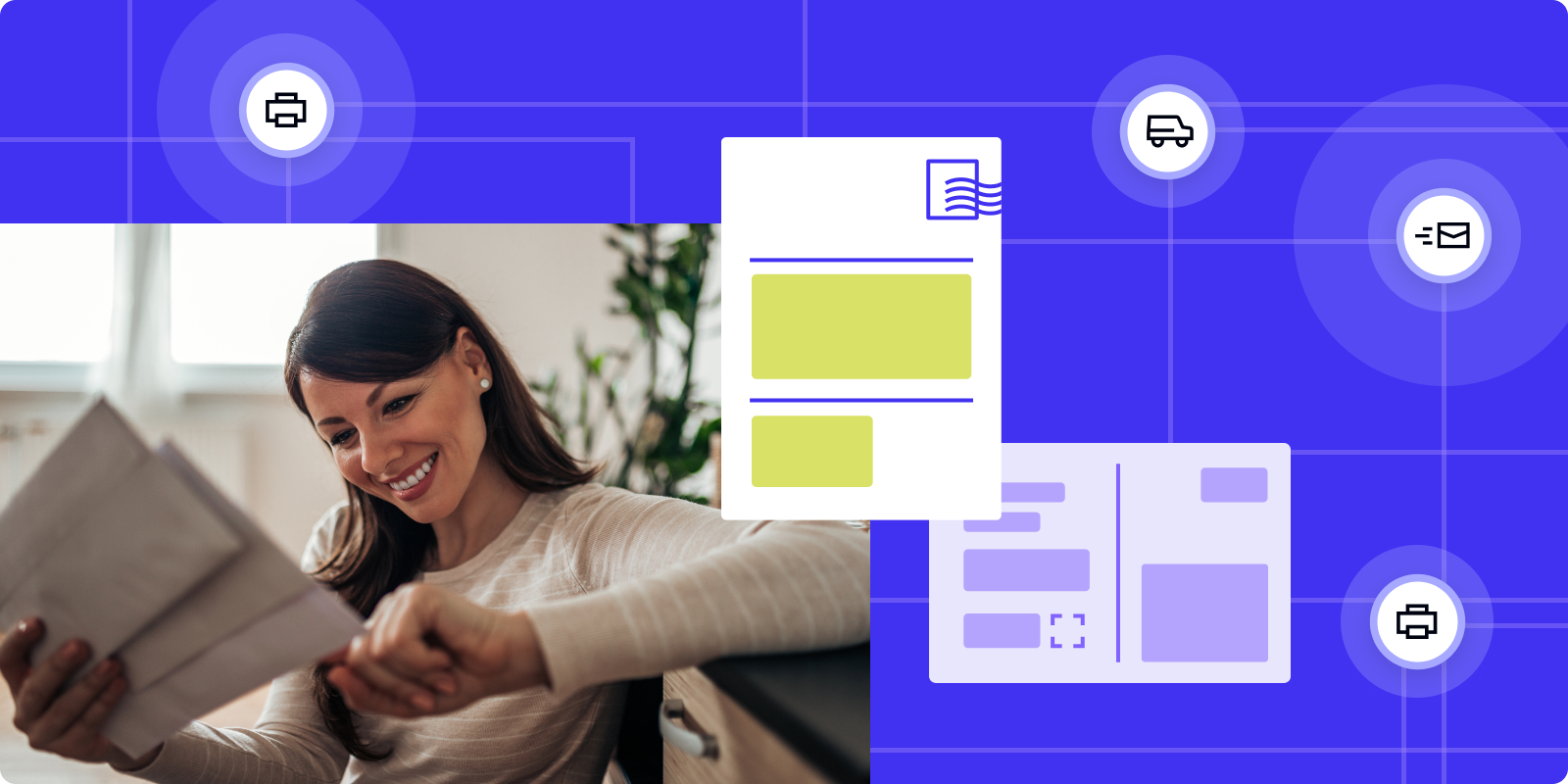

SaaS teams use direct mail to reach important prospects and customers when digital outreach is not getting a response. It can support acquisition, product activation, pipeline acceleration, retention, and account expansion.
The channel is especially useful when the potential value of the action justifies a physical touchpoint. Instead of mailing every contact, successful SaaS programs focus on specific accounts, behaviors, and lifecycle moments.
Why direct mail fits SaaS marketing
SaaS buying journeys often involve long sales cycles, multiple stakeholders, and repeated digital communication. A well-timed postcard, letter, or self-mailer gives marketing and sales teams another way to reinforce an important message.
The strongest programs connect mail to account activity or customer behavior. They also coordinate it with email, sales outreach, and in-product communication. This makes direct mail part of the go-to-market strategy instead of a disconnected campaign.
For B2B teams, effective direct mail lead generation begins with precise targeting, relevant messaging, and a clear reason for the recipient to respond.
12 SaaS direct mail use cases
1. Reach priority ABM accounts
Direct mail can help introduce your company to decision-makers at high-value accounts that have not responded to digital outreach.
Personalize the message around the company, industry, or business problem. The goal is to create a relevant reason for the sales team to follow up, not to send an expensive item without context.
2. Support sales meeting outreach
A postcard or letter can make a cold prospect more familiar with your company before a call or email arrives.
Coordinate the mailpiece with the SDR’s outreach sequence. The representative should know what was sent, which message the prospect received, and when postal tracking events suggest the piece is approaching its destination.
3. Re-engage stalled opportunities
Opportunities sometimes lose momentum after a demo, proposal, or promising conversation. Direct mail can bring the account’s attention back to the original problem and provide a simple way to restart the discussion.
Keep the message specific to the deal stage. A late-stage opportunity needs a different message from a prospect who only downloaded a piece of content.
4. Convert free trials
Trial users may create an account without reaching the point where they understand the product’s value.
A mailpiece can remind selected users that their trial is active and direct them toward one useful next step. Prioritize users who have demonstrated meaningful intent or whose potential account value justifies the cost of mailing.
5. Activate product-led signups
Product-led companies can trigger mail when a user stalls during onboarding, skips an important setup step, or stops logging in.
The message should focus on completing one action, not explaining the entire product. Automated direct mail for product-led SaaS works best when the trigger reflects real product behavior.
6. Promote high-value events
Physical invitations can support executive roundtables, customer conferences, field events, and other programs where attendee quality matters more than raw registration volume.
Match the format to the event. A focused postcard may be enough for a webinar, while a personalized letter or self-mailer may better suit an invitation-only executive event.
7. Welcome new customers
A welcome letter or onboarding mailer can reinforce the customer’s decision and give them a clear starting point.
Include only what helps the customer move forward, such as a short setup checklist, support information, or the next onboarding milestone. Avoid turning the welcome experience into another sales pitch.
8. Re-engage inactive users
Users who have stopped logging in may no longer see in-product prompts, and they may also be ignoring lifecycle emails.
Direct mail gives you another way to reach them. Reference a useful feature, unfinished workflow, or support option, then provide a direct path back into the product.
9. Expand existing accounts
Product usage can reveal when a customer might benefit from another feature, plan, or service.
Use that context to create a relevant expansion message. A customer approaching a usage limit should not receive the same offer as one exploring a specific premium feature. SaaS teams can coordinate these signals through ABM and lifecycle direct mail campaigns.
10. Support at-risk renewals
Declining usage, unresolved support issues, or missed account meetings can signal renewal risk before the customer cancels.
A letter from the customer success team or an account leader can acknowledge the relationship and offer a specific next step. Send early enough for the customer to respond before the renewal decision is final.
11. Win back former customers
Former customers already understand your product, but the reason they left needs to shape the campaign.
A useful win-back message might introduce a relevant improvement, address a former limitation, or invite the customer to reconsider the product. Avoid generic “we miss you” messaging that ignores why the customer churned.
12. Recognize advocates and referral partners
A physical thank-you can recognize customers who submit referrals, participate in case studies, provide product feedback, or advocate for your company.
Keep the message sincere and tied to the contribution. Recognition does not need to include an expensive gift to feel meaningful.
Match the use case to your SaaS motion
Different SaaS business models should prioritize different direct mail programs:
- Product-led growth: Focus on trial conversion, activation, feature adoption, re-engagement, and self-service upgrades.
- Sales-led or ABM: Focus on priority-account outreach, meeting generation, stalled opportunities, multi-stakeholder deals, and account expansion.
- Hybrid: Combine product behavior with sales and account data to determine who receives mail and when.
Start with one use case where the audience, trigger, and desired outcome are already clear. Expanding into all 12 at once makes it harder to determine what is working.
Connect mail to product and CRM data
Direct mail becomes more relevant when the systems that manage your customer journey can initiate it.
Useful triggers may include:
- A deal advancing to a new pipeline stage
- A trial approaching expiration
- An onboarding step remaining incomplete
- Product usage declining
- A customer approaching renewal
- An account reaching an expansion threshold
- A former customer becoming eligible for win-back outreach
Connecting product signals and CRM data lets teams send based on meaningful activity instead of relying only on scheduled batches.
A reliable workflow should also include eligibility checks. Confirm that the recipient still qualifies, has a valid mailing address, has not completed the intended action, and has not recently received the same mailpiece.
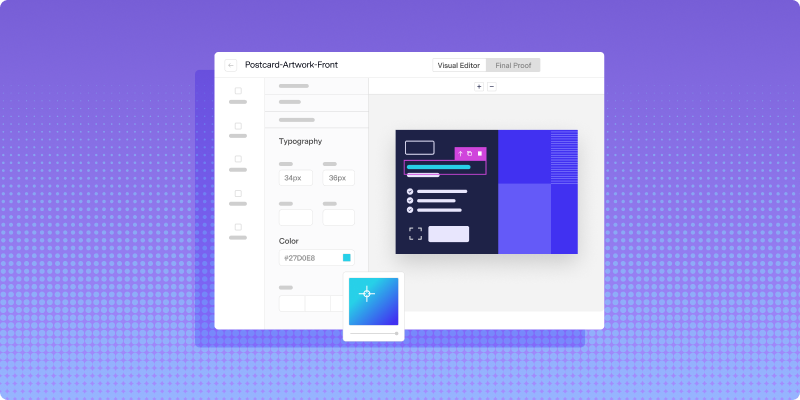
Teams can use native integrations, APIs, webhooks, or automation tools to build these connections. A CRM-triggered direct mail workflow can generate and send the appropriate piece when a qualifying event occurs without requiring a new list export each time.
Measure SaaS direct mail beyond delivery
Production and postal tracking help you understand how a mailpiece moves through the mailstream. They do not prove that the recipient personally received, opened, or acted on it.
Measure campaign performance using signals tied to the desired outcome:
- QR code scans
- Personalized URL visits
- Demo or meeting requests
- Trial conversions
- Product logins or feature adoption
- Opportunity progression
- Renewals and upgrades
- Win-back conversions
Log mail activity in your CRM so you can compare it with later customer and opportunity events. When possible, use a holdout group to determine whether mailed accounts behaved differently from similar accounts that did not receive mail.
Plan the measurement approach before the creative enters production. Response codes, URLs, and campaign identifiers are much harder to add after the mailpiece has already been approved.
Build automated SaaS direct mail campaigns with Lob
Running these programs manually creates repeated list exports, file handoffs, and vendor coordination. Automated direct mail connects customer data, creative, production, and available tracking events in one workflow.
With Lob’s direct mail platform, SaaS teams can trigger personalized mail from existing systems, verify addresses before production, and connect mail activity with the rest of the customer journey.
Book a demo to see how Lob can support direct mail across your SaaS acquisition and customer lifecycle programs.
Frequently asked questions about SaaS direct mail use cases
FAQs

Which SaaS direct mail use case should you start with?
Start with a high-value moment where digital outreach is underperforming and the desired action is easy to measure. Stalled opportunities, at-risk renewals, and inactive high-intent users are often practical starting points.
What direct mail format works best for SaaS companies?
Postcards work well for concise reminders, trial outreach, and product re-engagement. Letters are better when the message needs more context or a personal tone. Self-mailers can support events, onboarding, or product education that requires additional space.
Can SaaS direct mail be triggered automatically?
Yes. Product events, CRM updates, renewal dates, usage changes, and lifecycle milestones can initiate direct mail through integrations, APIs, webhooks, or automated workflows.
How should SaaS teams measure direct mail?
Measure the outcome connected to the campaign goal. That may be a meeting, trial conversion, product login, upgrade, renewal, or reactivation. Use QR codes, personalized URLs, CRM activity, and holdout testing to build a more complete performance view.
How do SaaS companies reduce undeliverable mail?
Use reliable customer or prospect data and verify addresses before production. Automated eligibility and suppression rules can also stop sends when an address is incomplete, a contact has converted, or the person no longer qualifies for the campaign.
Answered by:

Sam Melero
.png)