
B2B lead generation through direct mail is having a real moment again. While inboxes fill up with lookalike emails, a well-crafted mail piece lands on a decision-maker’s desk with far less competition and a much longer shelf life.
The difference between a campaign that generates a qualified pipeline and one that goes straight to recycling comes down to who you target, how you personalize, when you send, and how you connect mail with your digital channels.
Why direct mail still works for B2B lead generation
Direct mail cuts through digital noise. Decision-makers are used to deleting cold outreach in bulk, but a physical mail piece that feels tailored and relevant is harder to ignore and easier to share with a buying committee.
It also plays well with B2B buying behavior. A mailer can sit on a desk as teams compare vendors, reinforce the work your digital channels are doing, and reach people who are difficult to engage by email alone.
Build a high quality target list first
Your list is the single biggest driver of lead quality. Before you design anything, get clear on exactly who should receive it.
1. Define your ideal customer profile
Start with your Ideal Customer Profile. Look at your best customers and identify the traits they share, such as industry, company size, tech stack, and key use cases. That ICP becomes the filter for every list and campaign decision.
2. Enrich, validate, and segment
Use enrichment to fill in missing details like titles and mailing addresses, and validate addresses so you are not wasting budget on undeliverable mail. Then segment by things like industry, size, or buying stage so your message feels specific, not generic.
Begin with tests of a few hundred to around a thousand pieces per segment. This lets you see which audiences and messages resonate before you commit larger volumes.
Craft messaging and offers that drive action
B2B buyers are skeptical. Your mail piece has only a few seconds to show that you understand their world and can solve a real problem.
Lead with outcomes instead of features. Focus on the business impact a prospect can expect, not only what your product does. Use one clear call to action that matches your goal and avoid giving three or four options that create friction.
Social proof helps your message land. Short customer quotes, recognizable logos, and simple outcome statements make it easier for a buying committee to trust you. QR codes or personalized URLs then provide a smooth path from the mail piece to a landing page, demo request, or calendar.
Personalize at scale with data-driven workflows
Generic B2B mail looks like junk. Personalization does not need to be flashy, but it should show that you know who you are talking to.
Variable data printing lets you swap headlines, copy, images, and offers based on fields in your data. Healthcare contacts can see healthcare examples, while retail leaders see retail visuals and use cases, all in the same campaign.
You can also trigger sends based on intent signals such as pricing page visits, webinar attendance, or content downloads. Matching offers to buyer stage makes this even stronger, for example education for early stage prospects and demos or pilots for late stage buyers.
Connect direct mail to your CRM and MAP
Direct mail is most powerful when it is part of a coordinated program, not a standalone blast.
Syncing your mail platform with your CRM or marketing automation tool means audiences and suppression lists stay current. New customers move out of prospecting campaigns automatically, and opt-outs do not receive future mail.
You can also coordinate multichannel cadences. A simple pattern might be an introductory email, a LinkedIn touch, a direct mail piece, then a follow-up call or email that references the mailer. Delivery events that feed back into your CRM let sales reach out shortly after delivery and help you report on performance. For more detail on what to measure, see direct mail KPI essentials: what to track for maximum ROI.
Automate production so you can move fast
Speed matters in B2B. When a buying window opens, you want your brand on the table right away, not weeks later.
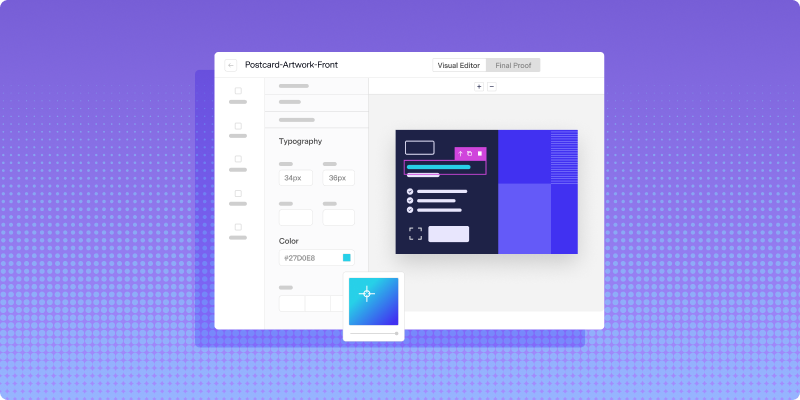
Reusable templates keep your brand consistent and cut design time. Your team can swap copy and images without rebuilding layouts, and approve proofs online instead of waiting on physical samples.
A distributed print network produces mail closer to your recipients, which shortens delivery timelines and improves consistency. Lob’s Print Delivery Network is built for this, with audited facilities and shared quality standards.
Managing separate designers, printers, and mail houses adds time and risk. A single platform removes much of that hidden operational work and cost. For a deeper look at those tradeoffs, see what are the hidden costs of manual mail.
Track every piece and prove ROI
Modern direct mail gives you the data you need to earn and protect your budget.
USPS scan data shows when pieces enter the mail stream and when they are delivered. That helps you time sales outreach while the mail is still fresh and diagnose delays if they occur.
Matchback analysis connects recipients to downstream actions such as form fills, demo requests, opportunities, and closed-won deals. Layering in QR codes, PURLs, and campaign-specific promo codes makes attribution even clearer and gives you a direct line from mail to revenue.
Keep data secure and compliant
B2B mail often involves sensitive information. You need partners and processes that protect that data and fit your compliance needs.
Look for providers with strong security certifications, encryption in transit and at rest, clear data retention policies, role-based access, and audit trails. This protects your customers and your reputation and is often a key requirement in regulated industries.
Five B2B direct mail plays you can adapt
You do not have to start from a blank page. These patterns show up again and again in successful programs.
- Account-based outreach
Highly personalized packages for a short list of named accounts, coordinated with sales outreach once delivery is confirmed. - Event follow-up kits
Fast follow-up after trade shows or field events with a recap, relevant content, and a clear next step. - Re-engagement for stalled opportunities
A straightforward mail piece that acknowledges a pause in communication and offers an easy way to restart the conversation. - Customer expansion and upsell
Mail for existing customers that highlights complementary products or services based on what they already use. - Renewal reminder series
Simple, well-timed reminders leading up to contract renewals, with a clear call to action and a path to talk with an account manager.
Launch your B2B direct mail program with Lob
Direct mail can be one of your most effective B2B lead generation channels when targeting, personalization, and timing all work together. The challenge is running these programs at scale without adding a heavy operational load to your team.
Lob automates the entire workflow so you can:
- Trigger personalized mail directly from your CRM or MAP
- Keep audiences and suppressions in sync
- Track delivery and performance in real time
- Rely on an enterprise-ready Print Delivery Network and strong security
If you are ready to make direct mail a predictable part of your B2B pipeline, book a demo. We will show you how leading companies use Lob to launch, track, and optimize high-performing B2B direct mail programs.
FAQs about B2B direct mail lead generation
FAQs

How long does it take for B2B direct mail to generate leads?
Most campaigns begin to surface responses within the first couple of weeks after delivery, with opportunities building over the following weeks as buying committees do their research. Because B2B cycles are longer, it is helpful to review impact over a full quarter.
What response rate should I expect?
Performance varies by list quality, offer, creative, and timing. In general, well-targeted mail to engaged audiences compares favorably to cold email when you look at qualified conversations and pipeline created, not only raw response.
How big should my first test be?
A first test of a few hundred to around a thousand pieces per key segment is usually enough to see directional results without overcommitting budget. You can then scale what works and refine targeting and messaging.
Should direct mail replace cold email in my B2B program?
Direct mail works best alongside email, sales outreach, and digital channels. Many teams use mail to open doors with hard-to-reach accounts, then rely on coordinated email and sales follow-up to nurture those leads through the rest of the buying journey.
Answered by:

Sam Melero
.png)