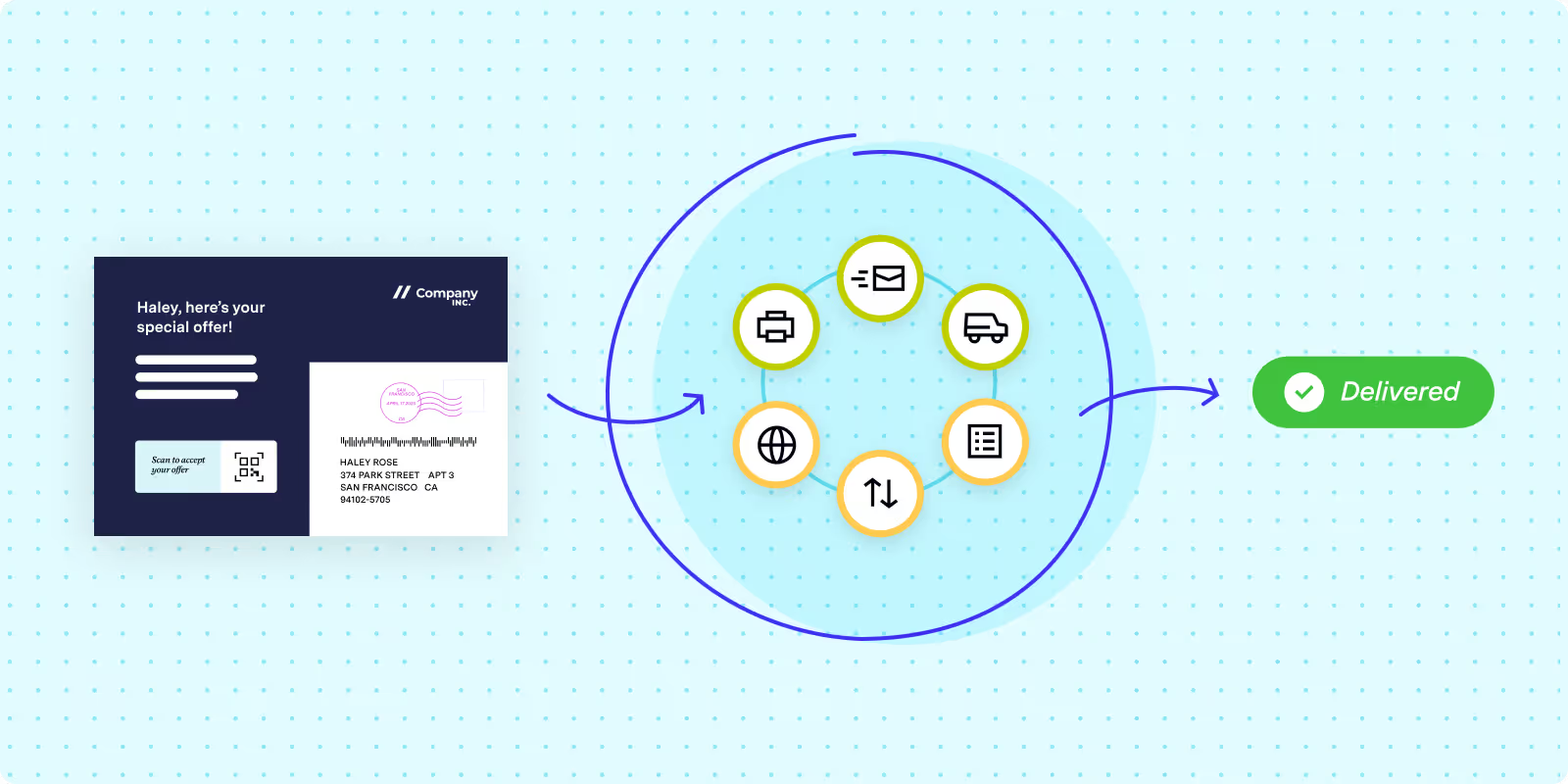

The biggest challenge in direct mail isn’t creative or strategy, it’s logistics. Our 2026 State of Direct Mail report shows that broken logistics are breaking budgets. And surprise costs are often tied to operational silos. Marketing and operations teams without a direct mail program owner are more likely to face delays, surprise costs, and planning disruptions.
To better understand what’s driving these challenges, we talked to our in-house experts to share what they’re seeing firsthand.
“What to send, where to produce it, how to route it, in-home delivery – all those things are really an end-to-end value chain problem, not a creative problem,” said Brent Hagan, Chief Supply Chain Officer at Lob.
Feeling the strain? You’re not alone. Direct mail logistics challenges affect every business in every industry. Nearly 90% of leaders say printing, shipping, and delivery are major blind spots.
“There are a lot of steps involved in planning and executing a direct mail campaign,” said Lawrence Woo, Strategic Account Executive at Lob. “Without proper coordination, it can get messy quickly.”
Who should own direct mail logistics?
Direct mail logistics doesn’t have to fall through the cracks. It all starts with full visibility and clear leadership accountability and responsibility.
A logistics owner oversees all critical elements of the campaign, including data quality, postal entry, vendor management, tracking, and delivery. Without one, responsibility becomes fragmented, friction builds with production, and each handoff becomes a campaign risk.
But who should be responsible? It’s not one-size-fits-all – your ideal logistics organization structure depends on the use case and send volume. More mature vendors usually have a dedicated direct mail team. In many organizations, direct mail logistics falls under marketing or operations. Some companies take a shared ownership approach. No matter your organizational structure, a direct mail logistics partner can work in the background to manage sends, track results, and bring greater ROI.
Key roles and responsibilities for direct mail logistics
Every high-performing logistics team understands that even small workflow gaps derail a strong campaign. Sometimes the creative doesn’t print properly or seasonal mail volume can delay delivery. Errors happen. Dedicated logistics oversight enables teams to catch and address these issues before they impact campaign performance.
- Creative team
Whether in-house or an agency, the creative team designs and develops the mailings. - Printer relationship manager
This role manages everything downstream, including timelines, addresses, creative handoff, proofing, pricing, and invoicing. - Delivery partners
Vendors like USPS handle the transportation and physical distribution of the direct mail campaign.
“I think the best-functioning relationships are the ones where the production partner has real-time operational control, but it’s built through marketer-manufacturer collaboration on the outcomes the marketer wants to generate,” said Hagan.
How to measure direct mail logistics
When goal setting for teams, marketing and operational leaders need clear key performance indicators tied to both operational performance and business outcomes. Weekly KPI reviews can help you identify real-time trends, make course corrections, and improve the effectiveness of future campaigns.
Connecting this data with technology builds logistics intelligence – automating tasks, providing actionable insights, and making it easier to scale campaigns.
Built to deliver, not just send
With the right partnerships, direct mail logistics becomes a strategic advantage instead of an afterthought. Technologies like Lob’s APIs, Print Delivery Network, and Postal IQ routing intelligence bring built-in accountability, predictability, and optimization to every stage of direct mail operation. Learn more here.
FAQs About Direct Mail Ownership
FAQs

What is an accountability chart vs. organizational chart?
An accountability chart clarifies ownership and responsibilities, while an organizational chart outlines job titles and reporting. This distinction proactively protects timelines, budgets, and performance.
What does line of authority mean in direct mail operations?
The line of authority in organizational structure determines who has final decision-making power over campaign data, production, vendors, timing, and more.
Should direct mail program ownership sit in marketing or operations?
Either. Direct mail ownership depends on a number of factors, including size of the organization, volume of mail, and type of mail (marketing vs. transactional).
How do you maintain accountability when using multiple print vendors?
A single logistics owner can better coordinate vendors, monitor performance, and set realistic timelines to mitigate campaign disruptions.
What qualifications should a direct mail program owner have?
Your program owner should have a deep understanding of the nuances involved in direct mail campaign management. Partners like Lob can provide print production, postal logistics, budgeting, and measurement support without replacing internal accountability.
Answered by:

Sam Melero