
In-home timing should not feel like a guessing game. But for many mail teams, direct mail still gets planned around broad delivery ranges, loose drop dates, and the hope that pieces arrive before a promotion, appointment window, renewal deadline, or event.
Routing data gives teams a more reliable way to plan. When you know where a piece is printed, where it enters the postal network, how similar mail has moved in the past, and when delivery events occur, you can make smarter decisions about timing before a campaign goes out.
This guide breaks down the routing factors that affect in-home timing most, how delivery data helps teams plan more accurate windows, and where marketers often leave time on the table.
What is routing data in direct mail?
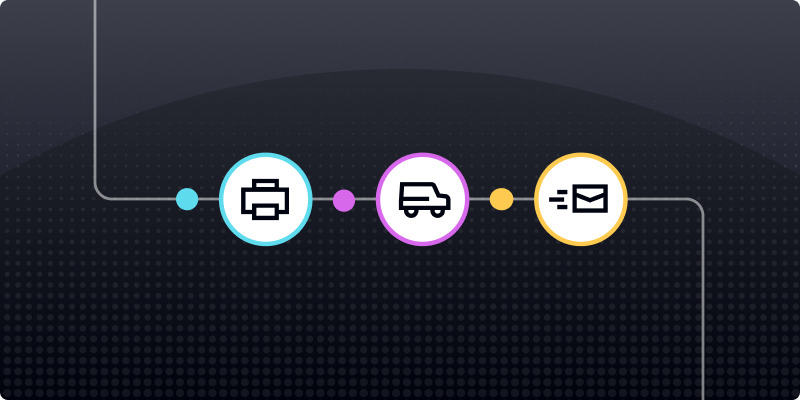
Routing data is the information trail that tracks a mailpiece from production through delivery. It includes print location, USPS entry facility, service class, address quality, barcode data, and scan events along the way.
Mail teams can use this data to improve in-home timing by optimizing where mail is printed, which USPS entry points it uses, and how delivery events are tracked. Instead of relying on broad delivery estimates, teams can use routing patterns to plan drop dates, coordinate digital touchpoints, and improve campaign timing.
Without routing data, you are working from assumptions. With it, you can make direct mail timing more predictable.
Which routing factors affect in-home timing most?
Teams often focus first on mail class when trying to hit a delivery window. First-Class Mail versus USPS Marketing Mail matters, but it is only one part of the timing equation.
Print location and entry point selection often have a larger impact on actual arrival dates. Mail class sets the general range. Routing decisions influence where a campaign lands within that range.
Print location
Where your mail is printed relative to your recipients is one of the biggest levers for delivery timing. A campaign printed closer to its recipients usually has fewer handoffs, fewer processing steps, and less distance to travel.
Many teams underestimate how much print location matters. They assume the same file and same mail class will produce the same timing no matter where it is printed. In reality, printing far from your audience can add transit time that postal optimization alone cannot fully recover.
Entry point selection
The entry point is the USPS facility where mail first enters the postal network. Think of it as the on-ramp. Choosing an entry point closer to the destination can reduce processing steps and shorten transit time.
For campaigns with tight timing needs, entry point selection can make the difference between hitting an in-home window and missing it.
Mail class
Mail class affects the expected delivery range. First-Class Mail is generally more predictable, while USPS Marketing Mail can be more variable.
The important distinction is that mail class does not determine the exact arrival date. A piece of Marketing Mail can move faster or slower depending on where it is printed, where it enters the network, address quality, and regional processing patterns.
Presort level and volume
Presorting groups mail by destination before USPS handoff. Higher presort levels and larger volumes can qualify for more efficient handling and lower postage.
For high-volume campaigns, presort optimization can support better timing and stronger postage planning. For smaller sends, the impact may be more limited because there is less volume to sort into deeper destination groups.
How print location shapes delivery windows
Print location gives teams more control over transit time. When mail is printed closer to recipients, it can skip unnecessary regional movement and enter the postal network nearer to its destination.
This is often where teams see the biggest timing improvements.
Why proximity reduces transit time
A campaign for Ohio recipients printed in Ohio will usually move through the mail stream more efficiently than the same campaign printed across the country.
The reason is simple: fewer handoffs, fewer trucks, and fewer sorting steps. Every additional processing point introduces more time and more variability.
For teams coordinating mail with a digital campaign, call center outreach, retail event, renewal deadline, or limited-time offer, that timing gap matters.
How distributed print networks improve consistency
Using multiple print facilities across different geographies lets teams match production to recipient location. Instead of printing everything in one place and sending it across the country, campaigns can be produced regionally and entered closer to the final destination.
Lob’s Print Delivery Network routes production this way automatically. The system evaluates recipient location and assigns print jobs to qualified facilities, helping teams improve timing consistency without managing the logistics themselves.
Why entry point selection determines transit time
Even with the right print location, the wrong entry point can add avoidable time. Entry point selection is one of the most important routing decisions in direct mail, but it is easy to overlook.
SCF and NDC entry points
SCF entry gets mail closer to the final destination, which can reduce handling and transit time. NDC entry can be simpler to manage, but it may add extra processing steps.
The right choice depends on campaign size, destination mix, timing requirements, and logistics capacity.
How drop shipping reduces processing steps
Drop shipping means transporting mail closer to its final destination before handing it off to USPS. Instead of entering mail at a distant facility and letting USPS move it across the country, the mail is entered closer to the recipient.
This can reduce delivery variability and improve timing control. The tradeoff is added logistics complexity. For campaigns where timing is especially important, that additional coordination can be worth it.
How mail class affects timing predictability
Mail class sets the delivery window, but other routing factors determine where a mailpiece lands within that window. Teams can over-index on mail class when print location, entry point, address quality, and scan data are just as important.
First-Class Mail service standards
First-Class Mail generally offers a tighter delivery window and more predictable timing. That can make it easier to coordinate mail with other campaign elements, especially when a deadline or event date is involved.
The tradeoff is higher postage, so teams need to weigh timing requirements against campaign budget and audience size.
USPS Marketing Mail service standards
USPS Marketing Mail is often more cost-effective for larger campaigns, but delivery timing can be more variable. That variability can create challenges when teams are trying to coordinate mail with email, SMS, paid media, or sales outreach.
The key insight is that Marketing Mail timing becomes more predictable when you optimize the routing factors around it. You cannot control every part of USPS processing, but you can control how much distance, handling, and uncertainty your mail has before it enters the network.
How address quality and presort affect delivery timing
Routing data only helps if the underlying address data is accurate. Bad addresses create delays, returned mail, undeliverable pieces, and wasted spend.
Address quality is the foundation for better delivery timing.
CASS certification and deliverability
CASS certification verifies and standardizes addresses against USPS data. This helps ensure mail includes the correct ZIP+4 codes and delivery point information needed to move through the postal network more efficiently.
Lob runs CASS verification automatically on every address. Pieces with bad addresses are flagged before they are printed, so teams can avoid paying to send mail that is unlikely to arrive.
Presort optimization for high-volume campaigns
Presorting groups mail by destination before it enters the postal network. The more precisely mail is sorted upfront, the less processing USPS has to do later.
For high-volume campaigns, presort optimization can support both timing and postage planning. It requires coordination, but the payoff can be meaningful when mail is being sent at scale.
What routing data comes from Intelligent Mail barcodes?
The Intelligent Mail barcode, or IMb, is the barcode printed on each mailpiece. It is the source of delivery tracking data and helps teams understand what happens after mail leaves the print facility.
Without IMb data, teams have limited visibility once mail enters the postal network.
IMb data fields that inform timing
The key fields in an IMb help identify and track each mailpiece through the mail stream:
Together, these fields create a unique fingerprint for each piece. When USPS scans the barcode at different points in the network, teams can see where the mail is and better estimate when it is likely to arrive.
Scan events and what they reveal
Scan events can show when a piece is processed, in transit, out for delivery, or delivered. Each event adds context to the delivery timeline.
Not every piece generates every scan. Rural routes, low-volume areas, and certain delivery conditions can create gaps in scan data. Where scan data is available, it gives teams a clearer view of delivery timing. Where it is not, teams can use historical delivery patterns to estimate arrival windows.
How teams use real-time delivery data to improve timing
Routing data becomes most useful when teams use it to make campaign decisions. Delivery data can help predict in-home dates, adjust drop timing, and coordinate campaigns around actual mail movement instead of assumptions.
Predicting in-home dates from historical patterns
Historical delivery data by geography can help teams forecast when future mail is likely to arrive. If a specific region tends to receive similar mail within a certain window, that pattern can inform future drop dates.
Lob surfaces this delivery performance data so teams can plan more realistic in-home windows and avoid building campaigns around guesswork.
Adjusting campaign timing based on delivery data
Delivery data also helps teams back-calculate drop dates. If you want mail in-home before a specific event or promotion window, historical routing data can help determine when the campaign needs to enter production and when it should be handed off.
Without delivery data, timing decisions become guesses. With it, teams can plan around actual performance patterns and adjust future campaigns based on what really happened.
Tip: Use historical delivery data to set realistic in-home windows, then refine future drop dates based on actual delivery performance.
How to connect routing data to campaign analytics
Routing data becomes more valuable when it is connected to campaign outcomes. Delivery data alone tells you when mail arrived. Connected to your CRM or marketing platform, it helps show what happened next.
Integrating delivery data with CRM and marketing platforms
Delivery events can sync to CRM records, giving teams a clearer view of when each recipient likely received their mail. This makes it easier to measure response windows, compare delivery timing to conversion timing, and understand how direct mail fits into the customer journey.
Lob offers integrations with major CRMs and marketing automation platforms so delivery data can flow into existing systems without manual entry.
Building unified reporting across channels
When direct mail delivery data is combined with digital engagement data, teams can measure omnichannel performance more clearly.
You can see how mail delivery lines up with website visits, email engagement, form fills, purchases, or other conversion events. That turns direct mail from a black box into a measurable part of the marketing mix.
How to coordinate in-home timing with digital touchpoints
Routing data helps teams sequence campaigns across channels. Instead of guessing when recipients might receive a mailpiece, marketers can trigger digital follow-ups around actual or predicted delivery windows.
Triggering digital follow-ups around mail delivery
Delivery scan events can trigger emails, SMS messages, retargeting ads, or sales outreach within a specific window of mail arrival. For example, an email can be scheduled after a mailpiece is marked delivered.
This kind of coordination makes campaigns feel more intentional. A recipient receives a postcard, then sees a related email or ad while the message is still fresh.
Sequencing omnichannel campaigns for maximum impact
Coordinated touchpoints are more effective when timing is aligned. Without delivery data, a follow-up email may arrive before the mailpiece does, or a sales call may happen after the campaign moment has passed.
Routing data gives teams the information they need to plan those touchpoints with more confidence. Physical and digital channels can reinforce each other instead of operating on separate timelines.
Turn routing data into predictable in-home delivery
Routing data helps mail teams move from broad delivery estimates to more informed timing decisions. By focusing on print location, entry point selection, address quality, barcode tracking, and delivery performance, teams can make direct mail more predictable and easier to coordinate with the rest of their marketing.
The result is not just better visibility. It is more control over when mail arrives, how campaigns are sequenced, and how direct mail contributes to measurable outcomes.
FAQs about routing data and in-home timing
FAQs

How accurate are in-home delivery date predictions based on routing data?
Predictions based on historical routing data are generally more reliable for established routes with consistent scan patterns. Variability can increase in rural areas, during peak mail seasons, or when weather and operational disruptions affect processing.
Can routing data reduce delivery variability for national campaigns?
Yes. Distributed print production, optimized entry points, address verification, and historical delivery data can help narrow delivery windows across geographies. This gives teams more control when planning national campaigns.
What happens to routing data when mail is forwarded or returned?
Forwarded mail can generate additional scan events that update the delivery timeline. Returned mail is typically flagged with return information that can help teams improve address hygiene before future sends.
How long after delivery do you receive routing data confirmation?
Delivery confirmation timing can vary by route and scan availability. Some events appear quickly, while others may lag depending on carrier route, location, and mail volume.
Does weather or seasonal mail volume affect routing data accuracy?
Yes. Severe weather, holiday volume, and regional processing disruptions can affect both delivery timing and scan consistency. During those periods, predicted and actual in-home dates may be farther apart.
Answered by: