
The best winback direct mail triggers reflect how your customers actually buy, engage, and leave. They may be based on a missed purchase cycle, declining engagement, a cancellation, a churn-risk signal, or an approaching renewal.
Timing matters because a winback message can arrive too early, before the customer has truly disengaged, or too late, after they have replaced your product or mentally ended the relationship. Your trigger should identify the point when a customer is showing meaningful signs of leaving but can still be persuaded to return.
What is a winback direct mail campaign?
A winback direct mail campaign is sent to a former or disengaging customer with the goal of prompting a return purchase, reactivation, or renewal. Modern programs use customer data and automated workflows to initiate mail when a specific condition is met.
Unlike a general promotional campaign, winback mail responds to a change in the customer relationship. That change might be a missed reorder, declining product usage, an unsuccessful digital re-engagement sequence, or a cancellation.
Lob’s automated reactivation workflows show how customer behavior can initiate mail as part of a coordinated journey rather than a one-time batch campaign.
Why default inactivity triggers fall short
A standard inactivity window may be convenient, but it rarely reflects every customer or product category.
Someone buying a frequently replenished product may become at risk after missing one expected order. A customer purchasing a durable product may go several months without buying and still be fully active. Treating both customers as lapsed after the same number of days produces irrelevant mail.
Default triggers also overlook useful context:
- Whether the customer purchased once or repeatedly
- How much the customer previously spent
- Which product or subscription they used
- Whether engagement declined gradually or stopped suddenly
- Whether the customer canceled, downgraded, or simply became inactive
- Whether another campaign has already prompted a response
Use your own purchase, lifecycle, and engagement data to define what disengagement means for each important segment.
Seven effective winback direct mail triggers
1. Declining RFM score
RFM evaluates recency, frequency, and monetary value. Together, these factors provide a broader view of customer activity than time since the last purchase alone.
A falling score can identify customers who previously bought frequently or spent significantly but are beginning to disengage. Your team can set different trigger thresholds for high-value, repeat, and occasional customers.
RFM works best when the scoring model reflects your actual purchase patterns. The threshold should identify a meaningful change, not simply a customer who falls slightly below average.
2. Predicted churn signal
Subscription, SaaS, and membership businesses may use several customer signals to identify churn risk. These can include declining usage, failed payments, unresolved support issues, fewer logins, or reduced engagement.
A combined churn-risk signal can initiate mail before the customer fully leaves. This gives the campaign a retention role as well as a traditional winback role.
Prediction models require monitoring. If the model regularly flags customers who remain active, your campaign will create unnecessary sends and potentially confuse recipients.
3. Cancellation or downgrade
A cancellation request, nonrenewal, or plan downgrade provides a clear signal that the relationship has changed.
The mailpiece should reflect the reason for the change when that information is available. Someone who canceled because of price needs a different message from someone who experienced a product or service problem.
Avoid assuming that every cancellation should trigger an immediate offer. Some customers may require a support-focused response, while others may be better suited to a later winback campaign.
4. Missed purchase or replenishment cycle
Time since last purchase can be an effective trigger when it is calibrated to the product.
Start with the typical repurchase interval for each category or segment. Then identify customers who have moved beyond their expected window without buying again.
This approach can support consumables, seasonal purchases, service appointments, and other recurring needs. Avoid applying the timing for one category across your entire customer database.
5. Declining digital engagement
Direct mail can provide another touchpoint when a previously engaged customer stops responding to email or other digital communication.
Do not rely on one signal alone. Combine indicators such as declining clicks, failed delivery, reduced site activity, product inactivity, or a completed digital sequence with no conversion.
The goal is not to replace email automatically. It is to introduce mail when digital communication is no longer producing a response and the customer remains valuable enough to justify the send.
6. Abandonment followed by continued silence
Cart, browse, application, or booking abandonment shows interest, but abandonment alone may belong in a retargeting campaign rather than a winback program.
It becomes a stronger winback trigger when an existing customer abandons an action and then remains inactive after the normal digital follow-up sequence.
Lob’s strategies for re-engaging dormant customers can help teams distinguish between temporary hesitation and a more meaningful lapse in the relationship.
7. An approaching renewal or recurring milestone
Some winback campaigns should begin before the customer officially lapses.
Renewal dates, subscription anniversaries, seasonal buying periods, and expected replacement windows can provide an opportunity to remind customers of the relationship before they disengage.
Work backward from when the mail should be relevant. The trigger must leave enough time for creative generation, production, and postal transit.
How to select the right trigger
Evaluate potential triggers using four questions.
Is the customer actually at risk?
Confirm that the behavior represents a meaningful change for the segment. A missed purchase may matter for a frequent buyer but not for an occasional customer.
Is the customer valuable enough to mail?
Direct mail has a real production and postage cost. Prioritize customers whose expected revenue, retention value, or relationship importance supports that investment.
Do you understand why the customer disengaged?
The trigger identifies when to send. It does not automatically explain what the mailpiece should say. Use purchase history, support data, cancellation reasons, or product behavior to shape the message.
Can the recipient still act?
Do not send an offer for a product the customer already purchased, a subscription that cannot be restarted, or a promotion that will expire before the piece is expected to arrive.
Build a winback workflow around the trigger
Define the qualification rule
Write the trigger as a precise business condition. For example, the rule might combine a missed expected purchase window with a minimum customer-value threshold and no recent order.
Avoid vague triggers such as “customer inactive” unless every system uses the same definition.
Add suppression and eligibility checks
Before production, confirm that the customer:
- Has not returned or renewed
- Has not received the same mailpiece recently
- Still qualifies for the offer
- Has a usable mailing address
- Is not on an applicable suppression list
- Has not reached the campaign frequency limit
A final eligibility check helps prevent a winback postcard from arriving immediately after the customer returns.
Coordinate mail with digital channels
Direct mail can follow an unsuccessful email sequence, reinforce a digital offer, or begin a reactivation journey that continues online.
The channels should support the same goal without repeating identical messages. Lob’s approach to orchestrating direct mail with email and digital channels explains how teams can give each touchpoint a clear role.
Plan for production and postal timing
A trigger event does not create an instant physical touchpoint. Account for template generation, production, mail class, destination, and current postal conditions.
Available postal events can help refine expected arrival windows, but they should not be treated as guaranteed proof that the recipient personally received or opened the mailpiece.
Test the complete workflow
Test records that should qualify and records that should be suppressed. Confirm that the correct offer, template, address, and customer data appear before turning on automation.
Lob’s framework for triggering direct mail from CRM events covers the eligibility, data mapping, timing, and testing controls that help prevent automated workflow errors.
How to measure winback direct mail
Define the intended reactivation event before launch. Depending on the business, that might be a purchase, subscription restart, renewal, return login, completed booking, or conversation with a representative.
Useful measures include:
- Reactivation rate: Reactivated customers divided by eligible mailed customers
- Revenue per mailpiece: Revenue associated with reactivated customers divided by pieces sent
- Cost per reactivation: Total campaign cost divided by reactivated customers
- Time to reactivation: Time between expected mail arrival and the customer’s return
- Incremental lift: Difference between mailed customers and a comparable holdout group
QR codes, personalized URLs, offer codes, and customer-record matching can provide response signals. Matchback analysis can associate mailed customers with later purchases, but it does not prove that the mailpiece caused every conversion.
A holdout group provides a stronger view of incrementality by showing how comparable customers behaved without receiving the campaign.
Common winback trigger mistakes
Avoid these common problems:
- Applying the same inactivity window to every customer
- Waiting until the relationship is too cold
- Triggering mail from a single weak signal
- Failing to suppress customers who return
- Using outdated addresses or customer data
- Sending the same offer regardless of why someone left
- Ignoring production and postal timing
- Leaving automated campaigns unmonitored
Review trigger performance by segment. A rule that works for repeat customers may perform poorly for first-time buyers or customers from another product category.
Know when to stop sending winback mail
Winback campaigns need exit rules as well as entry triggers.
Stop or pause mail when a customer returns, opts out where applicable, reaches a frequency limit, or fails to respond after the defined sequence. Continuing indefinitely increases costs and can make the communication feel repetitive.
Customers who remain inactive can move into a lower-frequency audience or be removed from active winback campaigns until a new, relevant reason to contact them appears.
Automate winback direct mail with Lob
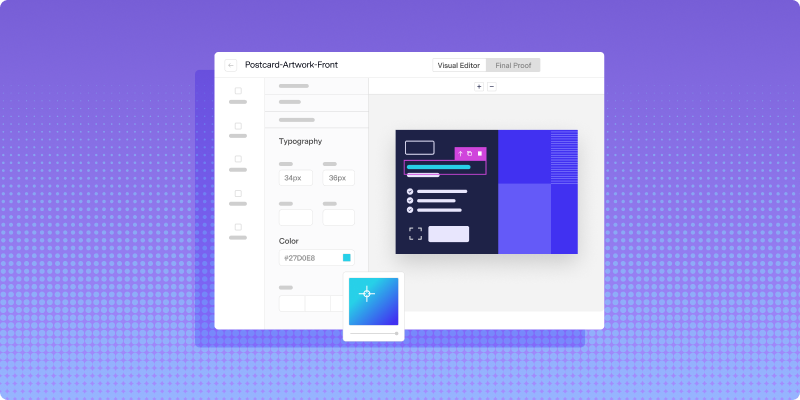
Lob connects customer and CRM data with personalized creative, address verification, production, and available postal events. Teams can build trigger logic through integrations, APIs, webhooks, or campaign tools without manually preparing every winback send.
With Lob’s direct mail platform, you can create reusable winback workflows while keeping eligibility, suppression, personalization, and measurement connected.
Book a demo to see how Lob can support your customer reactivation program.
Frequently asked questions about winback direct mail triggers
FAQs

What is the best trigger for a winback campaign?
The best trigger reflects a meaningful change in customer behavior. Depending on the business, that may be a missed purchase cycle, declining RFM score, cancellation, churn-risk signal, or completed digital re-engagement sequence with no response.
How long should you wait before sending winback mail?
There is no universal waiting period. Base the timing on your normal purchase or usage cycle, the customer segment, the trigger event, and the time required for production and postal transit.
Can a CRM automatically trigger winback direct mail?
Yes. A CRM, CDP, marketing automation platform, ecommerce system, or internal application can initiate mail through an integration, API, webhook, or automated campaign rule.
How do you prevent irrelevant winback mail?
Run an eligibility check immediately before production. Suppress customers who have returned, renewed, purchased, reached a frequency limit, or no longer qualify for the offer.
How do you know whether winback direct mail caused a reactivation?
QR codes, personalized URLs, offer codes, and matchback can associate mail with customer activity. A holdout group provides stronger evidence by comparing reactivation among mailed and non-mailed customers.
Answered by:

Sam Melero