
When it comes to direct mail, timing is everything – especially for compliance-sensitive mail like financial statements or policy documents. But far too often, businesses anchor on the send date instead of the in-home delivery date. While the difference may seem subtle, planning around the wrong date can lead to missed delivery windows that compromise SLAs, billing cycles, and regulatory compliance.
The send date marks when mail leaves production, not when it actually reaches the mailbox. Once your mail is sent, final delivery depends on postal entry, transit speeds, seasonal volume, weather disruptions, and other factors beyond your control.
In our 2026 State of Direct Mail Business Insights report, 86% of operations leaders rank timely delivery as a top compliance challenge. The good news is you can make your performance more predictable by working backwards from your target in-home delivery date and accounting for direct mail timing up front.
What is backwards planning for direct mail?
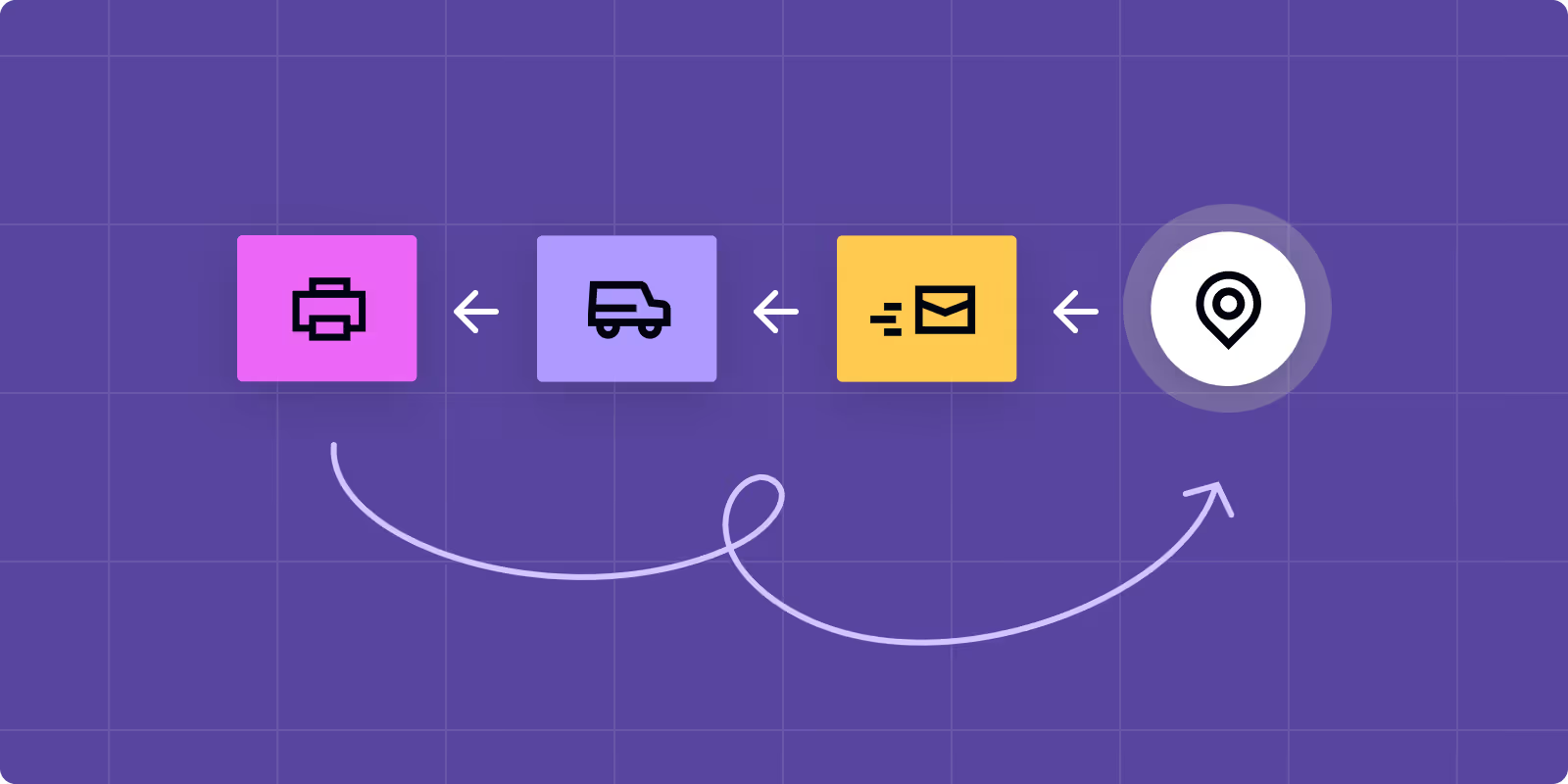
It sounds counterintuitive, but the strongest direct mail campaigns start at the finish line. Build your plan around when your message needs to arrive, not when it needs to reach the post office. From your target in-home delivery date, you can work backwards through every stage of the workflow – from delivery to production to conception – to create a realistic direct mail timeline that accounts for the unexpected.
Four strategies to improve your in-home delivery window
Creative and targeting has become more sophisticated, but what about logistics? Integrating logistics intelligence can help bring structure and predictability to direct mail campaign scheduling.
When organizations have visibility into production and delivery, they move faster, reduce costs, and build resilience against disruptions. This is especially important for transactional mail where precise timing is a requirement, not just a preference.
Here’s how teams can move from reactive to proactive direct mail planning:
- Optimize entry points
Entering mail closer to the final destination means faster delivery (and lower postage). When you take on more of the logistics work, your campaign becomes more precise and predictable.
- Stress test your timeline
Even the most carefully planned campaigns encounter surprises. Adding in buffer days for potential issues and building contingency paths for delays preserves in-home delivery windows. - Send in batches
Instead of sending everything at once, plan to release mail in waves so you can monitor scan velocity early and make adjustments as needed. - Automate mail workflows
Every manual touchpoint increases the risk of errors, delays, and regulatory violations. Automated mail workflows improve mail speed, quality, and visibility so your mail moves as planned. - Track and analyze results
Every campaign is a learning opportunity. Comparing planned vs. actual in-home delivery tells you what’s working and what’s not, so you can tighten future scheduling accuracy.
Most businesses focus on the frontend – creative strategy, targeting, and the print production timeline. But it’s smart planning and the logistics behind the scenes that ultimately get your message delivered on time.
Optimize direct mail timing with Postal IQ
Lob’s Postal IQ routing intelligence doesn’t just route your mail, it automates it, bringing unmatched precision to your campaign timing strategy. Included with every Lob account, Postal IQ optimizes delivery speed, cost efficiency, and predictability – for perfectly timed mail, every time.
Ready to see how Lob can meet your in-home delivery dates? Book a demo today.
FAQs about direct mail timing
FAQs

What is the average delivery time for First-Class Mail versus Marketing Mail?
USPS First-Class Mail typically takes 1 to 5 business days and includes free forwarding and returns. Marketing mail can range from 3 to 10 business days, depending on distance, and must meet minimum quality or weight requirements.
How far in advance should you start planning a holiday direct mail campaign?
For holiday campaigns, it’s best to start planning two to three months ahead of your planned in-home delivery date. However, for tight direct mail deadlines, Lob’s Postal IQ automates direct mail for delivery in under a week.
Can you guarantee delivery on a specific day with USPS?
While you can’t guarantee USPS delivery times, you can use backwards planning, buffer days, and the latest postal service information to improve direct mail campaign predictability.
How do you coordinate direct mail timing with a digital campaign calendar?
Omnichannel success hinges on customer relationship management (CRM) tools, email service providers (ESPs), and marketing automation platforms (MAPs). Shared campaign calendars and shared workflows can align direct mail delivery with digital touchpoints for maximum impact.
Answered by:

Sam Melero
.png)