
Here is a problem many teams do not see until they scale. Their mail prints at one facility, then travels across the country before it even enters the USPS network. That extra distance adds variability to delivery timing and can limit how efficiently you use zone-based postage.
Distributed print production changes the model. Instead of printing everything in one place, a multi-site network produces mail closer to where it is going, then enters USPS nearer to the destination. The result is fewer long-haul legs, more consistent in-home timing, and better control over postage performance.
This guide explains how multi-site routing works, where the postage and timing benefits come from, and what to look for when evaluating a distributed print provider.
What distributed print production is
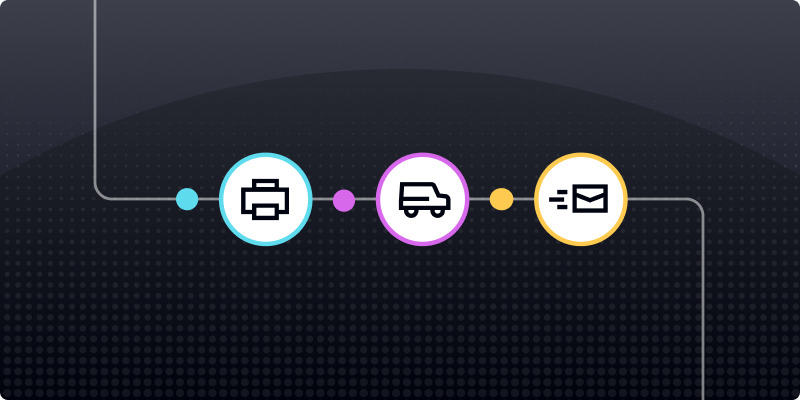
Distributed print production shifts direct mail from a print-and-ship approach to a produce-near-recipient approach. Rather than printing every piece at one central facility, a network uses multiple regional facilities and routes each piece based on the recipient’s address.
Why this matters is simple. Where your mail enters USPS affects both postage and delivery timing. Entry closer to the destination generally means fewer handoffs and less distance inside the postal network, which can help reduce variability and improve predictability.
How multi-site routing assigns print jobs
In a distributed model, routing logic selects the best facility for each piece so you are not managing separate print jobs across regions.
Proximity to recipient addresses
The most basic routing input is destination. Pieces are routed to facilities that are closer to recipient ZIP codes, so mail is produced and entered into USPS nearer to where it will be delivered.
Capacity and operational constraints
Routing also needs to account for real-world constraints such as capacity, maintenance, and production schedules. A strong network can route around constraints without forcing you to coordinate multiple vendors.
USPS entry strategy
Where mail is inducted into USPS matters. Distributed production supports entry closer to the delivery region, which can reduce long-haul transportation before mail reaches local processing.
How distributed printing supports postage efficiency
The relationship between print location and postage becomes clearer under zone-based pricing, where rates can vary based on distance from entry to destination.
Zone proximity and postage performance
USPS zones are based on distance from the entry point. When mail enters closer to its destination, it is more likely to travel fewer zones, which can improve postage efficiency compared to entering everything from a single origin far from large parts of your audience.
If you are scaling and trying to control operational complexity, this is one of the reasons distributed production is often part of a broader effort to scale operations.
As postage rates continue to rise, optimizing mail routing becomes increasingly critical for maintaining campaign profitability.
Presort strategy across regions
Presort discounts come from preparing mail in ways that reduce USPS sorting work. A distributed model can support presort strategies region by region, which can help when your audience is spread across multiple geographies.
Less pre-entry shipping distance
In a single-site model, finished mail often needs to travel farther before it even reaches USPS. Producing closer to recipients can reduce the need for long pre-entry transportation, which helps remove a common source of variability in timing.
Why distributed production can improve delivery timing
Delivery timing depends on many factors outside your control, including USPS processing variability. What you can influence is how far pieces travel and how many handoffs are required to get them into the mailstream near their delivery region.
Shorter distance to destination regions
When mail enters nearer to its destination, it typically moves through fewer processing steps and travels less distance before reaching the final delivery area.
More consistent in-home windows
Reducing long-haul legs can also reduce variance. That matters if you coordinate mail with email or SMS, or if your offer has a time window where arrival timing changes results.
Faster entry into local processing
When production and induction happen nearer to recipients, mail can begin local processing sooner than mail that first has to travel across the country before USPS touches it.
How distributed networks compare to single-site vendors
There are three common approaches teams run into.
Single printer with centralized fulfillment
Everything is produced in one place. The process is simple, but all destinations share the same origin, which can increase distance to delivery regions and reduce flexibility during capacity constraints.
Brokered regional network
A broker coordinates multiple printers, often through manual processes. Coverage can be broader than single-site, but quality and visibility may vary by partner, and coordination can become complex.
Automated distributed platform
A platform model uses a unified workflow for routing, production, and visibility across facilities. The biggest advantage is operational consistency. You get one system, one set of standards, and fewer handoffs for your team to manage.
What to look for in a distributed print provider
If you are evaluating providers, focus on capabilities that affect consistency and predictability, not just a network map.
Facility coverage that matches your audience
Distributed only helps if facilities align with where you mail. Ask how routing works for the regions where your audience is concentrated.
Quality controls that support consistency
Printing across multiple facilities raises a real question: will your brand look the same everywhere? Look for documented standards and verification processes, including calibration practices and routine quality checks.
Visibility into production and delivery status
Modern distributed print networks provide real-time visibility into production status, mail tracking, and delivery confirmation across all facilities.
Considerations beyond postage
When evaluating distributed print production, consider factors beyond just postage savings, including production costs, quality control, and delivery reliability.
Security and compliance considerations across multiple facilities
Distributed production does not have to mean higher risk, but you should validate how data is handled.
Look for clear controls around access, encryption, retention, and auditability, especially if you work with sensitive customer data. If you operate in regulated environments, confirm the provider’s compliance posture and workflows match your requirements.
How to transition from single-site to distributed print production
You do not need to replace everything at once. A phased approach reduces risk and makes performance differences easier to measure.
- Establish your baseline. Document current delivery timing patterns, operational pain points, and how you manage production today.
- Map data sources and triggers. Identify the systems that drive sends so you can automate without rebuilding workflows.
- Pilot a segment. Start with a defined audience or campaign type where timing predictability matters.
- Expand with what you learn. Use performance data to refine routing, formats, and timelines before you scale volume.
Improve postage efficiency and delivery timing with Lob’s Print Delivery Network
Lob’s Print Delivery Network is built for distributed production, with multi-site coverage, consistent specifications, and operational visibility designed for teams running mail at scale.
Book a demo to see how Lob supports distributed print production and multi-site routing.
FAQs about distributed print production and mail routing
FAQs

How does a distributed network handle capacity constraints?
A distributed model gives you more than one production path. When a facility hits a constraint, routing can shift to support continuity without requiring you to manage multiple vendor relationships.
Can you personalize mail at scale across multiple facilities?
Yes. In a platform model, personalization is applied as part of the same production workflow, regardless of where pieces are produced.
What happens to presort when volume is spread across regions?
Presort strategy depends on format, volume, and how mail is prepared. A distributed model can support regional approaches that align entry points with delivery regions.
How do you maintain brand consistency when printing in different locations?
Look for networks with documented print standards, calibration practices, and quality verification routines that support consistency across facilities.
Answered by: