
USPS entry point optimization is a strategy where mailers enter mail into the postal network at facilities closer to the final destination. When you do more of the transportation work up front, USPS handles fewer processing and transport steps, which can qualify eligible mail for lower postage. The closer your mail enters to where it is being delivered, the less USPS has to move it across the network.
For high volume mailers, this approach can be the difference between a direct mail program that scales and one that is held back by postage costs. This guide walks through how entry point optimization works, the main USPS facility types involved, and practical ways to put this strategy to work, whether you are managing logistics yourself or using a platform such as Lob to handle it automatically.
What is USPS entry point optimization
USPS entry point optimization is a mailer strategy that involves entering mail into the postal network at facilities closer to the final destination to qualify for destination entry pricing. The idea is straightforward. When you take on more of the transportation work, USPS moves your mail a shorter distance.
Every piece of mail travels through a series of USPS facilities before it lands in a mailbox. The entry point is the facility where your mail first enters that network. Drop it at your local post office and USPS handles everything from there, including sorting, transportation across regions, and final delivery. Drop it at a facility that is already near your recipients and you remove steps from that journey.
- Entry point: The USPS facility where your mail first enters the postal network
- Destination entry: Entering mail at a facility closer to the recipient’s address
- The tradeoff: You handle more logistics so USPS handles fewer processing and transportation steps
For high volume mailers, this difference often determines whether a direct mail program stays efficient or sees more budget consumed by postage than necessary.
How entry point optimization lowers your postage costs
USPS pricing reflects the amount of work required to move and deliver mail. When you rely on origin entry, USPS takes responsibility for the full journey, including initial acceptance, long haul transportation, and local delivery.
Destination entry changes that equation. By entering mail at a facility already near your recipients, you bypass upstream processing and cross country transportation. USPS can then apply pricing that reflects the smaller slice of work remaining.
At a high level:
- Origin entry means USPS manages the full processing and transport path
- Destination entry limits USPS involvement to local processing and final delivery
For organizations sending large volumes of mail, small per piece differences can have a meaningful impact on overall postage spend over time.
Types of USPS entry points and how SCF discounts work
USPS offers several destination entry levels, each representing a different depth into the postal network. Understanding the differences helps you decide which approach fits your program.
Network Distribution Center entry
Network Distribution Centers (NDCs) are large regional hubs that serve broad geographic areas. Historically, NDC entry offered an early tier of destination entry discounts, sitting between origin entry and deeper levels of savings.
USPS has phased out NDC destination entry discounts as part of its network restructuring under the Delivering for America plan. If you relied on NDC entry as your primary cost saving approach, that structure is no longer available and it may be time to revisit your strategy.
Sectional Center Facility entry
Sectional Center Facilities (SCFs) serve groups of ZIP codes that share the same first three digits. This is now the primary discount tier for many business mailers and a major focus for modern entry point optimization.
SCF entry often hits a balance between practicality and savings. It provides meaningful postage benefits without requiring extremely concentrated mail volumes in a single neighborhood. For national mailers, working with partners or platforms that can enter mail at multiple SCFs across the country can unlock significant cost reductions.
Delivery unit entry
Destination Delivery Units (DDUs) are the local post offices that deliver mail to specific addresses. DDU entry offers the deepest level of destination entry because your mail skips nearly all upstream USPS processing.
The tradeoff is that DDU entry typically only makes sense when you have highly concentrated mail volumes in specific geographic areas. A brand mailing to recipients scattered across the country will not see as much benefit, while a local campaign targeting a small cluster of ZIP codes might find DDU entry very effective.
How entry point affects USPS standard shipping times
Entry point optimization also affects how quickly your mail reaches recipients. For time sensitive campaigns where in home timing matters, delivery speed and predictability can be just as important as postage savings.
Delivery windows by entry level
Mail entered closer to the destination generally arrives faster because it skips transport and processing steps.
- Origin entry: The longest transit time and the most variability in delivery dates
- SCF entry: Faster delivery with fewer handling steps between entry and mailbox
- DDU entry: The shortest path to the recipient and the most predictable timing
For campaigns tied to promotions, events, renewals, or seasonal windows, this speed advantage supports more reliable in-home dates and better coordination with other channels.
Reducing mail delivery variability
Every time mail transfers between facilities, there is an opportunity for delays. Destination entry reduces the number of touchpoints your mail passes through, which reduces the chances for slowdowns.
This consistency is especially valuable when you coordinate direct mail with digital channels. If you are planning an email or SMS follow up based on when a postcard or letter arrives, unpredictable delivery windows can throw off your timing. Fewer handoffs generally mean more reliable delivery patterns.
Recent USPS changes that impact your entry point strategy
The USPS network has evolved in recent years, and those changes have made entry point optimization both more important and more nuanced.
The end of NDC discounts
As part of the Delivering for America plan, USPS eliminated NDC level destination entry discounts. Mailers that historically built entry strategies around NDCs now have a choice. They can accept higher postage at origin entry or rework their logistics to focus on SCF level entry and other options.
Why SCF entry matters more now
With NDC discounts removed, SCF entry has become the primary path to meaningful destination entry savings for many business mailers. Commingling services and modern platforms make SCF level pricing accessible even if you do not have enough volume to reach it on your own.
Commingling combines your mail with other volumes to meet USPS density requirements at specific facilities. This allows smaller or mid volume mailers to access entry levels they would not reach independently.
Strategies to optimize your mail entry points
Whether you are managing entry point logistics internally or evaluating providers, a few practical strategies help you get more value from destination entry pricing.
1. Verify addresses before mailing
Accurate, standardized addresses are the foundation of optimization. Mail with incorrect or incomplete addresses may not qualify for destination entry pricing and can become undeliverable, which wastes postage entirely.
Tools that use USPS approved validation, such as Lob’s address verification, help ensure addresses are both valid and standardized before printing.
2. Partner with presort and commingling services
Commingling combines your mail with other mailers’ volumes to meet USPS density thresholds at specific entry points. For mid volume mailers, this is often the most practical path to destination entry discounts without building a large in house logistics operation.
3. Consolidate mail volumes for better entry
Timing and batching your sends can help you hit volume levels that support more advantageous entry points. Rather than sending very small batches daily, consolidating into planned drops may make certain strategies more accessible.
You will want to balance this with your campaign timing requirements. In some cases, predictable speed matters more than maximum cost savings.
4. Match entry points to your campaign delivery goals
Not every campaign should aim for the deepest possible discount. A time sensitive promotion might benefit more from faster, more predictable delivery at a slightly higher cost than from maximum savings with variable timing.
Consider your objectives when planning your entry strategy. Acquisition campaigns with flexible timing often prioritize cost, while lifecycle or retention campaigns tied to specific customer milestones may prioritize timing and consistency.
How to automate entry point optimization for direct mail
Managing entry point logistics manually, coordinating with multiple facilities, tracking volume thresholds, and balancing cost and timing, becomes complex quickly. Modern direct mail platforms can handle these decisions automatically.
A platform with a nationwide print network can:
- Produce mail closer to recipients
- Enter mail at USPS facilities that align with your goals
- Apply address verification and standardization by default
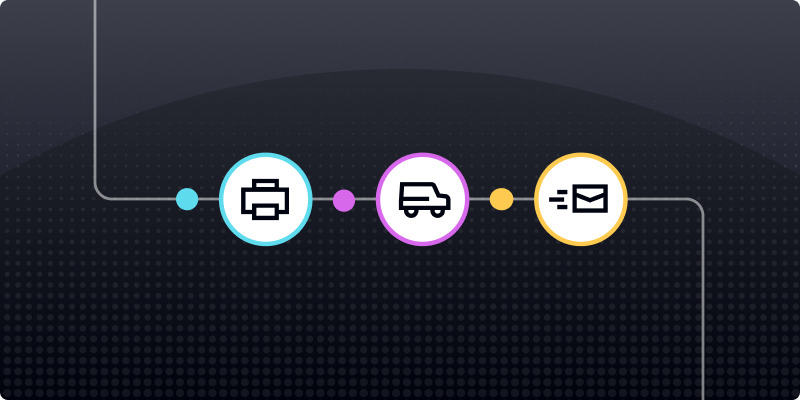
Instead of shipping printed pieces across the country to reach the right entry point, the platform routes production to facilities that are already near your recipients and selects entry points as part of the workflow.
Here is what automation typically manages behind the scenes:
- Print location selection: Choosing production facilities near recipients
- Entry point routing: Routing mail to the USPS facility that fits your cost and timing goals
- Address verification: Confirming address quality before printing so pieces qualify when possible
Platforms such as Lob use distributed production and automated routing to make destination entry strategies accessible without adding operational overhead.
Let Lob’s nationwide print network handle entry point optimization for you
When you send mail through Lob, each piece is produced at a facility close to its destination and entered at an appropriate USPS location. You do not have to coordinate with multiple printers, negotiate with logistics providers, or track thresholds. The platform manages those steps for you.
Lob’s distributed Print Delivery Network supports destination entry across the country and pairs it with built-in address verification and delivery tracking. You get the benefits of optimized entry points without having to build or maintain a complex logistics operation.
Ready to see how automated entry point optimization could work for your mail program? Book a demo.
FAQs

What mail volume do you need to qualify for destination entry discounts?
USPS requires minimum piece counts to qualify for different destination entry levels. Working with commingling services or an automated platform can help you access those levels even if your own volumes fluctuate.
Can you use entry point optimization for triggered or on demand mail?
Yes. With a distributed print network, even triggered or on demand campaigns can be routed to production facilities near recipients so entry point decisions are optimized automatically.
How do you know if your mail provider is optimizing entry points?
Ask where your mail is produced, whether it enters at SCFs or DDUs when appropriate, and whether they provide visibility into postage and logistics decisions for your campaigns.
What is the USPS Optimized Collection Plan?
The USPS Optimized Collection Plan focuses on collection box schedules and locations. It is separate from destination entry and does not control commercial postage discounts or entry point strategies.
Answered by: