
At 500,000 pieces, you can still get away with a few manual steps and informal handoffs. At 5 million, those “small” delays start showing up everywhere. A file that needs one more tweak. A proof that sits in someone’s inbox. A data issue you don’t catch until production. Suddenly your timeline is no longer a timeline.
The fix is rarely “work harder.” It’s getting clear on where throughput actually slows down, then designing that constraint out of the workflow. Below, we’ll cover the most common bottlenecks in high-volume mail fulfillment, how to spot which ones are hitting you, and what automation looks like when you’re running at scale.
What multi-million piece volume means for mail operations
Scale changes everything. Workarounds that function fine at 50,000 pieces fall apart when you’re processing millions. Every handoff between teams, every approval cycle, and every validation step becomes a place where work can get stuck.
And the math gets unforgiving. A 2% error rate on 10,000 pieces is 200 reprints. At 5 million, that same rate becomes 100,000 reprints and a budget problem no one planned for. In regulated industries, delays can also create compliance risk.
The six biggest throughput bottlenecks in high-volume mail fulfillment
At enterprise scale, bottlenecks compound. One delay creates pressure downstream, which leads to rushed steps, which increases error rates, which creates rework. A campaign that should take five days can stretch into weeks when multiple constraints hit at once.
1. Data quality and address validation failures
Bad addresses don’t just waste postage. They force manual intervention, and manual intervention does not scale.
The best fix is upstream: standardize formatting rules, de-dupe consistently, and validate addresses before files ever hit production. If you need a baseline, start with address verification.
2. File prep and processing delays
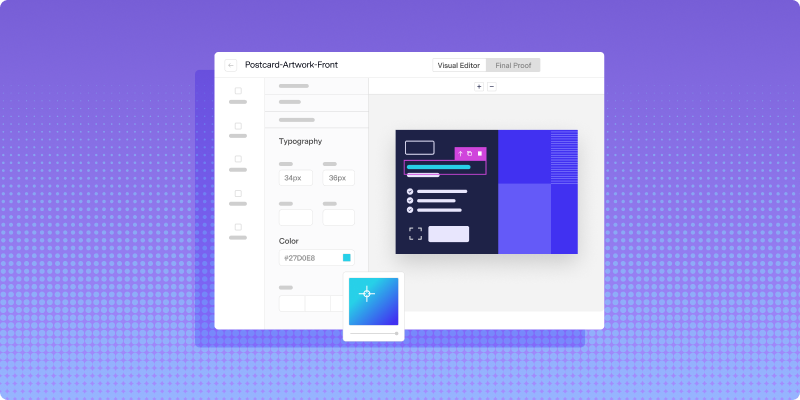
Large files take time. Variable data mapping errors, mismatched formats, and version control issues between marketing and production can stall a campaign before it reaches print.
Creative can slow you down too, especially when files are heavy, complex, or built without production realities in mind.
3. Personalization complexity at scale
Variable data printing is powerful, but it multiplies processing load. The more rules, versions, and dependencies you add, the more QA you need, and the more ways the workflow can break.
Personalization works best when your production pipeline is built to support it, not patched together around it.
4. Manual proofing and approvals
Approval cycles create unpredictable delays. Each stakeholder handoff adds time, and timelines become harder to forecast.
In regulated industries, review is mandatory. The opportunity is to remove the friction around it: fewer back-and-forth threads, cleaner routing, and better visibility into where proofs are stuck.
5. Print capacity and redundancy gaps
Single-site printing creates a ceiling. If that facility hits capacity or has equipment issues, your campaign is waiting.
A distributed print network helps reduce risk by routing work based on capacity and geography. If you’re evaluating options, it’s worth understanding the Print Delivery Network.
6. USPS logistics and entry strategy
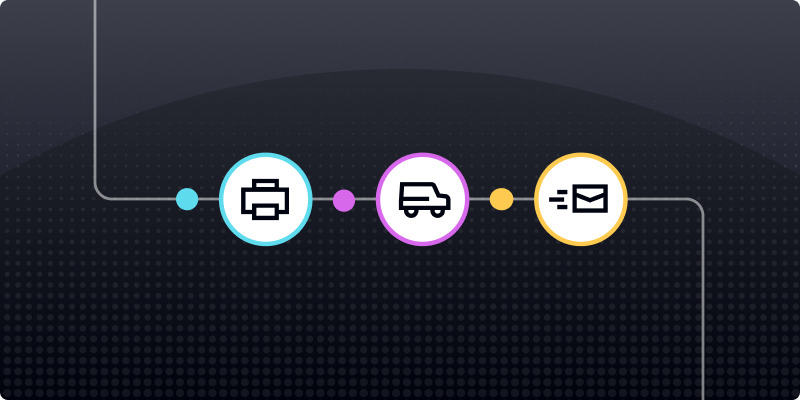
Throughput doesn’t end at print. Entry timing, presort, and drop-off strategy all affect delivery windows. Miss the right entry point and you can add days, even when production was fast.
At scale, postal strategy is part of throughput.
How to identify which bottleneck is slowing your operation
1. Map the workflow
Document every step from data receipt to USPS handoff. Pay extra attention to handoffs, because delays hide in the gaps between teams and vendors.
2. Measure stage-by-stage timing
Track how long each stage takes across recent campaigns. Look for variability. If one step swings wildly campaign to campaign, that’s usually your constraint.
3. Add monitoring checkpoints
Visibility changes how quickly you can react. Without it, you diagnose after the campaign missed the window. With it, you catch stalls while there’s still time to fix them.
KPIs that reveal throughput problems early
Automation that removes bottlenecks
The most reliable way to increase throughput is to reduce the manual steps that create slowdowns.
- Automated validation at submission to catch issues before production
- Digital proofing workflows to streamline reviews and reduce back-and-forth
- Distributed routing to avoid single-site ceilings and improve resilience
- Real-time visibility so you can act on issues before they cascade
Turn bottleneck visibility into an operational advantage
At multi-million piece volume, speed comes from process, not heroics. When you can pinpoint where throughput slows down, you can fix the right thing, protect timelines, and avoid rework that explodes at scale.
Ready to see how this looks in practice? Book a demo to explore how Lob supports multi-million piece volume without the operational drag.
FAQs about throughput bottlenecks in high-volume mail operations
FAQs

At what mail volume do throughput bottlenecks typically emerge?
Most teams start seeing meaningful constraints once they push beyond several hundred thousand pieces per campaign, depending on workflow complexity and how many manual steps are involved.
How do hybrid in-house and outsourced models create unique bottlenecks?
Hybrid environments add coordination risk: slower data handoffs, inconsistent standards across sources, and competing priorities when production paths share the same inputs.
What is the typical ROI timeline for automation?
Many teams see gains within the first few campaigns once manual work is removed, error rates drop, and staff time shifts from troubleshooting to execution.
How should teams prepare for peak season?
Secure capacity early, build buffer into schedules, and stress-test workflows before volume spikes arrive.
Can throughput delays create compliance risk?
Yes. Some industries have requirements for timely delivery of certain communications. At scale, delays can create real compliance and operational risk, not just missed marketing windows.
Answered by: