
This is the first in a new monthly postal briefing from Lob. Each month, our in-house USPS experts will share what’s changing behind the scenes. We track the updates that affect how your mail is planned, processed, and delivered, then break them down in plain language – what’s new, what’s different, and what it actually means for your day-to-day work.
Update #1: USPS pricing is returning to a once-per-year schedule
The Postal Regulatory Commission has ruled that Market Dominant products, commonly known as First-Class Letters, Postcards and Flats, Marketing Letters and Flats, along with Periodicals, will return to a single price increase per fiscal year through 2030.
After several years of more frequent pricing adjustments, this brings USPS pricing back to a steadier, more predictable cadence. While a rate change is still expected for 2026, future increases will follow an annual schedule rather than multiple adjustments throughout the year.
What this means for you
- Easier budgeting. Annual postage spend can be planned with fewer mid-year surprises.
- More intentional campaign timing. Mail drops can be scheduled around customer behavior and business goals, not rate-change deadlines.
- Cleaner performance measurement. Stable rates make it easier to evaluate ROI and CPA over time without a shifting cost baseline.
- Better use of USPS promotions. Discounts and incentives are easier to plan and apply when base rates are predictable.
Pricing predictability doesn’t eliminate the need for planning, but it does reduce unnecessary disruption and makes long-term mail strategy easier to manage.
Update #2: Postmarks will reflect processing, not drop-off
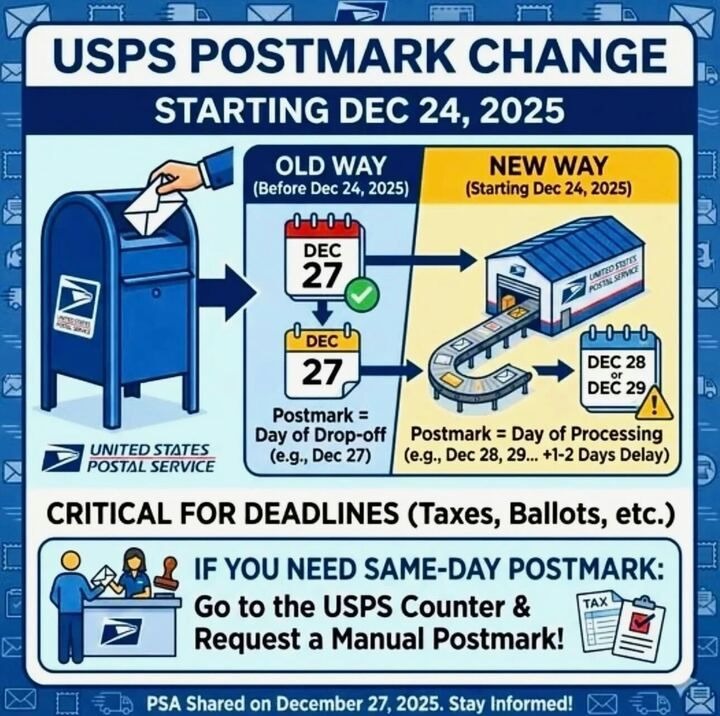
USPS is formally defining what a machine-applied postmark date represents. A machine-applied postmark reflects when a mailpiece is processed at a USPS processing facility, not necessarily the day it was dropped in a mailbox, collected locally, or accepted at a Post Office.
This change does not affect Lob customers. Lob customer’s mail is entered directly into the mail stream at USPS processing facilities, with mailpiece scan event data to ensure peace of mind.
As USPS continues to adjust its network and transportation paths, the time between local drop-off and processing can be longer and less predictable. That makes this distinction more important for mail tied to firm deadlines such as utility payments, legal documents, financial payments, taxes and ballets.
What this means for you
- For “postmarked by” deadlines, a last-day mailbox drop may not result in a same-day postmark.
- For those last minute letters and cards, instead of dropping your letter in the blue box, you can ask the Clerk at the USPS retail counter to date stamp your mail.
Update #3: International mail to Cuba is temporarily suspended
As of January 30, 2026, the United States Postal Service has temporarily suspended acceptance of all major international mail classes to Cuba, due to unavailable transportation options. USPS continues to advise customers not to mail items to Cuba until further notice.
What this means for you
- Pause on new mailings: Don’t enter mail destined for Cuba until USPS updates its service status.
- Returned items: If you’ve recently sent international mail to Cuba, expect it to be returned with the suspension endorsement.
USPS has not yet announced when service to Cuba will resume — we’ll share any updates in next month’s briefing.
What to keep in mind
For mail owners, the takeaway is practical: clearer pricing reduces disruption, but execution details still matter. Planning for how and when mail enters processing is increasingly important as USPS operations continue to evolve.
We’ll continue tracking USPS changes and sharing the updates that affect how mail is executed in practice. More in next month’s Postal Briefing.
FAQs

Answered by: