
Financial services teams need direct mail to do more than reach a mailbox. Campaigns and customer communications have to move through approved workflows, protect sensitive data, meet timing requirements, and produce records that marketing, operations, and compliance teams can review.
That becomes difficult when execution is split across print vendors, spreadsheets, email approvals, and disconnected reporting tools. Every handoff creates another place for data, creative, timing, or documentation to break down.
Lob gives banks, lenders, insurers, fintech companies, and financial advisors one platform for automating direct mail production and connecting it to customer data. Its APIs, campaign tools, address verification, nationwide Print Delivery Network, security controls, and mailpiece-level status events make it a strong fit for regulated teams running both marketing and operational mail at scale.
Why financial services teams use direct mail
Financial services organizations use direct mail across acquisition, onboarding, servicing, retention, and required customer communications. The channel can reach customers outside crowded digital environments while giving the communication a tangible format they can keep and review.
Common use cases include:
- Prescreened or preapproved acquisition offers
- Account-opening and onboarding materials
- Policy and account renewal reminders
- Statements, tax forms, checks, and other transactional mail
- Product education and cross-sell campaigns
- Application follow-up and abandonment outreach
- Customer retention and reactivation campaigns
The delivery requirements differ by use case. A marketing postcard and a customer notice may use the same production network, but they should not share the same approval logic, data access, documentation, or timing assumptions.
Physical mail is not universally required for every financial communication. Electronic delivery may be permitted when the organization meets applicable consent and disclosure requirements. Legal and compliance teams should determine the rules for each communication, jurisdiction, audience, and product. The direct mail platform then needs to support the approved workflow without introducing uncontrolled manual steps.
What makes Lob a strong direct mail platform for financial services
Financial services teams should evaluate more than per-piece price. The platform must connect campaign execution, security, production, delivery visibility, and reporting in a way that fits the organization's risk controls.
Automated execution from data to production
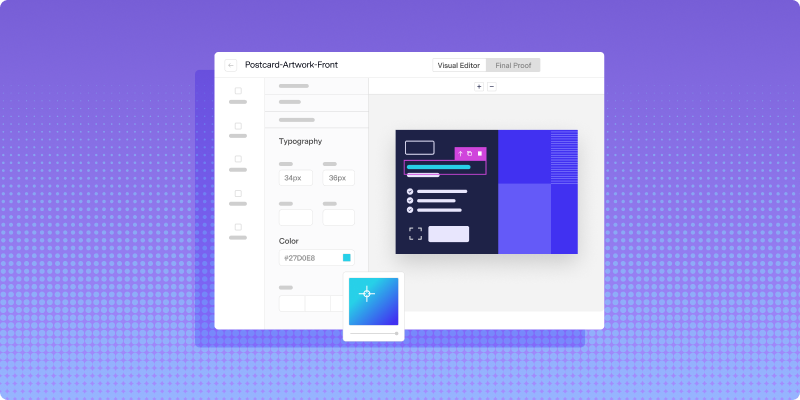
Lob can receive a mail request through an API, an integration, or a campaign workflow. The request can include recipient information, a selected template, approved personalization fields, mail format, and other production instructions.
This approach reduces recurring file exports and vendor email threads. Teams can create repeatable workflows for high-volume batches, scheduled communications, and event-triggered mail while keeping required review and approval steps in place.
A nationwide Print Delivery Network
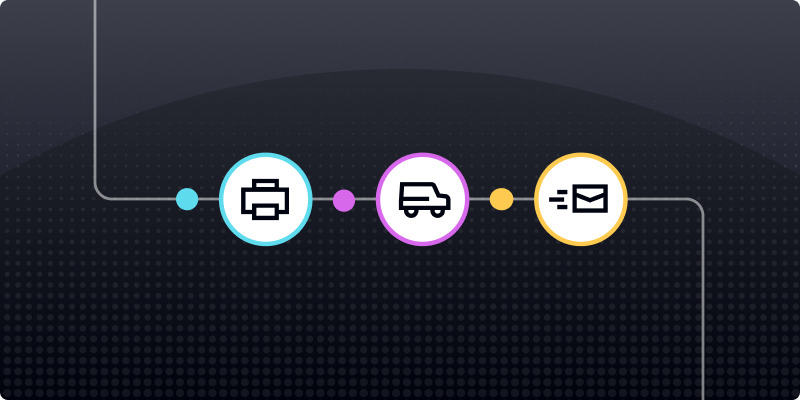
Lob's Production + Tracking platform connects mail workflows to a distributed network of vetted commercial printers. Production can be routed based on factors such as format availability, capacity, materials, distance from the recipient, and applicable operational requirements.
A distributed network can support regional routing, capacity management, and continuity when demand changes. Lob also applies shared production standards and conducts quality reviews and facility audits across the network.
Mailpiece-level production and delivery visibility
Lob provides status events across production and the USPS mailstream. Teams can monitor when a mailpiece is created, processed, entered into the postal system, and marked with available delivery-related events.
This visibility is more useful than relying only on a campaign drop date. It can help operations teams investigate delays, customer-service teams confirm status, and marketers coordinate follow-up windows.
USPS tracking is scan-based, so it is not proof that a recipient personally received or read a mailpiece. Teams should treat these events as operational signals and use QR codes, personalized URLs, offer codes, or matched conversion data to measure response.
Address verification before production
Address problems can waste print and postage while also creating customer-experience and privacy concerns. Lob's Address Verification can standardize and verify U.S. and international addresses individually, in bulk, or as customers enter them into a website or application.
For U.S. mail, CASS-certified processing and delivery-point data can help identify formatting errors, incomplete records, and addresses that may not be deliverable as submitted. Financial services teams can define whether a questionable result is corrected, reviewed, sent back to the source system, or suppressed.
Address verification does not independently prove that a specific customer currently lives at a destination. Programs should also apply the appropriate move-update, identity, and account-level controls.
Governed personalization at scale
Lob supports variable data and reusable templates so teams can personalize more than a recipient's name. Approved data can control product details, account milestones, representative information, offer language, images, or calls to action.
For prescreen and credit-related campaigns, personalization logic must follow the organization's approved eligibility criteria, model governance, fair-lending controls, and disclosure requirements. The direct mail platform executes the rules and data it receives. It does not replace the financial institution's responsibility for deciding which data and offers are legally appropriate.
Reusable templates separate approved content from variable fields, making versions easier to test and unapproved changes easier to restrict.
APIs and integrations with customer data systems
Lob can connect direct mail to CRMs, customer data platforms, marketing automation tools, and internal systems. API and no-code options let teams choose an implementation that fits their technical resources and control requirements.
For example, a CRM can trigger mail when an account changes status, a marketing automation platform can add mail to an approved customer journey, and a CDP can pass a governed audience segment into a campaign. Internal systems can also submit operational mail through Lob's APIs.
An integration should be evaluated by what it can actually pass, not by whether a vendor logo appears on a page. Confirm field mapping, authentication, trigger logic, error handling, retry behavior, suppression, and the return of mailpiece status events. Lob's integrations support direct mail workflows across CRM, CDP, and marketing automation environments.
Attribution that connects mail to outcomes
Direct mail measurement requires more than a delivery event. Lob supports QR codes and personalized URLs, while teams can also use offer codes, dedicated phone numbers, conversion windows, and matchback analysis. The reporting design should match the objective, such as completed applications, funded accounts, retained policies, or operational completion.
Lob's guide to measuring financial services direct mail explains how banks can connect delivery, response, and conversion data. Any data returned to a CRM or analytics platform depends on the integration and reporting workflow your team configures.
How Lob reduces fragmented vendor management
A traditional program may involve separate vendors for data processing, creative, print, postal preparation, and tracking. Lob centralizes more of that execution through one platform and Print Delivery Network. Financial institutions can keep required approvals and segregation of duties while reducing one-off coordination and manual movement of customer data. When a job is delayed or rejected, teams have a defined platform record to inspect instead of reconstructing the campaign from email threads.
How Lob supports security and compliance workflows
No software vendor makes a financial institution automatically compliant with every law or regulation. Compliance depends on the organization's products, data, configuration, policies, contracts, and use of the platform. Lob provides controls and documentation that can support that work.
SOC 2 Type 2 audits
Lob completes annual SOC 2 Type 2 audits across all five Trust Services Criteria. SOC 2 is an attestation framework, not a financial-services law or blanket compliance certification. Security and procurement teams can review the available documentation as part of vendor due diligence.
Encryption, access controls, and logs
According to Lob's security documentation, customer data is encrypted in transit and at rest. Enterprise features include role-based access controls, single sign-on, audit logs, and API request logs. Teams should confirm which controls are included in their subscription and configure access according to least-privilege principles.
HIPAA support when relevant
HIPAA may apply to certain insurance or health-related financial workflows involving protected health information. Lob supports HIPAA/HITECH compliance through privacy audits, dedicated facilities, and Business Associate Agreements for eligible use cases. Teams should confirm that their agreement, configuration, and workflow are appropriate before transmitting protected health information.
Vetted print and logistics partners
Lob states that it regularly audits printer and logistics partners against security, privacy, operational, and quality standards. Financial institutions should still review the controls and documentation required for their own vendor-management program.
Support for regulatory workflows
Rules such as GLBA, FCRA, privacy laws, state requirements, and product-specific regulations apply differently by communication and institution. Evaluate whether Lob's controls, contracts, documentation, production workflow, and integrations support the requirements your legal, security, risk, and compliance teams identify.
How financial services teams can use Lob
Connected workflows let direct mail respond to events already recorded in customer systems. Examples include:
- Triggering an approved welcome package after an account opens
- Sending a renewal reminder based on a policy or account date
- Following up on an incomplete application when outreach is permitted
- Producing statements, tax documents, checks, or required notices through an API workflow
- Adding a personalized mailpiece to an approved retention or cross-sell journey
- Launching prescreen campaigns from governed audience and offer files
Each workflow should define its source event, approved template, required fields, suppression rules, address checks, production timing, error handling, and reporting destination. Lob can then make direct mail part of the existing customer journey instead of a separate manual campaign. See how teams use trigger-based direct mail for financial services.
How to evaluate a financial services direct mail platform
Include marketing, operations, security, legal, compliance, procurement, and technical stakeholders in the evaluation.
1. Review current security documentation
Request the SOC 2 Type 2 report and documentation relevant to your use case. Confirm scope, data flows, subprocessors, retention, incident response, and contractual requirements.
2. Test the actual integration
Test a representative workflow, including authentication, field mapping, rejected records, retries, duplicate prevention, status events, and downstream behavior.
3. Review production controls and service levels
Review facility selection, audits, print samples, quality standards, production service levels, contingency plans, and escalation procedures. Keep production commitments separate from USPS transit estimates.
4. Validate tracking and reporting language
Identify which events come from Lob, which come from USPS scans, and which are estimates. Confirm how those events reach your CRM or reporting tools and how your team will measure actual response or conversion.
5. Compare total operating cost
Include print, postage, platform costs, implementation, internal labor, vendor management, rework, returned mail, and error remediation. A lower per-piece quote may not produce a lower total cost when the workflow depends on extensive manual coordination.
Build a connected financial services mail program with Lob
Lob brings campaign execution, APIs, address verification, production infrastructure, mailpiece status visibility, and security controls into one platform. That gives financial services teams a more repeatable way to run acquisition, lifecycle, and operational mail while preserving the reviews and documentation their organization requires.
Explore Lob for financial services, or book a demo to discuss your mail workflows, integrations, and compliance requirements.
Frequently asked questions about Lob for financial services
FAQs

Does direct mail work for financial advisors and wealth managers?
Direct mail can support prospecting, event promotion, client education, and relationship programs for advisors and wealth managers. Performance depends on the audience, offer, creative, list quality, timing, and follow-up. Test the channel against a defined business outcome rather than assuming one format will work for every firm.
Is Lob compliant with GLBA and other financial services regulations?
Lob provides security controls, annual SOC 2 Type 2 audits, documentation, and audited production partners that can support a financial institution's compliance program. It does not make every customer or campaign automatically compliant with GLBA or other regulations. Your legal, risk, security, and compliance teams should evaluate the specific use case and configuration.
Can Lob trigger direct mail from CRM events or customer actions?
Yes. Lob can receive mail requests through APIs and integrations based on approved events such as account openings, renewal dates, lifecycle milestones, or campaign engagement. The customer configures the source data, eligibility logic, suppression rules, and error handling.
What direct mail format works best for financial services?
The right format depends on the communication. Enveloped letters provide space and privacy for detailed or sensitive content. Postcards and self-mailers can work for concise promotional messages when the content is appropriate for an exposed format. Checks, statements, and other operational mail have their own production and security requirements.
How does Lob help measure direct mail performance?
Lob provides production and mailstream status events and supports response tools such as QR codes and personalized URLs. Teams can combine those signals with offer codes, phone tracking, conversion data, or matchback analysis to measure performance against the campaign objective.
Answered by: