
Here is what most marketers miss: routing decisions can matter more than creative when it comes to hitting your delivery window. Where your mail prints, how it enters USPS, and which service you choose are the decisions that determine whether your campaign lands on time or shows up later than planned.
This guide breaks down the four routing decisions that influence delivery speed most, plus a few secondary factors that can quietly slow you down. You will also see where automation can remove the manual work that typically causes routing mistakes.
What is direct mail routing?
Direct mail routing is the path your mail takes from the print facility to each recipient’s mailbox. It determines which sorting facilities your pieces pass through, how they get grouped along the way, and when they land in homes.
Think of routing like a GPS for your mail. The choices you make, or your platform makes for you, affect how fast mail arrives, how predictable delivery is, and how well your in-home timing lines up with the rest of your marketing.
Which routing decisions impact delivery speed most?
Print location and entry point are often the biggest levers because they determine distance and processing steps. Mail class sets the baseline service standard, and presort level determines how much sorting work you do upfront versus leaving it to USPS.
Four decisions shape your delivery timeline:
- Print location: Where your mail is produced relative to where recipients live
- Entry point: Where mail is inducted into USPS
- Mail class: First Class versus Marketing Mail service standards
- Presort level: How mail is organized by ZIP code before it enters the network
Print location
Where your mail is printed is the starting line. Printing closer to recipients typically means fewer miles traveled, fewer facility handoffs, and fewer opportunities for delay.
If your program prints everything from one facility, some recipients will be close and others will be far. As your list spreads across regions, timing spreads too. That is where print location becomes a routing decision, not just a production detail.
Entry point selection
The entry point is where mail enters USPS processing. Inducting mail near the final destination can skip earlier processing steps that happen when mail enters near the printer.
Entry strategy can make a meaningful difference for predictability, especially when you are trying to hit a tight home window.
Mail class
Mail class determines how USPS prioritizes your piece as it moves through the network. First Class generally moves faster than Marketing Mail, but costs more.
Mail class is the most visible routing choice, but it is not always the best first lever. Many teams get better timing by optimizing print location and entry point before upgrading class.
Presort level and volume
Presorting is how much you organize mail before USPS touches it. The more you presort, the less USPS has to sort, and the more efficiently pieces can flow through processing.
Higher presort levels also unlock postage discounts, and they can improve consistency by reducing extra handling.
How print location affects transit time
Geographic distance between your print facility and your recipients directly influences how many processing steps and miles stand between your piece and the mailbox.
Why proximity reduces delivery days
Mail moving shorter distances tends to pass through fewer facilities. Each stop introduces another scan, another container handoff, and another chance to sit in a queue.
This is why a piece printed near its destination often reaches homes sooner than the same piece printed across the country, even when mail class is identical.
How a distributed print network shortens routes
Distributed printing means producing mail in multiple regions so each piece starts closer to where it is going. Instead of shipping every job from one place, the network routes production based on recipient geography.
In Lob, the Print Delivery Network is designed for this, producing mail across multiple facilities so you can reduce cross country transit without managing vendor relationships yourself.
Why entry point selection matters for speed
Entry point strategy determines where your pieces get inducted into USPS, which affects how many processing steps happen before last mile delivery.
Common entry point approaches
Most programs use one of these models:
- Origin entry: Mail enters USPS near the print facility. This is common, but it can be slower for distant destinations.
- Destination entry (drop shipping): Mail is transported closer to recipients, then inducted near the destination. This can bypass earlier steps.
- Regional hub entry: Mail enters at larger regional facilities that serve as intermediate points between origin and destination.
How drop shipping can reduce processing steps
Drop shipping moves mail closer to its destination before USPS induction. Instead of entering in one region and traveling through multiple layers of processing, the mail starts deeper in the network.
This can improve delivery timing, especially for campaigns where the in-home window matters, but it requires coordination and consistency in how drops are planned and executed.
How mail class determines delivery windows
Mail class sets USPS service standards and influences how pieces are prioritized.
First Class Mail service standards
First Class generally receives faster processing and includes forwarding and return service for undeliverable pieces. This can be helpful when accuracy and delivery certainty matter.
USPS Marketing Mail service standards
Marketing Mail is a lower priority and can be more variable. It is often a better fit for programs where exact timing is less critical and you can plan around a wider delivery window.
When to choose speed over savings
Choose First Class when timing is essential, like appointment reminders, event invitations, or deadlines. Choose Marketing Mail when you are optimizing for reach and budget, and you can tolerate more variability.
If you are trying to hit a window, start by tightening print location and entry strategy first, then decide whether mail class needs to change.
Other factors that influence direct mail speed
Even with smart routing, a few operational details can slow delivery.
Address quality and CASS certification
Bad addresses cause pieces to be delayed, rerouted, or returned. CASS certification is the USPS standard for address validation. Cleaning and standardizing your list before a send reduces avoidable delays.
Mailpiece format and weight
Nonstandard formats and heavier pieces can require more manual handling, which can add time. Staying within standard machinable formats helps mail move through automated sorting more smoothly.
Presort optimization
A 5 digit presort groups pieces more tightly by destination than a 3 digit presort. Higher presort levels generally mean less sorting work for USPS, which can improve processing efficiency.
How routing and last mile distribution work
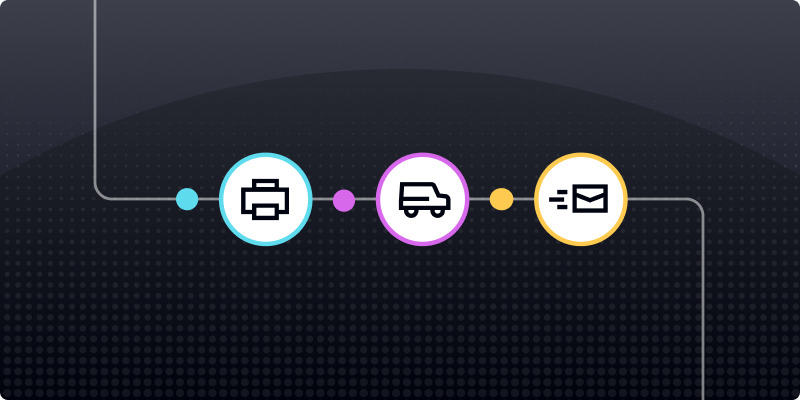
A simplified view of the journey looks like this:
- Mail is produced and prepared for induction
- It enters USPS at an origin, regional, or destination entry point
- It moves through sorting and distribution layers
- It reaches the local post office for last mile delivery
Every additional stop introduces time and variability. This is why proximity and entry strategy are so powerful, they reduce the number of stops and handoffs.
Balancing speed and postage cost
Faster options can cost more. The right decision depends on your goals and how tight your timing needs to be.
A few practical questions to weigh:
- Do you have a specific in-home window tied to a promotion or event?
- Is timing more important than per piece cost for this campaign?
- Does your volume support higher presort levels that can offset postage?
For many programs, the best first move is optimizing print location and entry point. You often get better timing without changing mail class simply by starting closer to where the mail is going.
How to track delivery performance in real time
If you want to improve routing, you need feedback loops.
Intelligent Mail Barcode tracking
The Intelligent Mail barcode enables scan events as pieces move through USPS. Those scans help you understand where time is being spent and how consistent delivery is by region.
Connect delivery data to campaign analytics
Delivery timing is part of performance. Pair scan data with response tracking like QR codes, PURLs, or offer codes to understand how timing affects conversion.
With Lob, Production + Tracking surfaces delivery visibility so you can see how mail is moving and use that data to tighten future routing decisions.
How automation optimizes routing for faster delivery
Routing gets complicated quickly when you are managing print locations, drop shipping, presort requirements, and service standards at scale. Automation helps by handling the routing logic consistently every time.
Lob can automate print location selection through the Print Delivery Network and support smarter entry strategies, while tools like Postal IQ help you understand how mail actually moves so you can make better routing decisions over time.
Want to see what this looks like for your program? Book a demo and we will walk through how to improve delivery predictability without adding operational overhead.
FAQs about direct mail routing and delivery speed
FAQs

How long does First Class Mail take compared to USPS Marketing Mail?
First Class Mail typically reaches recipients in 1 to 5 business days, while Marketing Mail is often 3 to 10 business days. The difference comes down to service standards and how USPS prioritizes processing.
Can you guarantee a specific delivery date for direct mail?
No. USPS controls final routing and delivery, so specific delivery dates cannot be guaranteed. You can improve reliability by choosing the right print location, entry point, mail class, and presort level for your timeline.
What is drop shipping and how does it speed up direct mail delivery?
Drop shipping transports mail closer to recipients before USPS induction. This can bypass earlier processing steps and reduce the time pieces spend moving across the network.
Does address quality affect how fast direct mail is delivered?
Yes. Invalid or incomplete addresses can delay processing, trigger reroutes, or cause returns. Running lists through CASS certified validation before a send helps pieces move through the network more smoothly.
Answered by:

Sam Melero