Direct mail campaigns used to be fairly straightforward: choose a mailing list, create one piece of creative, send it to a printer, and wait to see what happened.
The basic parts of a campaign are still the same. You need the right audience, an offer that gives people a reason to respond, creative that earns attention, and a delivery plan that gets the piece into the mailbox at the right time.
What has changed is how much control marketers have over the process. Customer data can determine who receives each piece, what message they see, and when it is sent. Tracking and response tools also make it easier to understand what happens after the campaign launches.
This guide walks through how to build each part, run the campaign, measure the results, and scale what works without wasting budget.
What a modern direct mail campaign looks like
A traditional direct mail campaign often starts with a spreadsheet. The team assembles a mailing list, sends a creative file to a printer, approves a proof, and waits for the campaign to enter the postal system.
That process can get mail into homes, but it makes campaigns harder to personalize, adjust, and measure.
Modern direct mail connects the mailing process to customer data and marketing systems. Instead of waiting for a monthly list pull, a brand can send mail when a customer takes an action or reaches a meaningful point in the customer journey.
A new customer might receive a welcome postcard after making a purchase. A shopper could receive a reminder after abandoning a high-value cart. A subscriber might get a letter before a renewal date, while an inactive customer receives a personalized win-back offer.
Choosing which customer data should trigger a direct mail send helps teams focus on moments when a physical message can support the next customer action.
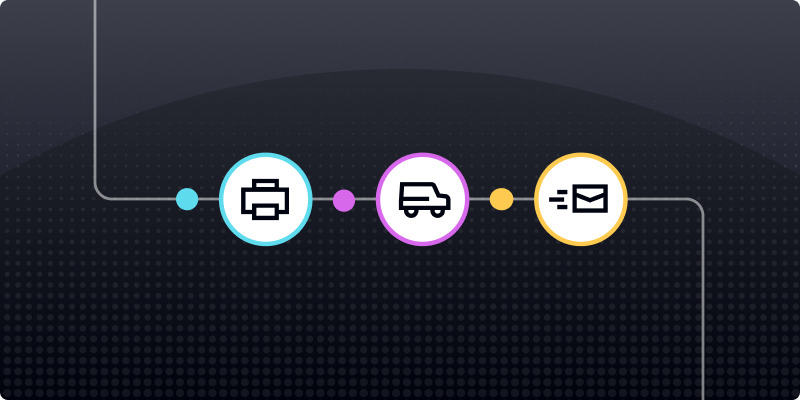
Modern direct mail platforms can also automate address checks, production, tracking, and reporting. That makes direct mail easier to manage as an ongoing channel rather than a separate print project that starts from scratch with every send.
How to build a direct mail campaign
A strong campaign starts before the creative is designed. The objective, audience, offer, format, and delivery plan should work together from the beginning.
Define the campaign objective
Start by deciding what the campaign needs to accomplish.
The goal might be to generate a purchase, schedule an appointment, activate an account, encourage a renewal, or re-engage an inactive customer.
Keep the objective specific enough to measure. A renewal campaign should be evaluated using completed renewals, while an acquisition campaign may focus on leads, purchases, or cost per acquired customer.
The objective also helps determine which audience, format, offer, and response method make sense. If the campaign does not have a clear goal, it becomes much harder to judge whether it worked.
Choose and segment the audience
Audience selection can determine whether the rest of the campaign has a chance to perform. Strong creative still wastes printing and postage when it reaches people who are unlikely to care.
Start with customer information you already have, such as purchase history, account status, lifecycle stage, location, recent engagement, or customer value.
You might separate new customers from repeat buyers, active customers from lapsed ones, or people approaching renewal from those who recently renewed.
The purpose of segmenting a direct mail list is not to create as many audience groups as possible. It is to identify meaningful differences that should affect the message, offer, format, or timing.
Start with a focused group you can evaluate clearly. If the campaign performs well, expand into related segments instead of mailing the broadest available audience immediately.
Create an offer that fits the audience
The offer gives the recipient a reason to respond.
It does not always need to be a discount. Depending on the campaign, the offer could include free shipping, a consultation, early access, a loyalty benefit, a free trial, or useful account information.
The offer should match both the audience and the objective. A discount may work for a win-back campaign, while a renewal reminder may need convenience and urgency more than an incentive.
Make the value easy to understand. The recipient should not have to search through several paragraphs or complicated terms to figure out what is being offered and how to claim it.
Choose the right format
The format affects how much information you can communicate and how the recipient experiences the campaign.
Postcards work well for simple, visual offers because the main message is immediately visible. Letters provide more room and privacy for detailed or sensitive communications. Self-mailers and booklets can support larger stories, multiple products, or step-by-step information.
Choose the format based on the message rather than habit. A complex offer may need more room than a postcard provides, while a short reminder may not need an envelope and several pages.
The size, paper, fold, envelope, and mail class should support the campaign’s purpose rather than becoming unnecessary additions.
Design around one clear action
The recipient should quickly understand what the message is about, why it matters, and what to do next.
Lead with the main benefit or reason for the communication. Supporting copy can add context, but it should not bury the offer.
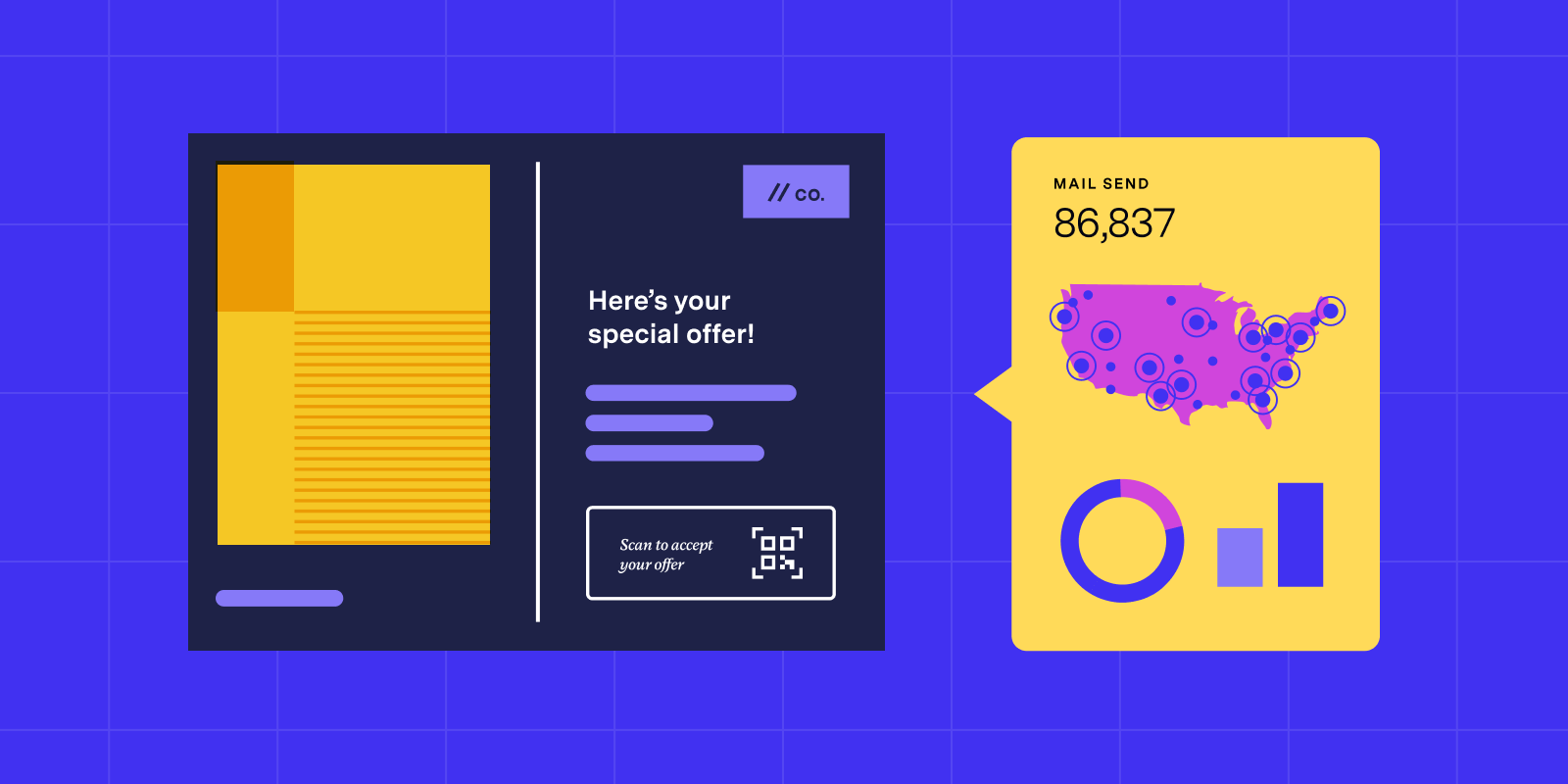
The call to action should be specific and easy to follow. Depending on the campaign, that might mean scanning a QR code, visiting a personalized URL, calling a phone number, using an offer code, or visiting a nearby location.
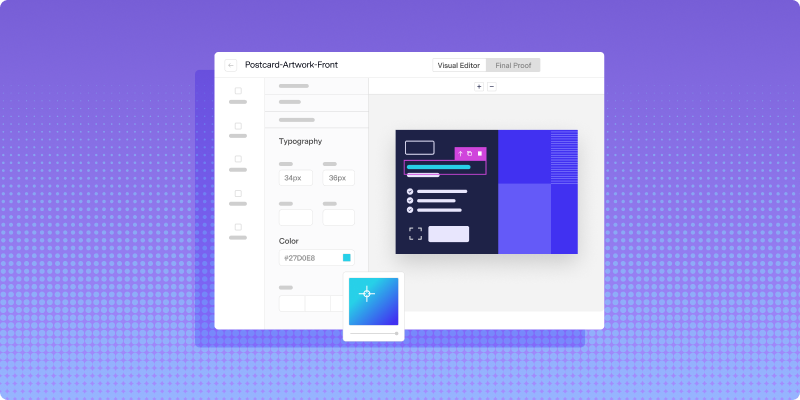
Personalization can make the creative more relevant. Customer data can change the headline, imagery, offer, location, account information, expiration date, or call to action.
With dynamic direct mail templates, one approved design can generate different versions without requiring the team to create a separate file for every recipient.
Use personalization where it improves the message. Adding customer information simply because it is available can make the piece feel cluttered or unnecessary.
How to run a direct mail campaign
Once the strategy and creative are ready, the focus shifts to data quality, proofing, timing, production, and measurement.
Verify the address data
Bad address data creates waste before the campaign has a chance to perform.
Check records for missing unit numbers, outdated addresses, incorrect ZIP Codes, duplicate entries, and formatting problems. Addresses should be reviewed when they enter the database and checked again before production.
Different address quality checks for direct mail can help standardize records, identify deliverability problems, and keep customer information current.
Clean address data improves more than delivery. It also makes campaign reporting more reliable because the mailed audience more closely reflects the people who could actually receive the piece.
Proof every version of the creative
A single static proof may not be enough when a campaign includes personalized content.
Review how the template handles long and short names, missing optional information, different images and offers, long mailing addresses, personalized URLs, QR codes, and required disclosures.
Confirm that content stays within the printable area and does not interfere with folds, perforations, barcodes, or the address block.
For important campaigns, include members of your own team in the mailing audience. Seeing the finished piece provides an additional check on print quality, delivery timing, and the full recipient experience.
Decide whether to schedule or trigger the send
Some campaigns work best as planned batches. Seasonal promotions, event invitations, and announcements may need many pieces to arrive within the same window.
Other campaigns are more effective as ongoing triggers. Welcome messages, abandoned-cart reminders, renewal notices, and customer milestones can be sent when each person meets the appropriate conditions.
Automated triggers should include safeguards. Make sure the customer qualifies for the campaign, has not already received the piece, and does not appear on a relevant suppression list.
The right approach depends on whether the campaign is tied to a shared date or an individual customer event.
Plan around the in-home window
The date a campaign leaves production is not necessarily the date that matters.
Campaigns tied to a promotion, event, renewal period, or deadline should be planned around when the piece needs to reach the recipient. The in-home date accounts for production, postal entry, USPS processing, and final delivery.
Work backward from the desired arrival window. Leave time for approvals, rendering, production, postal processing, and delivery variation.
A piece that arrives too early may be forgotten. One that arrives after the offer or event has ended cannot perform, even if the audience and creative were strong.
How to measure and improve a direct mail campaign
Measurement should be built into the campaign before the first piece is printed.
Common tracking methods include unique QR codes, personalized URLs, offer codes, dedicated phone numbers, campaign landing pages, and CRM conversion data.
Delivery is useful operational information, but it is not the final measure of success. Track the action connected to the original objective, whether that is a purchase, renewal, appointment, account activation, or another conversion.
To measure direct mail campaign performance, connect delivery information with engagement, conversions, revenue, and other campaign outcomes.
Results can then be compared across audience segments, offers, formats, and creative versions.
Test before expanding
Testing helps identify which parts of the campaign affect response.
You might test the audience, headline, offer, image, format, call to action, response method, or timing. Change one primary variable at a time so you can tell what caused the difference.
For example, test one offer against another while keeping the audience and creative consistent. Each version should have its own response method so conversions can be attributed correctly.
The stronger version can become the control for the next test. Over time, each campaign produces information that improves the next one.
How to scale a direct mail campaign
Scaling does not mean sending the same piece to a much larger list.
Increasing volume before validating the audience, offer, creative, and workflow can multiply small problems. A data issue that affects a few pieces during a pilot could affect thousands during a larger campaign.
Before expanding, confirm that the campaign reached the intended audience, the personalization rendered correctly, the offer generated the desired action, and the response method captured conversions accurately.
Production and delivery should also match the campaign timeline. A campaign needs a clear reason to scale, not just a handful of responses.
Expand into related audiences
Start with the next most relevant segment rather than the largest available list.
A campaign that works with recent customers might expand to people who purchased slightly longer ago. A successful regional test might move into areas with similar customer characteristics.
Continue evaluating results by segment. Performance may change as the audience becomes less familiar with the brand or less closely aligned with the original offer.
Automate repeatable work
Manual processes that feel manageable during a pilot can quickly become bottlenecks as volume grows.
Templates, data connections, approvals, address checks, triggered sends, tracking updates, and reporting should be standardized wherever possible.
Automation should reduce repetitive work without removing oversight. Teams still need clear ownership of audience rules, creative approvals, data quality, production exceptions, and campaign decisions.
Protect print and delivery quality
Larger campaigns may require production across multiple facilities. That makes consistency in color, materials, finishing, and delivery performance more important.
Ask how the provider selects print facilities, manages capacity, handles disruptions, and maintains standards across its network.
A distributed production network can make scaling easier, but only when the same quality and operational requirements apply at every location.
Build a direct mail program that improves over time
A successful direct mail campaign still depends on the audience, offer, creative, and delivery.
Modern tools make each part more precise. Customer data improves targeting and personalization. Automation allows mail to respond to individual actions. Address checks reduce wasted production and postage. Tracking and attribution help teams understand what happened after the campaign launched.
Start with a focused audience and one clear objective. Verify the data, make the response measurable, and test before expanding. When the campaign proves itself, scale the process rather than simply increasing the number of pieces sent.
Book a demo to see how Lob can help your team build, automate, track, and scale direct mail campaigns.
Frequently asked questions about direct mail campaigns
FAQs

What are the four main parts of a direct mail campaign?
The four main parts are the audience, offer, creative, and delivery. The audience determines who receives the piece, the offer gives them a reason to act, the creative communicates the message, and the delivery plan gets it into the mailbox at the right time.
How do you start a direct mail campaign?
Begin with a measurable objective and a targeted audience. Develop a relevant offer, select an appropriate format, create the mailpiece, verify the addresses, add a trackable response method, proof the campaign, and plan production around the desired in-home window.
How can you track a direct mail campaign?
Teams can track direct mail using QR codes, personalized URLs, offer codes, dedicated phone numbers, landing pages, CRM conversions, and mailpiece delivery events. Combining multiple signals provides a more complete view than relying on delivery or response alone.
What should you test in a direct mail campaign?
You can test the audience, offer, headline, format, imagery, call to action, response method, and timing. Change one primary variable in each test so you can identify what caused the performance difference.
When should you scale a direct mail campaign?
Scale after a pilot confirms that the audience, message, offer, data, production process, and measurement plan work as intended. Expand gradually into related audiences and continue monitoring performance as volume increases.
Answered by:

Sam Melero