Renewal notices seem simple until your team is sending thousands of them across different customer segments, renewal dates, and compliance requirements.
A renewal date may live in one system. Customer addresses may live in another. Someone exports a list, sends it to a printer, reviews proofs, checks timing, and hopes the notice reaches the recipient on time. At small volumes, that process may work. At scale, the gaps start to show.
Automating renewal mail means connecting your CRM, billing system, policy platform, or customer database to a direct mail workflow, so notices can trigger, personalize, print, mail, and track without manual handoffs.
This guide breaks down where manual renewal mail programs create risk, how automated workflows work, and what to look for in a platform that can support renewal notices at scale.
Where manual renewal mail programs break down
Manual renewal mail programs usually fail in the handoffs.
Renewal dates may live in a CRM, billing platform, policy system, spreadsheet, or property management tool. Customer addresses may be stored somewhere else. Creative templates may be managed by marketing, while compliance reviews sit with legal or operations. The actual mail file may not be created until someone exports data and sends it to a vendor.
That creates several common issues:
- Missed or rushed notice windows
- Outdated or incomplete addresses
- Manual list exports
- Version control problems
- Delayed proofing cycles
- Limited production visibility
- No clear delivery confirmation
- Disconnected renewal performance data
The issue is not that teams do not care about timing. It is that manual workflows make it difficult to repeat the same process accurately across every customer, renewal date, and notice type.
How automated mail renewals actually work
Automated renewal mail starts with a system of record.
That may be a CRM, billing platform, policy administration system, subscription platform, property management system, or internal database. That system holds the data needed to send the notice, including renewal dates, customer names, mailing addresses, account details, policy numbers, subscription terms, and communication preferences.
When a trigger fires, the workflow can pull the right customer data, verify the mailing address, populate an approved template, route the mailpiece into production, and track delivery activity.
Instead of managing a multi-day handoff, the notice can move automatically from trigger to production to delivery tracking.
Lob’s guide to connecting direct mail automation with your marketing tech stack explains how direct mail can work with CRMs, marketing automation platforms, and customer data systems.
Steps to automate renewal notices by mail
1. Map renewal triggers and notice requirements
Start by identifying every renewal-related communication your team sends.
Examples may include:
- Policy renewal notices
- Lease renewal notices
- Subscription renewal notices
- Membership renewal notices
- Service contract renewals
- Account renewal reminders
- Non-renewal notices
- Rate change notices
- Payment or billing reminders
Then map the timing requirements for each communication. Some renewal and non-renewal notices may be governed by contracts, state rules, industry regulations, or internal policy, so confirm the requirements with your legal or compliance team before automating the workflow.
The goal is to define the notice window clearly enough that automation can work backward from it.
2. Connect your CRM, billing, or policy system
Automation depends on clean data flowing from the system where renewal information lives.
That may include:
- Salesforce
- HubSpot
- A billing platform
- A subscription management tool
- A policy administration system
- A property management system
- A customer data platform
- An internal database
Once the source system is connected, renewal data can trigger mail automatically instead of requiring manual exports.
For higher-volume programs, API-based workflows can reduce handoffs and make mail easier to scale. Lob’s article on high-volume direct mail automation explains how automation helps teams reduce manual errors as volume grows.
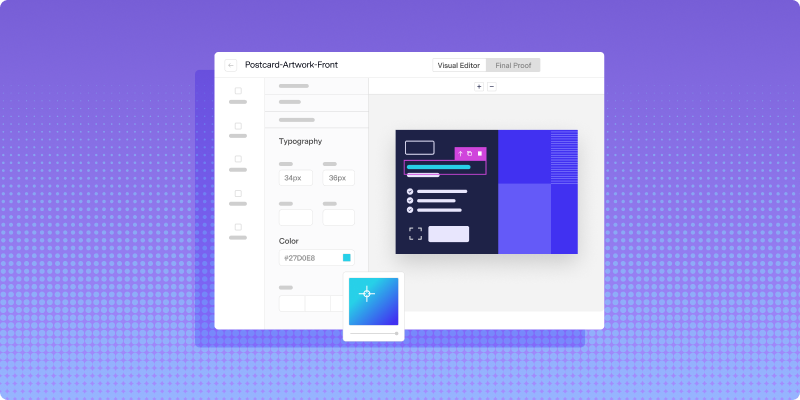
3. Build templates with variable data
Renewal mail should not require a new design or file build every time.
Create reusable templates with variable fields for details such as:
- Customer name
- Mailing address
- Renewal date
- Account number
- Policy number
- Property address
- Subscription plan
- Payment amount
- Renewal offer
- Contact information
- Required disclosures
Templates help teams keep approved language, branding, and formatting consistent while still personalizing each notice.
4. Set drop dates and delivery windows
The drop date is when mail enters the mailstream. The in-home window is when the recipient is expected to receive it.
For renewal workflows, both matter.
If a notice must arrive before a certain date, do not schedule the campaign around the deadline itself. Work backward to account for production time, postal transit, weekends, holidays, and any internal review steps.
For regulated or contractual notices, confirm whether the requirement is based on send date, postmark date, delivery date, or another standard before building the workflow.
5. Layer in follow-ups across channels
One notice is not always enough.
Renewal workflows often perform better when teams coordinate direct mail with email, SMS, phone outreach, customer portal notifications, or sales tasks. The right mix depends on your industry, customer preferences, communication permissions, and compliance requirements.
Building multi-touch renewal sequences
One notice, one channel, one shot is rarely enough for renewal workflows. A stronger approach uses a sequence that escalates across channels based on timing, urgency, and customer response.
Mail gets attention, email provides convenience, and SMS can create urgency when it is permitted and appropriate. Each touch should build on the last, not repeat the same message in a different format.
For teams coordinating physical and digital channels, Lob’s guide to unified direct mail and digital marketing campaigns covers how to connect mail with broader campaign strategy.
Personalizing renewal notices beyond a first name
Personalization should do more than insert the recipient’s first name.
The most useful renewal notices use data the customer already expects you to know. That makes the communication clearer, more relevant, and easier to act on.
Examples include:
- Renewal date
- Account or policy number
- Current plan, coverage, or subscription
- Property or service address
- Local contact information
- Payment amount or next-step instructions
- State- or region-specific disclosures
- Loyalty messaging for long-term customers
- Different offers or instructions for at-risk accounts
Personalization also helps reduce confusion. A notice that clearly states what is renewing, when action is needed, and how to respond is easier for customers to understand.
Staying compliant with renewal and non-renewal notices
Compliance requirements depend on the industry, jurisdiction, contract, and type of notice. That is why automation should be built around approved rules, not assumptions.
For renewal and non-renewal workflows, teams should define:
- Required notice windows
- Approved templates and disclosures
- Communication preferences
- Mailing method requirements
- Proof-of-mailing requirements
- Record retention rules
- Escalation steps for failed or returned mail
- Approval workflows for template or rule changes
Where teams often run into trouble is automating the send without preserving the proof.
A stronger workflow captures documentation as mail moves through the process, including timestamps, template versions, recipient records, address checks, production events, delivery events, and follow-up actions.
For regulated mail programs, Lob’s guide to compliance workflows for regulated direct mail explains how audit trails, approval workflows, role-based permissions, suppression management, address verification, and delivery visibility can support more controlled mail operations.
Tracking delivery and renewal performance
Sending the notice is only part of the workflow. Teams also need to know whether mail moved through production, when it reached the delivery window, and whether the customer renewed.
Useful tracking methods include:
- Production events
- Delivery events
- QR codes
- Personalized URLs
- Promo or renewal codes
- Call tracking
- CRM status updates
- Renewal completion data
- Return mail data
Delivery visibility is especially useful for renewal workflows because timing matters. If mail is delayed, teams may need to adjust follow-up timing, escalate exceptions, or send additional reminders through another channel.
Lob’s article on tracking direct mail campaign performance in real time explains how delivery events and webhooks can help teams coordinate follow-up activity.
For broader measurement, Lob’s guide to direct mail KPI essentials breaks down the metrics teams can use to evaluate performance.
What to look for in a mail automation platform
The right platform should support both workflow automation and operational control.
Look for capabilities like:
- API and no-code workflow support: Gives technical and non-technical teams ways to automate mail.
- CRM and billing integrations: Keeps renewal data flowing without manual exports.
- Template personalization: Lets teams use reusable templates with customer-specific fields.
- Address verification: Helps reduce returned mail and misdirected notices.
- Delivery tracking: Gives visibility into mail progress and timing.
- Webhooks and event data: Lets teams trigger follow-up actions based on mail status.
- Approval workflows: Supports review before sensitive or regulated notices are sent.
- Audit trails: Helps document what was sent, when, and through which workflow.
- Role-based access: Limits who can create, approve, or modify mail programs.
- Distributed print network: Supports scalable production and routing across geographies.
For regulated industries, also review the vendor’s security posture, documentation, subprocessors, data handling practices, and compliance support before connecting sensitive customer data.
Automate renewal mail at scale with Lob
Renewal notices are too important to rely on spreadsheets, manual exports, and disconnected vendor handoffs.
Lob helps teams automate direct mail workflows with API-based sending, template personalization, address verification, delivery visibility, and integrations that connect mail to the systems teams already use.
With Lob, teams can:
- Trigger renewal notices from customer, billing, or policy data
- Personalize each mailpiece with variable fields
- Verify and standardize addresses before production
- Track mail production and delivery activity
- Coordinate direct mail with email, SMS, or CRM follow-up
- Support repeatable workflows for high-volume programs
- Build more measurable renewal campaigns
Automated renewal mail gives teams more control over timing, delivery visibility, and follow-up. That makes it easier to reduce manual work, catch address issues earlier, and help customers renew before they lapse.
See how Lob helps teams automate renewal mail workflows by booking a demo.
Frequently asked questions about automating renewal notices by mail
FAQs

What is automated renewal mail?
Automated renewal mail is a workflow that sends renewal-related direct mail based on triggers from a CRM, billing system, policy platform, or customer database.
What types of renewal notices can be automated?
Teams can automate policy renewals, lease renewals, subscription renewals, membership renewals, service contract renewals, account renewal reminders, rate change notices, non-renewal notices, and other recurring customer communications.
Why use direct mail for renewal notices?
Direct mail gives teams a physical channel for important renewal communications. It can complement email, SMS, phone outreach, and customer portal reminders, especially when the notice is time-sensitive or requires a formal communication format.
How do you track renewal mail performance?
Teams can track renewal mail performance using production events, delivery events, QR codes, personalized URLs, CRM status updates, renewal completion data, and return mail data.
Answered by:

Sam Melero