
Choosing where to trigger direct mail is not really a debate about which platform is best. It is a question of where the right signal lives, where the decision logic runs, and which system can pass clean data into production.
A CRM is often the right owner for sales and account milestones. A customer data platform (CDP) is useful when the send depends on unified behavior or audience membership. A marketing automation platform (MAP) is usually the best fit when direct mail is one step in a coordinated campaign journey.
The practical answer is simple: assign one trigger owner to each use case. That system should evaluate the event, confirm eligibility, apply suppression rules, and send the required data to your direct mail platform. This guide explains how to choose that owner and build a workflow that does not quietly fail between systems.
What is a direct mail trigger?
A direct mail trigger is an event or condition that automatically starts a mail send. It replaces a manual list pull with a rules-based workflow tied to a customer or account moment.
Common triggers include:
- A lead reaches a qualified stage.
- A shopper abandons a high-value cart.
- A customer approaches a renewal date.
- A loyalty member reaches a new tier.
- A prospect engages with a campaign but does not take the next digital action.
- A previously active customer becomes inactive.
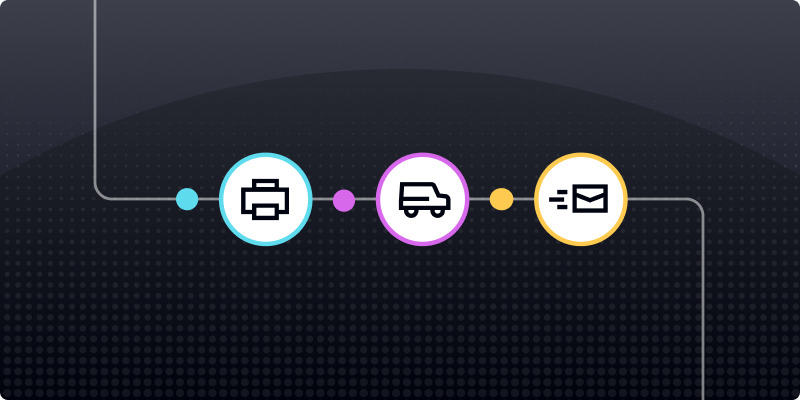
The trigger is only the first part of the workflow. The system also needs to confirm that the person is eligible, has a usable postal address, has not already received the mailpiece, and has not been suppressed. It then passes the recipient data and creative variables to a direct mail platform for production.
That is why the trigger owner matters. The system must have enough context to make the send decision, not just enough data to notice that an event occurred.
CRM vs. CDP vs. marketing automation for direct mail triggers
Each platform contributes a different kind of context to a triggered direct mail program.
There is often overlap. A CRM may receive product activity from a CDP. A MAP may read lifecycle stages from a CRM. A CDP may build an audience that is activated through a MAP. The presence of the same field in several systems does not mean every system should be allowed to trigger the same mailpiece.
Instead, define a single owner for the use case. Other platforms can supply data, but one system should make the final send decision. This keeps timing, suppression, and reporting easier to manage.
When your CRM should trigger direct mail
Use your CRM when the send depends on a known relationship, sales process, or account milestone. The CRM is usually the system of record for fields such as lead status, opportunity stage, account owner, renewal date, and customer tier.
Strong CRM-triggered use cases include:
- Lead or opportunity changes: Send a personalized introduction when a prospect reaches a qualified stage or a package when an opportunity closes.
- Account milestones: Recognize an anniversary, upgrade, renewal, or expansion.
- Sales follow-up: Support an account-based outreach sequence with a mailpiece assigned to a specific representative.
- Retention and win-back: Trigger a message when an account changes status or enters a defined period of inactivity.
CRM ownership works best when the event is explicit and the customer identity is already known. The workflow can include the account owner, segment, product, or lifecycle stage as personalization fields.
Before launching, check how quickly the source field updates and whether a person can move backward through the same stage. A trigger based on every field change can produce duplicate sends if the workflow does not record that the recipient has already qualified. Lob's overview of triggering direct mail from CRM events covers the data, address, timing, and attribution considerations behind this setup.
When your CDP should trigger direct mail
Use your CDP when the send depends on a unified customer profile, behavior collected across several channels, or membership in a calculated audience. CDPs can combine product activity, website behavior, purchase history, and campaign engagement to create a more complete view of a known person.
Useful CDP-triggered use cases include:
- Cross-channel intent: A known customer repeatedly engages with a product category across web, app, and email.
- Calculated audiences: A person enters a high-value, high-intent, lapsed, or loyalty segment.
- Product behavior: A user reaches a usage threshold or stops using an important feature.
- Identity consolidation: Several known records are resolved into one governed customer profile before eligibility is evaluated.
A CDP can identify the audience, but it still needs a valid connection between the profile and a postal address. Do not assume that anonymous web activity automatically provides a mailable identity. The workflow should require a known person, an approved source for the address, and any consent or governance conditions your organization applies.
CDP ownership is most useful when the segment itself is the signal. If the CDP only passes a field into a journey that the MAP controls, it may be cleaner for the MAP to own the final trigger instead.
When marketing automation should trigger direct mail
Use your MAP when direct mail is part of a timed, multi-step campaign. Marketing automation platforms are designed to evaluate engagement, apply journey rules, wait between steps, and coordinate actions across channels.
Strong MAP-triggered use cases include:
- Nurture sequences: Add a postcard after a prospect engages with an email or content offer but does not take the next action.
- Event follow-up: Send a relevant piece after webinar registration, attendance, or a content download.
- Abandonment workflows: Follow a known shopper's digital reminder sequence with physical mail when the value and timing justify it.
- Channel coordination: Schedule mail alongside email, paid media, SMS, or sales outreach without creating competing journeys.
The MAP is a good owner when the trigger depends on what happened earlier in the campaign. It can evaluate whether the recipient already converted, whether another message is scheduled, and whether the mailpiece still makes sense at that point in the journey.
Physical mail does not arrive as quickly as email or SMS, so build production and postal timing into the sequence. A delay that works for a digital message may not work for a mailpiece. For a broader view, see how teams orchestrate direct mail with email and digital channels.
How a direct mail trigger moves from event to mailbox
The specific tools may differ, but a reliable triggered workflow follows the same basic path.
1. The source system detects an event
The CRM, CDP, or MAP records a qualifying change. That might be a stage transition, audience entry, purchase event, engagement threshold, or scheduled date.
2. Eligibility and suppression rules run
The trigger owner confirms that the recipient belongs in the campaign. It checks frequency limits, previous sends, customer status, geographic restrictions, and suppression rules. It should also decide what happens if required fields are missing.
3. Identity and address data are checked
The workflow connects the event to one intended recipient and one current postal address. Postal address verification can help standardize address data and identify records that are incomplete or undeliverable before production. Lob's Address Verification can be used at data entry or before a mail request is submitted.
4. The request is sent to the direct mail platform
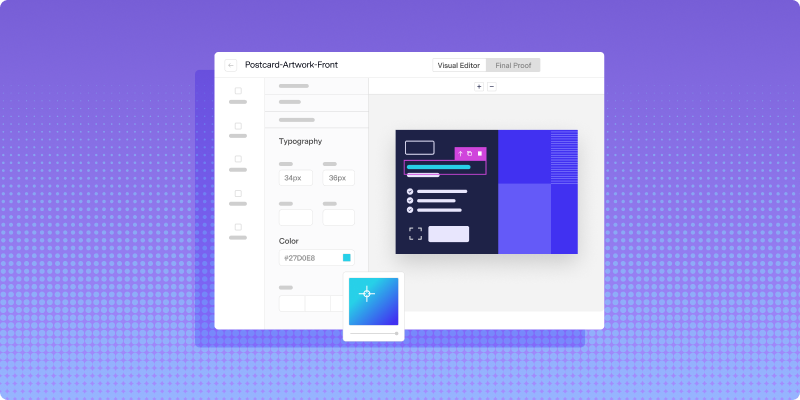
The trigger owner passes the recipient, mail format, creative version, and personalization variables through an API, native connection, or automation layer. The direct mail platform validates the request and routes the mailpiece into production.
5. Status data returns to the stack
Production and mailstream events should flow back into the systems your team uses for operations and measurement. Those events can support reporting, customer service, follow-up timing, and attribution. They should not be treated as proof that a recipient viewed or responded to the piece, so response measurement still needs mechanisms such as QR codes, personalized URLs, offer codes, or matched conversion data.
Where triggered direct mail workflows break
Most failures happen at the handoff between systems, not in the trigger idea itself.
More than one system can send the same piece
The CRM detects a stage change while the MAP detects journey eligibility, and both workflows submit a request. Prevent this by naming one trigger owner and storing a durable campaign or send identifier that every connected system can reference.
Suppression rules are fragmented
A person is excluded in one platform but still eligible in another. Maintain a clear source of truth for global suppressions, campaign frequency rules, and customer-status exclusions. Confirm that those rules are evaluated immediately before submission.
The address is stale, incomplete, or attached to the wrong identity
A valid trigger does not guarantee a valid destination. Verify the address, define how recent it must be, and avoid filling gaps with uncertain identity matches. If the record cannot meet the campaign's address requirements, route it to an exception queue instead of sending automatically.
Data arrives too late
A daily batch may be fine for a renewal reminder but too slow for an abandonment or high-intent campaign. Document the acceptable delay for each use case, then test the full path from source event to accepted mail request.
Missing fields stop personalization
Creative templates often require more data than the trigger itself. A campaign may qualify on lifecycle stage but fail because a name, offer, representative, or image variable is blank. Define defaults and validation rules before launch.
No one owns errors or feedback
A request can fail after the source system marks the workflow complete. Make sure errors are visible, retries are controlled, and the responsible team knows which system to inspect. Feed status events back into reporting so a triggered event is not mistaken for a successfully produced mailpiece.
A framework for choosing the trigger owner
Use these questions for each direct mail use case:
- Where does the qualifying signal originate? Choose the system that records the most authoritative version of the event.
- Where does the decision logic belong? Consider segmentation, journey order, timing, and suppression, not just the trigger field.
- Is the recipient identity complete? Confirm that the workflow can connect the event to one known person and a governed postal address.
- How time-sensitive is the send? Match the integration and sync method to the campaign's useful response window.
- Which system records that the request was submitted? Create a durable send record that prevents duplicates and supports troubleshooting.
- Where will status and response data return? Decide how production, mailstream, and conversion data will support measurement and follow-up.
The answer may differ by campaign. Your CRM can own renewal mail while your CDP owns an intent audience and your MAP owns a nurture sequence. Consistency matters within a use case, not across every program in the organization.
Build triggered direct mail workflows with Lob
Lob helps teams connect direct mail to customer data and campaign workflows through APIs and integrations. You can submit personalized mail requests from the system that owns the trigger, verify postal addresses, automate production, and return status data to the tools your team already uses.
The result is a direct mail program that responds to meaningful customer moments without relying on manual exports or disconnected print workflows. Explore how Lob connects direct mail automation to your marketing tech stack, or book a demo to discuss your workflow.
Frequently asked questions about direct mail triggers
FAQs

Should a CRM, CDP, or MAP always own direct mail triggers?
No single platform is always the right owner. Use the CRM for relationship and account events, the CDP for unified behavior and calculated audiences, and the MAP for coordinated campaign journeys. Assign one final trigger owner to each use case.
Can a CDP replace a CRM for triggering direct mail?
A CDP can trigger mail from audience membership or behavioral data, but it does not automatically replace the CRM's role as the system of record for sales stages and account relationships. The right choice depends on which system holds the authoritative signal and can evaluate the full send decision.
Does marketing automation software send physical mail on its own?
Most marketing automation platforms orchestrate the workflow and pass recipient data to a direct mail platform. The direct mail platform handles functions such as request validation, rendering, production, postage, and status events.
What happens if two systems fire the same trigger?
The recipient may receive duplicate mailpieces unless the workflow has a shared deduplication rule. Name one trigger owner, use a unique send or campaign key, and check prior-send records immediately before submission.
How often should trigger data sync between systems?
The sync should match the use case. Time-sensitive behavioral campaigns may need real-time or near-real-time event flow. Scheduled lifecycle mail may work with a batch process. Test the end-to-end delay rather than relying only on the stated sync frequency.
Answered by: