
Enterprise direct mail rarely fails because teams doubt the channel. It fails because the workflow behind it cannot keep up with the volume, data, timing, and oversight the program requires.
Files move between disconnected vendors. Address lists are checked too late. Production updates arrive through email. Delivery data lives somewhere else. By the time leadership asks what happened, the team is piecing together an answer from several systems.
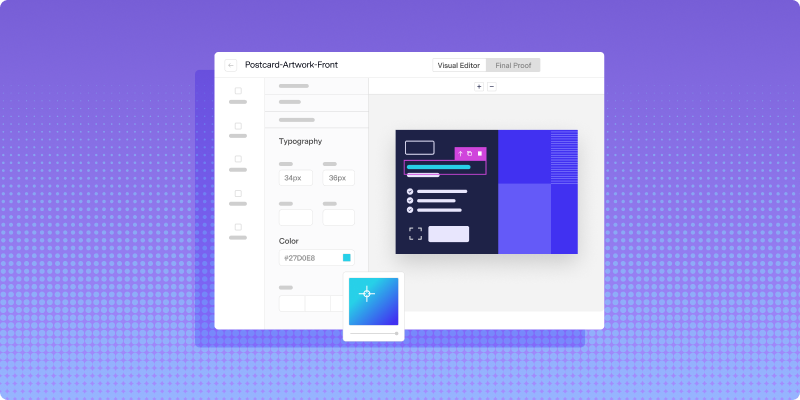
An enterprise direct mail platform brings those steps into one connected workflow. Lob combines campaign tools, APIs, address verification, distributed print production, postal routing, and delivery tracking so teams can manage direct mail with the same level of control they expect from digital channels.
Here’s what makes a direct mail platform ready for enterprise use, where traditional workflows break down, and how Lob supports complex programs at scale.
What makes a direct mail platform enterprise ready?
Enterprise readiness is not just the ability to accept a large mailing list. A platform needs to support the complete operation around that volume, including data handling, production capacity, security, delivery visibility, integrations, and reporting.
Look for these core capabilities:
- Scalable production: The platform should handle large and recurring sends without creating new manual steps or sacrificing quality.
- Workflow automation: APIs, webhooks, and no-code tools should connect customer actions directly to mail creation and production.
- Address quality: Verification should happen before printing so undeliverable or incomplete records do not waste production and postage.
- Security and compliance support: The provider should document its controls, audits, data handling, and support for applicable regulatory requirements.
- Production and delivery visibility: Teams should be able to follow individual mailpieces through production and the mailstream, not just confirm that a batch was submitted.
- Integration flexibility: The platform should work with the CRMs, marketing automation tools, customer data platforms, and internal systems already in use.
- Operational support: Enterprise teams need clear ownership, escalation paths, and help implementing complex workflows.
Why enterprise direct mail workflows break at scale
A manual workflow may feel manageable at low volume. The same process becomes fragile when campaigns include hundreds of thousands of records, multiple business units, regulated data, dynamic creative, and strict delivery windows.
Too many vendors create too many handoffs
Enterprise teams often use separate providers for data processing, creative, printing, postal preparation, and reporting. Every handoff adds another file transfer, approval, status check, and opportunity for an error.
When something goes wrong, accountability becomes unclear. A connected platform reduces those gaps by keeping creation, production, and tracking in one workflow.
Manual processes make small errors expensive
A mismatched column, outdated template, or incorrect personalization rule can affect thousands of pieces before anyone notices. Physical mail cannot be recalled or patched after it enters production.
Enterprise workflows need automated validation, controlled templates, proofs, permissions, and repeatable processes that catch problems before printing.
Batch-level updates leave teams guessing
Knowing that a campaign shipped does not tell you when a specific piece entered the mailstream, moved through USPS processing, or reached its destination.
That missing detail makes it harder to investigate delays, support customers, coordinate digital follow-ups, and connect responses with delivery timing. Mailpiece-level tracking turns a vague batch status into actionable delivery signals.
Single-facility production limits resilience
A single printer creates a concentration risk. Equipment downtime, regional weather, capacity constraints, or a sudden volume increase can delay the entire campaign.
A distributed print network adds redundancy, but only if every facility follows shared quality and security requirements. Enterprise teams need both capacity and centralized control.
Why Lob is built for enterprise direct mail
Lob was built as a direct mail automation platform, not as a traditional printer with software added later. Its campaign tools and APIs connect customer data with address verification, production, postal routing, and tracking.
That structure gives teams different ways to work within the same system. Marketers can build campaigns, developers can automate custom workflows, and operations teams can monitor production and delivery. Lob’s Print Delivery Network handles production, while Postal IQ supports routing and USPS entry decisions.
Lob features that support enterprise programs
Enterprise programs have different requirements from occasional batch campaigns. These Lob capabilities address the operational problems that become most expensive at scale.
Nationwide Print Delivery Network
Lob’s Print Delivery Network distributes production across qualified facilities instead of relying on one printer. Jobs can be routed based on factors such as location, production capacity, format, and delivery requirements.
The network supports redundancy during high-volume periods and disruptions. Shared specifications, quality controls, and recurring partner audits help maintain consistent output across facilities without requiring your team to manage separate printer relationships.
Production and mailpiece-level tracking
Lob provides visibility into production and USPS mailstream events at the individual mailpiece level. Teams can monitor whether a piece was produced, entered the mailstream, moved through processing, or encountered a delivery issue.
This visibility helps customer service teams investigate a specific communication, marketers align response windows with delivery timing, and operations teams spot exceptions.
USPS scan data is not the same as GPS tracking or guaranteed doorstep delivery. It provides postal processing and delivery-event signals that are much more useful than a single batch status.
Address verification
Address problems become expensive at enterprise volume. Even a small error rate can result in thousands of pieces that were printed and mailed without reaching the intended recipients.
Lob’s Address Verification standardizes and verifies addresses before production. Its US Address Verification solution is CASS Cycle O certified, supporting USPS address-matching standards and deliverability analysis.
Teams can verify addresses when customers enter them or process lists before a campaign, keeping bad data out of production.
Personalization and reusable templates
Enterprise personalization needs to go beyond adding a recipient’s name. Lob can use customer data to change copy, imagery, offers, locations, and calls to action within a reusable template.
Teams can personalize by purchase history, account status, location, or lifecycle stage without designing a separate file for every recipient. They can approve a template’s structure, define which elements may change, and use data rules to generate each version.
APIs, webhooks, and integrations
Lob’s APIs and integrations connect direct mail with the systems where customer data and campaign decisions already live.
Teams can trigger mail from platforms such as Salesforce, HubSpot, Adobe Marketo Engage, Braze, and Iterable, or build custom API connections with internal applications. A customer action that triggers an email or SMS can also trigger a personalized mailpiece.
That approach makes mail part of the customer journey while reducing CSV exports, manual uploads, and repeated data handling.
Security and compliance controls
Enterprise mail may contain personal, financial, or health information. Providers need controls that cover both the software platform and the physical production process.
Lob’s security and compliance program includes encryption in transit and at rest, account controls, audit and API request logs, automatic redaction, and data-retention policies. Lob completes annual SOC 2 Type 2 audits across all five Trust Services Criteria and supports HIPAA-compliant mailings through features that include Business Associate Agreements, privacy audits, and dedicated printing facilities.
Lob also audits its printer network against security, privacy, and operational standards. Enterprise teams should still confirm that the selected configuration supports their specific requirements.
Analytics and attribution support
Enterprise teams need to connect mail activity with business results. Lob’s analytics dashboard and tracking events provide operational data that can be combined with QR codes, personalized URLs, promotional codes, and conversion data.
Delivery events can feed into other systems through APIs and webhooks, helping teams coordinate follow-up messages and build attribution windows around postal activity.
The 2026 State of Direct Mail report found that high-ROI teams were more than three times as likely to integrate analytics and third-party data. Connecting multiple signals creates a fuller view of performance.
How Lob fits into an enterprise marketing stack
Direct mail creates the most value when it operates inside the same data and orchestration systems as email, SMS, paid media, and customer service.
Lob can support several integration patterns:
- CRM-triggered mail: Send onboarding, renewal, reactivation, or follow-up pieces when a customer record reaches a defined status.
- Marketing automation: Add direct mail to an existing campaign sequence alongside email and SMS.
- CDP audiences: Use current customer segments to determine who receives a piece and which version they see.
- Transactional workflows: Trigger statements, notices, letters, or checks from an internal system through the API.
- Delivery-based follow-up: Use mailstream events to time a sales call, email, or customer service action.
- Analytics connections: Send production and delivery data into internal reporting or attribution tools.
How enterprise direct mail provider categories compare
Enterprise teams generally evaluate traditional print vendors, marketing point solutions, and end-to-end automation platforms. Each category handles a different portion of the workflow.
Traditional print vendors
Traditional printers can be a good fit for straightforward, repeatable jobs. The tradeoff is that your team may remain responsible for data preparation, campaign logic, integrations, vendor coordination, tracking, and reporting.
Ask how the printer handles distributed capacity, quality standards, production disruptions, delivery data, and sensitive information. Do not assume that an upload portal makes the complete workflow automated.
Marketing point solutions
Point solutions often make campaign creation easier but depend on third parties for production and delivery. Evaluate how much visibility the platform maintains after a job leaves the software and whether its security, reporting, and support model fits enterprise requirements.
End-to-end automation platforms
An end-to-end platform connects campaign creation with the infrastructure required to verify, produce, route, and track the mail. Lob fits this category by combining software, APIs, Postal IQ, and its Print Delivery Network.
Compare how much of the workflow each platform controls and how clearly your team can see what happens at each stage.
How to choose an enterprise direct mail platform
Start with your current workflow and the problems you need the platform to solve.
1. Map every vendor and handoff
Document where data originates, who prepares it, how creative is approved, where files move, who prints the mail, and how delivery and response data return to your systems.
2. Test production capacity and resilience
Ask how the provider handles your normal volume, seasonal peaks, and sudden increases. Review the print network, routing logic, redundancy, quality controls, supported formats, and process for production disruptions.
Ask what happens when a facility loses capacity or a job fails a quality check, not just for the best-case turnaround time.
3. Confirm the integration path
List the systems that need to send data to or receive events from the platform. Confirm whether each connection uses a native integration, webhook, API, or another method.
Review documentation with the teams that will implement the workflow. A powerful API still needs to support your data model and approval process.
4. Conduct security and compliance due diligence
Request current documentation for relevant certifications, audits, data handling, access controls, retention, incident response, and print-partner oversight. Confirm which controls and services are included in your plan.
The provider should be able to explain how sensitive data moves from your system through production and when it is deleted or redacted.
5. Review tracking and reporting depth
Ask which production and mailstream events are available, how quickly they appear, and how your team can access them. Then confirm how those events connect with downstream conversions and internal reporting.
The goal is to understand what happened after submission and how the campaign contributed to the customer journey.
6. Compare support and total cost
Enterprise pricing should reflect the mail formats, volumes, users, verification needs, integrations, and support your program requires. Lob’s Enterprise plan uses custom pricing and includes account management and integration assistance.
Compare the full cost of the workflow, not only the per-piece rate. Include software, printing, postage, address verification, vendor management, internal labor, reprints, and reporting tools.
Bring enterprise direct mail into one workflow with Lob
Enterprise direct mail requires more than a printer or campaign builder. It needs connected data, automated workflows, resilient production, security controls, delivery visibility, and support that can keep up as the program grows.
Lob brings those capabilities together through its campaign tools, APIs, Postal IQ, Address Verification, Print Delivery Network, and production tracking.
Book a demo to see how Lob can fit your enterprise direct mail workflow.
Frequently asked questions about Lob for enterprise direct mail
FAQs

How does Lob price enterprise direct mail programs?
Lob uses custom pricing for its Enterprise plan. Pricing depends on factors such as mail volume, formats, postage, address verification, and program requirements. Contact Lob for a quote based on your workflow.
What support does Lob provide to enterprise customers?
Lob’s Enterprise plan includes standard support, account management, and integration assistance. The exact implementation and support plan depends on the program’s requirements.
Can Lob connect with CRM and marketing automation platforms?
Yes. Lob offers integrations for platforms including Salesforce, HubSpot, Adobe Marketo Engage, Braze, and Iterable. Teams can also use APIs and webhooks to build custom connections with internal systems.
Can Lob support HIPAA-compliant mailings?
Yes. Lob’s Enterprise plan supports HIPAA-compliant mailings. Available controls include Business Associate Agreements, HIPAA/HITECH privacy audits, dedicated printing facilities, encryption, and data-retention features. Organizations should confirm that their planned workflow and configuration meet their specific compliance obligations.
Does Lob provide mailpiece-level tracking?
Yes. Lob provides production and USPS mailstream events at the individual mailpiece level. These events provide visibility into postal processing and delivery activity, but they are not GPS tracking or a guarantee that a recipient personally received or opened the piece.
Is there a minimum volume for Lob’s Enterprise plan?
Lob currently positions its Enterprise plan for programs sending more than 150,000 mailings per year. Teams below that volume can compare the Developer, Startup, and Growth plans to find the appropriate feature and pricing level.
Answered by:

Sam Melero
.png)