
Growing teams often outgrow manual direct mail faster than expected. Coordinating with print vendors, uploading lists, reviewing proofs, and tracking sends in spreadsheets may work for occasional campaigns, but the process becomes a bottleneck as volume increases.
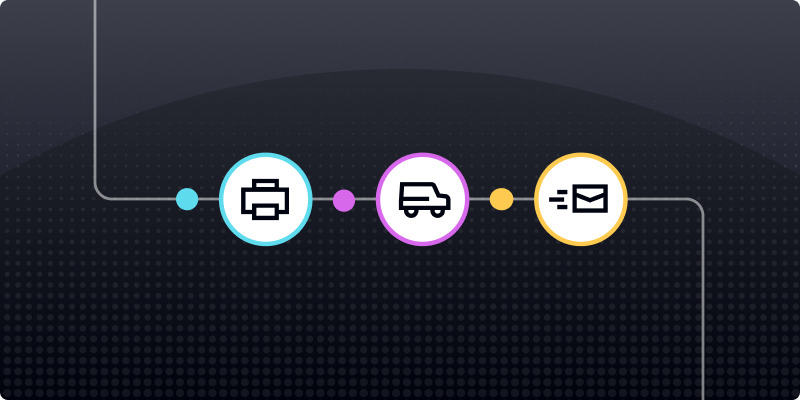
Direct mail automation brings campaign creation, printing, delivery, and tracking into one connected workflow. Teams can trigger personalized mail from the systems they already use instead of manually managing every send.
What direct mail automation is and why growing teams need it
Direct mail automation uses software to manage the creation, production, and delivery of physical mail. Campaigns can be triggered by customer data, scheduled events, or specific actions in a CRM or marketing platform.
It can replace:
- Manual audience and creative uploads
- Repeated print vendor coordination
- Spreadsheet-based campaign tracking
- One-size-fits-all mailings
- Separate production and reporting systems
For growing teams, the benefit is straightforward: they can increase campaign volume without adding the same amount of manual work.
Why growing teams outgrow manual direct mail workflows
Manual direct mail often depends on several disconnected systems. A team might manage customer data in one platform, send files to a printer by email, review proofs separately, and track campaign status in a spreadsheet.
As the program grows, these handoffs create delays and more opportunities for errors. Common challenges include:
- Coordinating with multiple vendors and internal teams
- Reformatting mailing lists for every campaign
- Repeating proofing and approval steps
- Maintaining consistent creative across printers
- Tracking delivery through separate systems
- Adjusting campaigns without delaying production
An automated high-volume direct mail workflow connects customer data directly to production, reducing the manual exports and repeated handoffs that make traditional workflows difficult to scale.
What makes Lob stand out among direct mail marketing platforms
Lob brings campaign management, APIs, integrations, address verification, production, and delivery tracking into one platform.
Marketing teams can manage campaigns through the dashboard or use no-code integrations, while developers can build customized workflows with the Lob API. Lob also uses a nationwide Print Delivery Network rather than relying on one production location.
Together, these capabilities make direct mail easier to manage as part of a connected marketing strategy.
Lob direct mail features built for growing teams
End-to-end direct mail automation
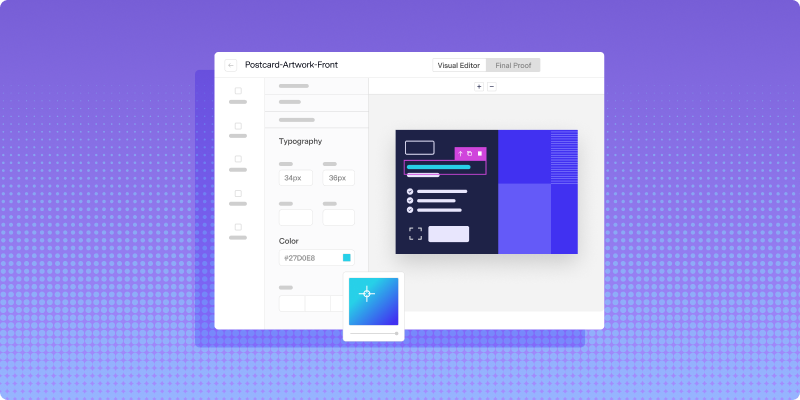
Lob manages the workflow from campaign creation through printing and delivery. Teams can upload or connect an audience, add creative, choose mailing options, and monitor the campaign from one platform.
The Lob API and integrations can also trigger mail automatically based on customer activity. For example, teams can send mail when someone:
- Abandons a high-value purchase
- Reaches a subscription milestone
- Approaches a renewal date
- Becomes eligible for an upgrade
- Needs an account or compliance notice
An end-to-end direct mail automation platform reduces the need to rebuild and submit each campaign manually.
Nationwide Print Delivery Network
Lob’s Print Delivery Network connects geographically distributed print and mail facilities through centralized software. Jobs can be routed based on destination, production capacity, format, and delivery requirements.
This distributed direct mail network infrastructure helps teams avoid depending on one production facility while supporting consistent output as campaign volume grows.
Mailpiece-level tracking
Traditional print workflows often provide little visibility after mail leaves the printer. Lob provides production and delivery events at the mailpiece level, helping teams:
- Monitor campaign progress
- Identify delivery issues
- Coordinate digital follow-up
- Compare campaign performance
- Document activity for operational mail
Webhooks can send these events back to connected systems, allowing another action to occur when a mailpiece reaches a specific stage.
This helps teams track direct mail campaign performance without manually combining reports from multiple vendors.
Address verification
Incorrect or incomplete addresses lead to returned mail, unnecessary production costs, and missed customer communications.
Lob’s Address Verification tools standardize and assess addresses before they enter production. Teams can verify addresses individually, in bulk, or automatically through the API.
Building verification into the workflow improves list quality without adding a separate manual data-cleaning step.
Personalization powered by customer data
The Lob API can connect direct mail to information stored in a CRM, customer data platform, marketing automation tool, or custom database.
Teams can personalize more than a recipient’s name. Creative can change based on:
- Purchase history
- Account status
- Lifecycle stage
- Geographic location
- Product interest
- Loyalty activity
The right direct mail personalization software allows teams to use customer data without manually building a separate campaign for every segment.
Security and compliance support
Direct mail may contain personal, financial, or healthcare information, making security an important consideration.
Lob uses controls including encryption, account permissions, data redaction, and retention policies. Lob also completes annual SOC 2 Type 2 audits and supports HIPAA-compliant mailing workflows.
Teams should review Lob’s security and compliance practices and confirm that their account, format, and workflow meet the requirements of their specific mailing program.
How Lob connects to your marketing technology stack
Direct mail becomes more effective as an omnichannel tactic when it connects to the systems already managing customer data and communications.
Lob’s APIs and integrations can connect direct mail with:
- CRMs
- Marketing automation platforms
- Customer data platforms
- Data warehouses
- Internal applications
- Custom databases
Customer activity in one system can trigger a mailpiece, while production and delivery events can flow back into dashboards or customer records.
This helps teams create unified direct mail and digital marketing campaigns instead of managing physical and digital channels separately.
How the Lob API and no-code tools support different teams
Lob offers API-based and no-code options so teams can choose the workflow that matches their technical resources.
Developers can use the Lob API to:
- Trigger mail from customer activity
- Generate personalized creative
- Verify addresses
- Build mail into an application
- Receive delivery events through webhooks
- Connect campaign data to internal reporting
A direct mail API connects an organization’s digital systems to physical mail production.
Marketing and operations teams can also manage campaigns through the Lob dashboard and use supported no-code integrations without building a custom workflow from scratch.
How Lob scales as direct mail volume grows
A direct mail platform should reduce operational work as campaign volume increases.
Lob’s automated workflows and distributed Print Delivery Network support recurring campaigns, large audience uploads, and changing mailing volumes. Teams can begin with dashboard-based campaigns and gradually add templates, triggered sends, integrations, and API automation.
That means the platform can support both a team launching its first campaign and an organization running high-volume operational mail.
How to evaluate a direct mail marketing platform
1. Confirm that it supports the full workflow
Look for campaign creation, personalization, address verification, printing, delivery, and tracking in one platform.
2. Review its integration options
Make sure the platform connects to the systems your team uses and supports triggered campaigns and delivery-based follow-up.
3. Look beyond send confirmations
The platform should show what happens after files are submitted to production, including mailpiece-level status events.
4. Test the depth of personalization
Look for the ability to change copy, offers, images, URLs, and calls to action using customer data.
5. Review production and security standards
Understand how print partners are evaluated, how quality is maintained, and how sensitive customer data is protected.
Direct mail automation pricing considerations
Direct mail pricing depends on factors such as:
- Mail format
- Paper and finishing options
- Mailing class
- Volume
- Postage
- Integration and support requirements
Teams should consider more than the price of an individual mailpiece. Vendor management, repeated list preparation, reprints, campaign delays, and disconnected reporting all add operational costs.
Teams can review Lob’s direct mail pricing plans or request custom pricing for a larger program.
Run your next direct mail campaign with Lob
Lob gives growing teams one platform for building, personalizing, producing, and tracking direct mail. Teams can launch campaigns through the dashboard, connect their existing marketing tools, or create fully automated workflows with the Lob API.
Book a demo to see how Lob can support your next direct mail campaign.
Frequently asked questions about Lob direct mail automation
FAQs

How is Lob different from other direct mail marketing platforms?
Lob combines campaign tools, APIs, integrations, address verification, a nationwide Print Delivery Network, and mailpiece-level tracking in one platform.
Can a small marketing team run direct mail without managing a print vendor?
Yes. Lob coordinates production through its Print Delivery Network, so teams do not have to source and manage a printer for every campaign.
What types of campaigns can teams run with Lob?
Teams can use Lob for acquisition, retention, reactivation, renewals, billing, compliance, and other marketing or transactional communications.
Does Lob offer both an API and no-code tools?
Yes. Developers can build customized workflows with the Lob API, while marketing and operations teams can manage campaigns and supported integrations through the dashboard.
Is Lob a good fit for teams new to direct mail?
Yes. Lob manages production and delivery while providing tools for campaign creation, personalization, address verification, and tracking.
Answered by: