Direct mail has a reputation for being slow. Vendor calls, file handoffs, proof cycles, and production coordination can turn a simple campaign into a weeks-long project.
Direct mail automation removes many of those delays by connecting audience data, creative, production, delivery, and tracking in one workflow. Lean teams can launch campaigns without building an internal mail operation or managing several vendors.
Here’s how to move from campaign idea to production faster.
1. Pick one goal and audience
Start with one objective and one clearly defined audience.
That might be reengaging inactive customers, promoting an event, following up on abandoned carts, or encouraging a second purchase.
Trying to test several audiences, offers, and formats at once adds decisions and approval cycles. A focused campaign is faster to launch and easier to measure.
Before creating the mailpiece, define:
- Who should receive it
- What action they should take
- Why the message is relevant now
- How you will track the response
2. Choose a format built for speed
Your format affects the amount of design, proofing, printing, and assembly required.
Postcards are typically the fastest option because they do not require envelopes or inserts. Self-mailers offer more space while remaining a single piece. Letters provide room for detailed or formal messages but involve additional production steps.
Match the format to the campaign rather than automatically choosing the most elaborate option.
Postcards
Postcards work well for simple offers, reminders, event promotions, and retargeting campaigns. Their limited space keeps the message focused and reduces production complexity.
Self-mailers
Self-mailers provide more room for product information or visual storytelling without requiring a traditional envelope package. Lob supports folded self-mailers for campaigns that need more space while maintaining a streamlined format.
Letters
Letters are useful for formal communications, detailed explanations, and high-value audiences. Use them when the message benefits from additional space or privacy, while accounting for the extra production requirements.
3. Pull a focused list from your CRM
Use customer data your team already trusts. Pull only the records that match the campaign audience rather than exporting your entire database.
Review the list for duplicate records, missing unit numbers, outdated customer details, and contacts who should be excluded.
Lob’s Address Verification tools help standardize and verify addresses before mail enters production. Catching address issues early reduces wasted print, postage, and time.
4. Start with a proven template
A custom design is not always necessary for the first campaign.
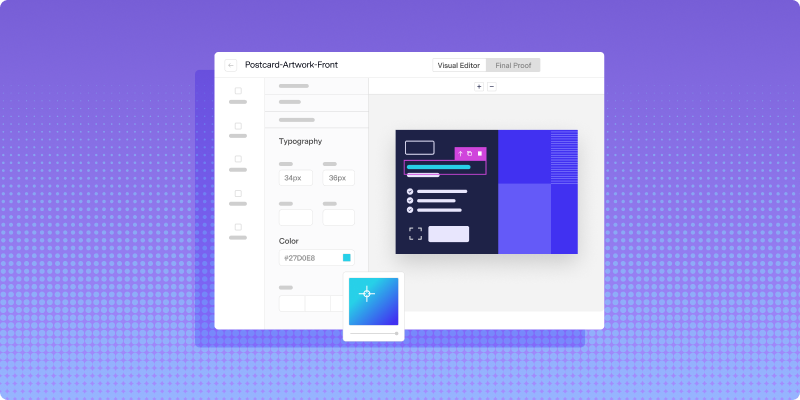
Using an existing template reduces decisions around layout and production specifications, allowing the team to focus on the message, offer, and call to action.
Lob’s Direct Mail Template Gallery includes customizable designs for postcards, letters, self-mailers, and common campaign use cases.
Keep the creative simple:
- One primary message
- One clear offer
- One call to action
- Easy-to-read customer details
- Properly tested personalization fields
You can refine the design after collecting campaign data.
5. Automate production and delivery
Every vendor handoff introduces another potential delay.
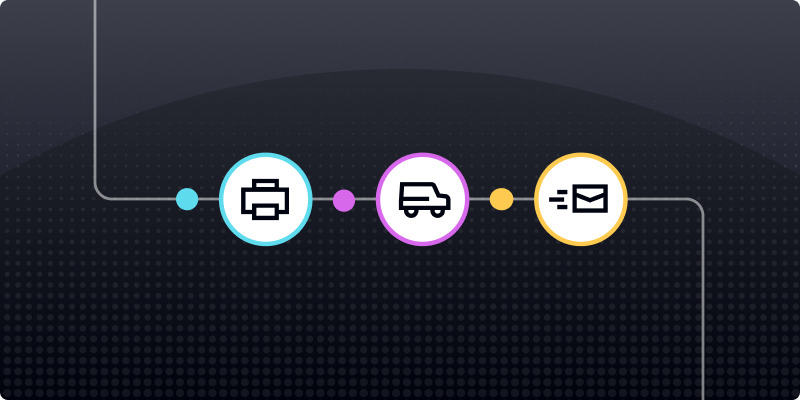
A direct mail automation platform connects customer data, creative, printing, postage, and delivery logistics within one workflow. Teams no longer need to email PDFs to a print vendor or manually coordinate every send.
Lob’s APIs and integrations connect direct mail with CRMs, customer data platforms, marketing automation tools, and internal systems.
This allows teams to send one-time campaigns or build automated programs triggered by customer behavior.
6. Set up tracking before sending
Decide how you will measure the campaign before approving the creative.
Response-tracking options include:
- QR codes
- Personalized URLs
- Promotional codes
- Dedicated landing pages
- Matchback analysis
Lob’s dynamic QR-code tracking connects physical mailpieces to digital destinations and campaign response data.
Teams can also monitor available production and delivery events through Lob’s direct mail tracking tools.
Trigger direct mail from customer data
Direct mail does not need to begin with a marketer manually uploading a list.
Teams can connect direct mail to CRM and product data and trigger mail when a customer takes a specific action.
Common triggers include:
Abandoned cart: Send a reminder after a shopper leaves without completing a purchase.
Lapsed customer: Initiate a win-back postcard after a period of inactivity.
New signup: Add physical mail to the welcome sequence.
Post-purchase: Send a review request, referral offer, or related-product recommendation.
Upcoming renewal: Mail a reminder based on the customer’s individual renewal date.
Once the workflow is established, qualifying customers can receive mail without the team rebuilding the campaign each time.
Avoid common launch delays
Waiting for perfect creative
Use a clear template and focus on the message and call to action. A simple campaign that launches provides more useful information than an elaborate concept that remains in review.
Skipping address verification
Sending quickly does not help if the mailpiece cannot reach the recipient. Verify customer information before production.
Treating every send as a new project
Save successful audiences, templates, and workflow rules. Repeatable campaigns should become automated programs rather than one-off production projects.
Adding measurement afterward
QR codes, URLs, and offer codes usually need to be incorporated into the creative. Establish attribution before sending.
Launch direct mail with Lob
Lean teams do not need an internal print operation to use direct mail effectively.
Lob connects customer data, creative, address verification, production, delivery logistics, and tracking in one platform. Teams can launch focused campaigns and automate future sends without managing spreadsheets and print vendors for every campaign.
Book a demo to see how Lob can help your team launch direct mail faster.
FAQs about launching direct mail quickly
FAQs

How quickly can a lean team launch a direct mail campaign?
The timeline depends on audience readiness, creative approval, personalization, format, and production requirements.
An automated platform can reduce the timeline by removing repeated list exports, vendor coordination, and manual file transfers.
Do you need a designer to launch direct mail?
Not necessarily. Customizable templates provide the layout and production specifications needed to launch a campaign.
Teams should still review the creative for brand consistency, readability, accurate personalization, and a clear call to action.
Can you send direct mail without managing a print vendor?
Yes. A direct mail automation platform can coordinate printing, postage, routing, and delivery logistics.
This allows the marketing team to manage the audience, creative, and campaign rules without sourcing a printer for each send.
Answered by: