Personalizing direct mail should not require a separate design file for every customer, segment, or offer.
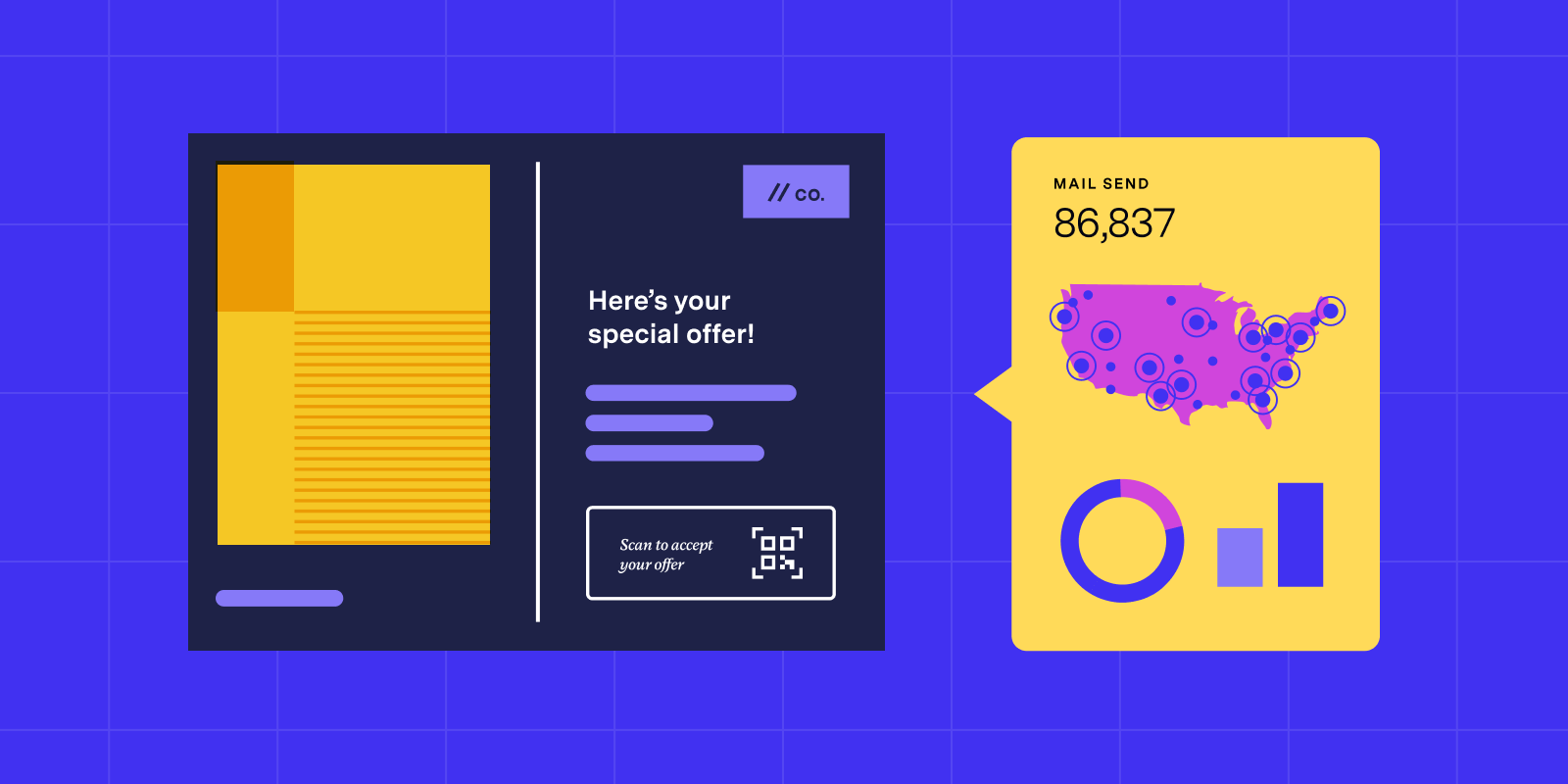
Dynamic templates combine one reusable design with customer data. The layout stays consistent while names, images, offers, QR codes, and other details change for each recipient. This allows teams to create personalized campaigns at scale without manually building every variation.
What is a dynamic template?
A dynamic template is a direct mail design with variable fields that automatically populate using recipient data.
Some elements remain fixed across every mailpiece:
- Branding and typography
- Layout and print specifications
- Standard copy and disclosures
Other elements can change for each recipient:
- Names and account details
- Headlines and offers
- Product images
- Expiration dates
- Locations
- QR codes and personalized URLs
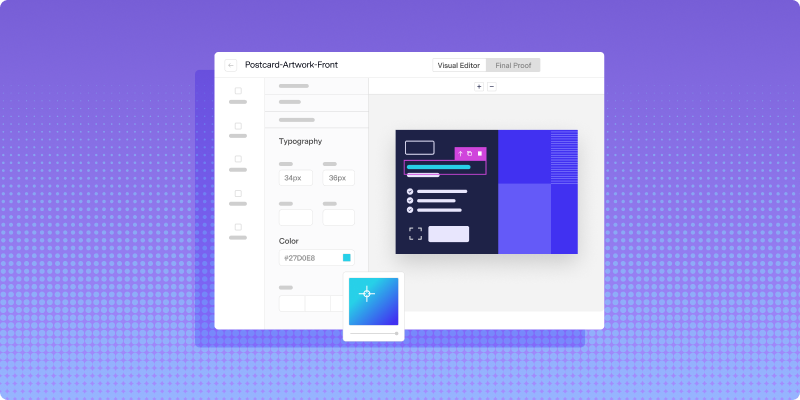
With Lob’s Create and Personalize tools, teams can use merge variables and conditional logic to change individual elements—or entire sections of a mailpiece—without rebuilding the design.
How dynamic templates work
1. Build the template
Start with the basic mailpiece layout, including the branding, fixed copy, images, and call to action.
Then add placeholders wherever personalized information should appear, such as:
{{first_name}}
{{offer_code}}
{{expiration_date}}
When the mailpiece is generated, each placeholder is replaced with information from the corresponding customer record.
Teams can also start with customizable designs from Lob’s Direct Mail Template Gallery, which includes professionally designed templates for different formats, industries, and campaign goals.
2. Connect customer data
Each variable in the template maps to a field in a CRM, customer data platform, marketing automation system, database, or audience file.
For example, {{first_name}} could connect to the customer’s first-name field, while {{recommended_product}} could pull from purchase or browsing data.
Lob’s APIs and integrations connect direct mail with existing customer systems, reducing the need for repeated exports, spreadsheet uploads, and manual handoffs.
3. Define the trigger
Dynamic mail can be sent on a schedule or triggered by customer activity.
Common triggers include:
- Cart abandonment
- A completed purchase
- An approaching renewal
- A customer anniversary
- A period of inactivity
- A CRM status change
- An incomplete application
Connecting direct mail to CRM, product, and marketing data allows physical mail to respond to the same customer signals that trigger email or SMS. A connected direct mail automation workflow helps teams coordinate those channels without managing separate manual processes.
4. Render and review each variation
The system combines the template with each recipient’s data to generate an individual mailpiece.
Before sending, preview records from several audience segments. Check for:
- Missing or incorrectly formatted fields
- Long names or headlines that exceed the available space
- Incorrect images or offers
- Conditional sections that appear for the wrong audience
- Content that falls outside the safe print area
Testing realistic records helps teams identify template or data problems before the campaign reaches production.
5. Print, send, and track
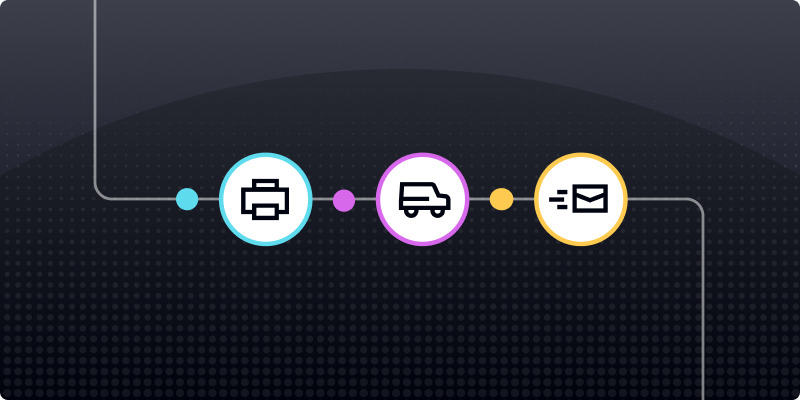
Once approved, the personalized mailpieces move into production and delivery.
Unique promotional codes, personalized URLs, and QR codes can connect each piece to digital engagement. Lob’s dynamic QR code tracking can give each recipient a distinct destination or tracking path, helping teams understand what happens after the mailpiece arrives.
Static templates vs. dynamic templates
Static templates give every recipient the same design and message. They work well for broad announcements, general awareness campaigns, and communications that do not need to change by audience.
Dynamic templates adjust the content based on customer data. They are better suited to personalized, segmented, and behavior-triggered campaigns where the offer, image, message, or call to action needs to change for each recipient.
Instead of producing separate campaign files for every audience, teams can use one dynamic template to support many variations.
What can you personalize?
Copy and offers
Change headlines, body copy, promotional codes, account information, and expiration dates.
A new customer might receive a welcome offer, while a longtime customer sees a loyalty message generated from the same underlying template.
Images
Display products, locations, or graphics based on customer behavior, purchase history, geographic area, or audience segment.
A retailer could feature a recently viewed product, while a multi-location business could display the recipient’s closest store.
QR codes and URLs
Give each recipient a unique destination, such as:
- A tailored offer page
- An account portal
- An appointment scheduler
- A prefilled application or form
- A location-specific landing page
Conditional sections
Conditional logic can show or hide entire content blocks based on customer data.
For example, VIP customers might see a premium offer, while lapsed customers receive a reactivation message. The structure of the mailpiece remains consistent, but the content reflects each audience’s relationship with the brand.
Common uses for dynamic templates
Welcome and onboarding
Send a personalized postcard or letter after signup with the customer’s account details, onboarding instructions, and a relevant next step.
Retention and win-back
Reference a previous purchase, subscription, or customer action instead of sending a generic “we miss you” message.
Loyalty milestones
Recognize anniversaries, birthdays, referrals, or loyalty-tier upgrades with customer-specific messaging and offers.
Behavior-based retargeting
Trigger mail after actions such as cart abandonment, product browsing, form completion, or an incomplete application.
Renewals and account communications
Personalize renewal dates, account details, plan information, payment deadlines, and next steps without manually creating a separate letter for every customer.
Best practices for dynamic templates
Keep customer data clean
Standardize names, dates, offers, and other variables before launching. Create fallback copy for fields that may be incomplete so customers never receive blank or incorrect content.
Lob’s Address Verification capabilities can also help standardize mailing addresses and identify address issues before production.
Plan for different content lengths
A long name or headline will not fit the same way as a short one. Leave enough room for variable content and test the longest realistic values your template may receive.
Personalize with a purpose
Use customer data when it makes the message more relevant or useful. Adding personal details that do not improve the experience can make a mailpiece feel intrusive rather than helpful.
Create fallback rules
Determine what the template should display when information is unavailable. A general product image, evergreen headline, or standard offer can prevent missing data from breaking the design.
Test before scaling
Preview multiple customer records and begin with a smaller send. Confirm that variables, images, links, QR codes, and conditional rules work correctly before launching to the full audience.
Automate dynamic direct mail with Lob
Dynamic templates allow teams to create relevant direct mail without multiplying the amount of design and production work required for each campaign.
With Lob, businesses can create reusable templates, connect customer data, trigger mail from existing systems, personalize individual pieces, and track campaigns through production and delivery.
Book a demo to see how Lob can help automate personalized direct mail.
Frequently asked questions about dynamic direct mail templates
FAQs

What is the difference between a static and dynamic direct mail template?
A static template sends the same content to every recipient. A dynamic template uses customer data to change details such as names, offers, images, account information, and QR codes while keeping the overall layout consistent.
What data can be used in a dynamic template?
Dynamic templates can use data from CRMs, customer data platforms, marketing automation tools, databases, or uploaded audience files. Common fields include names, locations, purchase history, account details, renewal dates, loyalty status, and promotional offers.
Do dynamic templates require coding?
Not always. Teams can use merge variables, reusable design components, and conditional logic to personalize content without creating a new design for each recipient. More advanced workflows may use APIs or integrations to connect customer data and automate campaign triggers.
Can one dynamic template support multiple audience segments?
Yes. Conditional logic can change headlines, images, offers, and entire content sections based on the recipient’s segment. This allows one template to support different customer groups without requiring separate campaign files.
How do you test a dynamic template before sending?
Preview the template using records from several audience segments. Check for missing data, long names, incorrect images, broken links, QR code destinations, and conditional content that appears for the wrong recipients. A smaller test send can help catch issues before scaling the campaign.
Can dynamic templates be used for triggered direct mail?
Yes. Dynamic templates can be connected to events such as cart abandonment, purchases, renewals, customer anniversaries, inactivity, or CRM status changes. The template automatically combines the trigger data with the appropriate personalized content.
How do dynamic templates improve direct mail workflows?
Dynamic templates reduce repetitive design and production work. Teams can maintain one approved layout, update customer-specific details automatically, and launch personalized campaigns without manually creating and reviewing every variation.
Answered by: