Direct mail needs to move fast to keep pace with digital channels. The good news is you can can remove the bottlenecks that traditionally slowed mail down by focusing on key technical, production, and logistical hurdles.
Creative and personalization bottlenecks
Every time a campaign needs a new template, a tweaked image, or a personalized element, it can land in a developer's queue. That queue has its own priorities, and direct mail changes wait their turn.
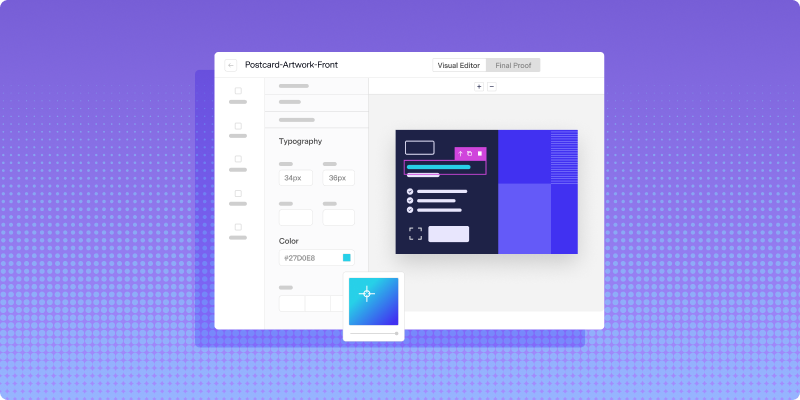
Removing this bottleneck means giving marketers and designers the ability to build, update, and personalize templates directly. No-code design tools that connect to the programs your team already uses let you mark dynamic fields, swap creative by segment, and preview how designs render with real data, without filing a ticket or waiting on engineering support. What used to take days takes minutes.
Production delays
Direct mailers who rely on a single print vendor are at that vendor's mercy. Queue backups, paper shortages, equipment issues, and weather delays all become your problem. Order minimums add another layer of friction – if a vendor requires a minimum print run, automated or trigger-based campaigns that send smaller volumes on a rolling basis can't move until there's enough volume to meet the threshold.
Working with a partner that has access to a distributed print network removes that dependency. If one facility hits a delay, production routes to another. And because a network can aggregate volume across jobs, order minimums stop being a blocker for automated programs.
Routing and delivery timing
Once mail enters the USPS network, delivery timing often depends on its entry point, how far it travels, and which mail class it's using. Mail that enters the network far from its final destination may take longer to arrive.
Optimizing entry points, entering mail closer to recipients, and planning backward from your in-home date keeps delivery timing tight. Routing intelligence that automates those decisions removes the guesswork and makes in-home windows more predictable campaign after campaign.
The result
When creative moves without developer dependencies, production runs through a distributed print network, and routing is optimized for delivery timing, direct mail moves on your schedule. The bottlenecks are gone. What's left is a channel that keeps pace with everything else in your marketing stack.
FAQs

Answered by:

Sam Melero