Personalized direct mail performs. According to Lob's State of Direct Mail Consumer Insights 2026 report, nearly 9 in 10 consumers say relevant, personalized mail is what influences them to take action.
The challenge for most teams isn't knowing that personalization works – it's getting personalized mail out the door without creating a bottleneck.
Where the bottleneck usually lives
For many teams, every template change, new merge variable, or personalized element requires code, and with that, a developer. A campaign that's ready creatively sits in a queue waiting for engineering support. By the time the template is coded and tested, the campaign window has shifted or the moment has passed.
The bottleneck isn't a people problem. It's a workflow problem.
What scaling personalization actually requires
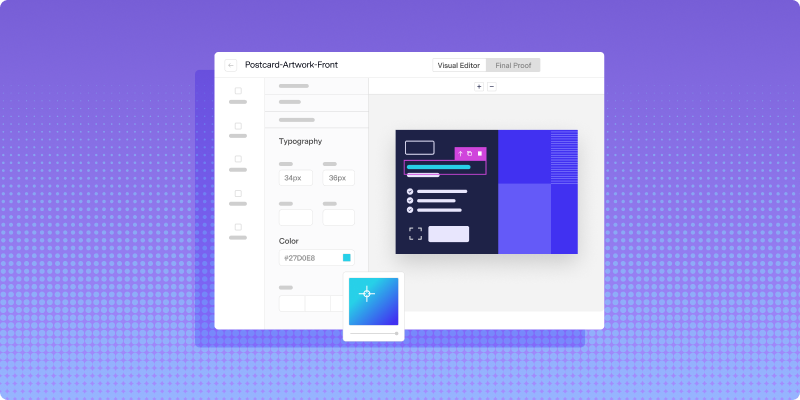
Scaling personalization means decoupling creative execution from technical dependencies. Marketers and designers need the ability to build, update, and personalize templates without filing tickets or waiting on developer availability.
That requires three things:
- A way to create templates in tools the team already uses
- Simple solutions for adding dynamic fields without writing code
- Preview tools to see how personalized content renders before anything goes to print.
Start with your existing design workflow
The fastest path to scalable personalization starts with the tools your team already knows. If your designers work in InDesign or Figma, look for ways to convert those files into mail-ready templates directly, rather than rebuilding them from scratch in a separate system.
Every handoff you eliminate is time back in your production timeline.
Make personalization a design decision, not a development task
Dynamic fields – the elements that change based on recipient data – should be something a designer or marketer can set up and adjust. Highlighting an element and marking it as a variable, then previewing how it renders across different data combinations, is a creative task.
Treating it as a development task slows everything down and limits how much personalization teams can realistically execute. Look for tools that let your team add merge variables and build dynamic layouts without touching HTML or submitting a ticket.
Keep assets organized for reuse
Personalization at scale also requires a reliable way to manage design assets. When approved fonts, images, and brand elements live in one accessible place, your team doesn't rebuild from scratch for every campaign.
Reusable assets speed up production and keep brand consistency intact as volume grows.
The result
Teams that remove technical bottlenecks from their personalization workflow send more personalized mail, faster, with fewer dependencies – and more impact.
They can respond to campaign changes in real time, test new approaches without a production cycle, and keep direct mail moving even as priorities shift. Personalization at scale isn't a function of how much development support your team has. It's a function of how well your tools support the people doing the work.
FAQs

Answered by:

Sam Melero
.png)