
Financial services teams need direct mail to do more than reach a mailbox. When you send loan offers, account notices, rate alerts, onboarding mail, or retention campaigns, every piece needs to reach the right person, protect sensitive data, and give your team a clear way to measure what happened next.
That is where feature selection matters. The right direct mail platform can support compliance, personalization, tracking, automation, and brand consistency. Without those capabilities, direct mail becomes harder to measure, harder to scale, and harder to defend.
Here are the direct mail features that matter most for financial services teams.
What direct mail features matter most in financial services?
Financial services companies should focus on six feature categories: compliance and security, personalization, tracking and measurement, format flexibility, automation, and omnichannel integration.
These features help teams move beyond one-off campaigns and build direct mail programs that are targeted, trackable, and easier to manage across acquisition, retention, onboarding, and customer communications.
The stakes are higher in financial services than in many other industries. Teams are handling sensitive PII, operating under regulatory scrutiny, and competing for high-value customer relationships. A mailer that arrives too late, uses the wrong offer, or lacks proper documentation can quickly turn into wasted spend or unnecessary risk.
Compliance and security features
Financial services direct mail often includes sensitive customer information, regulated disclosures, or account-related communications. Your platform needs to support secure data handling from the moment data enters the system through production and delivery.
Gaps here can create liability that shows up during audits or, worse, after a breach. IBM’s 2025 Cost of a Data Breach Report found that financial services breaches averaged $5.56 million per incident.
Look for encryption in transit and at rest, SOC 2 Type II certification, documented data handling practices, audit trails, and role-based access controls. These features help limit exposure to sensitive information and document who accessed data, approved campaigns, sent files, and triggered mail.
Personalization features that improve relevance
Financial services personalization is not just about adding a first name to a letter.
The strongest programs use customer data to make the offer, timing, format, and message more relevant. That could mean tailoring a refinance offer based on eligibility, sending a savings product promotion to customers who meet specific balance criteria, or adjusting branch information based on location.
Personalized direct mail can help teams move beyond generic outreach, especially when it uses real customer behavior and product eligibility.
Key personalization features include:
- Variable data printing for personalized offers, branch locations, QR codes, and next-step instructions
- Behavioral triggers based on actions like abandoned applications, rate checks, deposit milestones, or renewal windows
- Audience segmentation by product eligibility, lifecycle stage, geography, relationship depth, or engagement history
Batch-and-blast campaigns ignore the data financial services companies already have. The right platform helps that data work harder.
Tracking and measurement features
You cannot justify budget without proving direct mail works.
Legacy vendors often provide limited visibility after mail leaves the printer. You may get a batch report later, but that does not help your team coordinate campaigns, understand in-home timing, or connect mail delivery to downstream activity.
Financial services teams should look for:
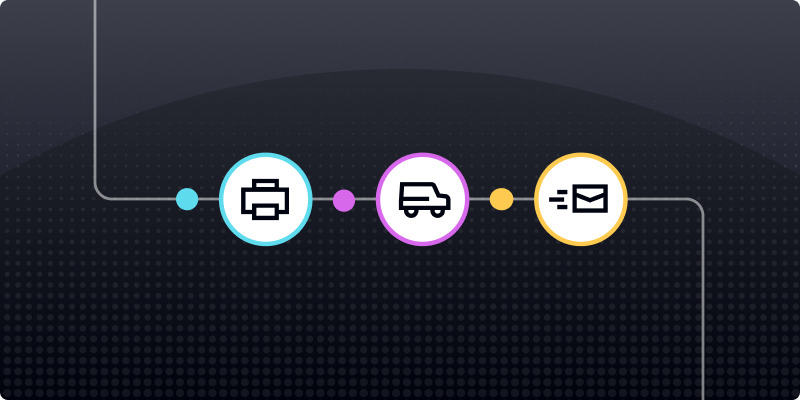
- Real-time tracking to understand where mail is in the production and delivery process
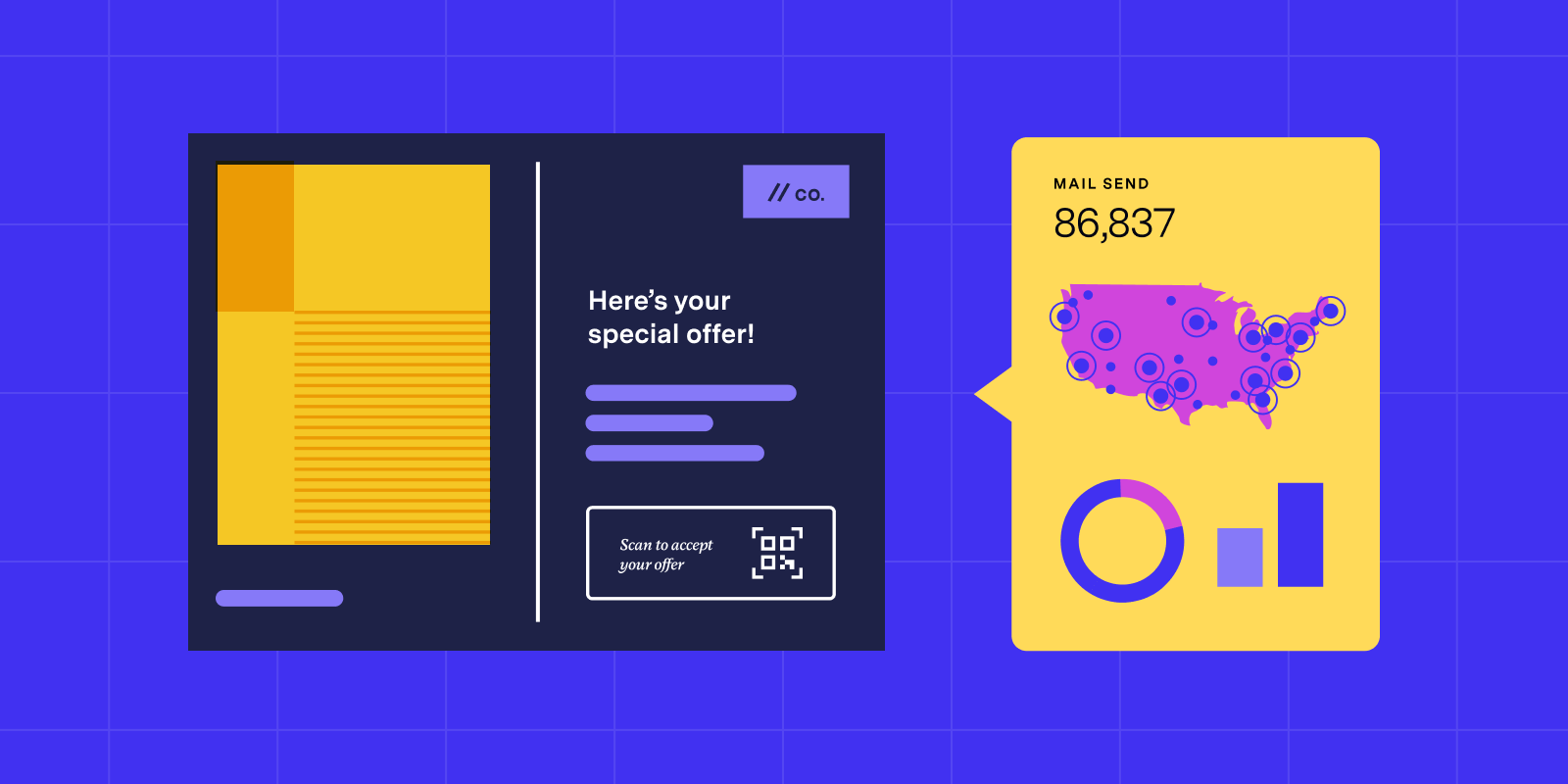
- Response attribution through QR codes, personalized URLs, unique phone numbers, offer codes, and matchback analysis
- Dashboards that show delivery rates, response rates, conversion, and cost per acquisition
The difference between “we think it worked” and “we know it worked” comes down to direct mail attribution, tying a specific mailpiece to a specific conversion.
Direct mail formats for financial products
The format you choose affects trust, privacy, cost, response, and compliance.
Letters work well for formal communications and offers that require detailed disclosures. Postcards work for simple, non-sensitive messages like rate alerts, branch promotions, or appointment reminders. Self-mailers give teams more space for education or onboarding. Dimensional mailers are best reserved for high-value audiences where the added cost makes sense.
Automation features for financial services
Manual direct mail processes do not scale well.
If your team is uploading files, emailing proofs, checking spreadsheets, and coordinating with vendors for every campaign, direct mail becomes slow and difficult to manage.
Automation features help financial services teams reduce manual steps while keeping control over approval, compliance, and timing.
Look for:
- API-driven sends that trigger mail based on customer behavior or system events
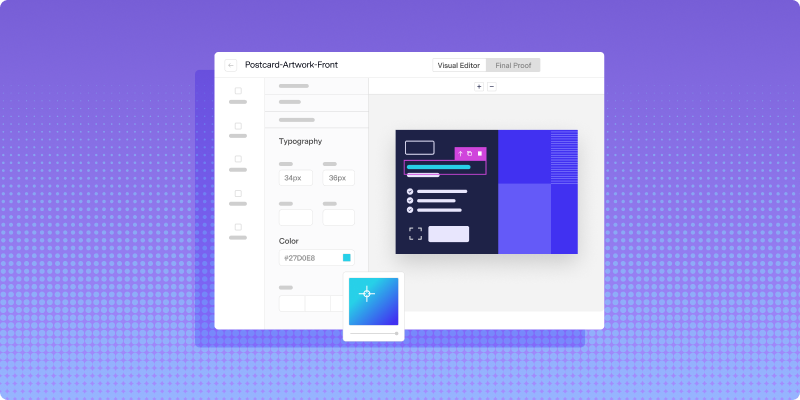
- Template management for reusable, pre-approved designs with variable fields
- Approval workflows that route campaigns through legal, compliance, brand, or operations before anything prints
Emailing PDFs back and forth is not a reliable workflow. It creates version-control problems, makes approvals harder to document, and increases the chance that something moves forward before it is ready.
Integration features for omnichannel marketing
Direct mail works better when it is connected to the rest of the customer journey.
Financial services customers may see an email, visit a landing page, receive a mailpiece, get a call, and then convert through a branch, app, website, or advisor. If those touchpoints are disconnected, it is hard to understand what influenced the outcome.
CRM and CDP connectors help teams use customer data for targeting and personalization without manual exports. Marketing automation triggers can make direct mail part of automated journeys. Bidirectional data sync brings delivery and response data back into your systems for reporting, segmentation, and follow-up.
That turns direct mail into part of an omnichannel strategy, rather than a standalone campaign.
Print quality features for brand consistency
In financial services, trust is part of the brand.
Poor print quality, inconsistent colors, or uneven production can make a mailpiece feel less credible. At scale, even small quality problems can multiply quickly across campaigns, markets, or printer locations.
Look for color accuracy standards, printer certification, production audits, and delivery visibility. These capabilities help protect brand consistency and make campaign timing less of a guessing game.
How to evaluate direct mail platforms for financial services
When evaluating direct mail platforms for financial services, focus on the features that affect compliance, performance, and scalability.
Build a financial direct mail program that performs
Your feature selection determines whether direct mail becomes a measurable, scalable channel or stays a manual process that is hard to manage.
For financial services teams, the right platform should support secure data handling, personalization, automation, delivery tracking, attribution, and approval workflows. Those features make it easier to connect direct mail to customer behavior, prove performance, and protect trust.
Lob offers the compliance, automation, and tracking features financial services teams look for.
Book a demo to see how Lob can help your team build a direct mail program that performs.
FAQs about direct mail features for financial services
FAQs

What is the 40-40-20 rule in direct mail marketing?
The 40-40-20 rule says direct mail performance is driven by audience, offer, and creative. In financial services, that usually means targeting and offer relevance matter more than design alone.
How long does a financial services direct mail campaign take to launch?
Launch timing depends on the campaign, approval process, format, and platform. Legacy workflows may take weeks, while automated platforms can move faster once templates, integrations, and approval paths are in place.
What response rates are typical for direct mail in financial services?
Response rates depend on the audience, offer, format, timing, and level of personalization. The best way to improve response is to use stronger segmentation, more relevant offers, and clear attribution.
Can direct mail support both customer acquisition and retention for financial institutions?
Yes. Direct mail can support acquisition campaigns like loan offers and credit card promotions. It can also support retention through account review reminders, renewal communications, loyalty offers, onboarding sequences, and win-back campaigns.
Answered by: