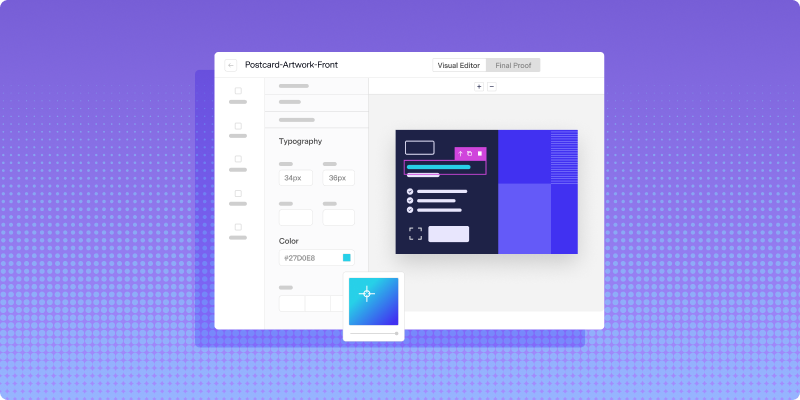
How do you run an A/B test in direct mail?
Digital marketers test constantly: subject lines, button colors, send times. Direct mail offers the same opportunity, but the variables are different and in some ways, are more interesting.
You're working with physical dimensions, paper stock, envelope versus self-mailer, offer framing, and types of CTAs. There's real creative and strategic territory to explore, and the results tend to be durable. Here's how to set up a test, and the variables most worth your attention.
The mechanics
A good A/B test starts with a specific hypothesis. Does a postcard outperform a letter for this audience? Does a deadline-driven offer beat a discount?
Pick one variable, hold everything else constant, and size your audience large enough to produce meaningful results. As a rough rule, most direct mail A/B tests need at least a few thousand records per version.
You also need a way to attribute responses back to the correct version. Unique QR codes, personalized URLs, or dedicated phone numbers assigned to each version make this straightforward. Without a tracking mechanism, you're guessing.
What to test: format
Format is one of the highest-impact variables in direct mail. A postcard and a letter create fundamentally different experiences. One is immediate and visual, and the other is considered and personal. Testing format tells you something meaningful about how your audience wants to engage.
What to test: the offer
The offer is often where the real performance difference lives. Think a percentage discount versus a dollar amount, a deadline versus an open-ended promotion, a free trial versus a guarantee. Small changes to offer framing can move response rates significantly.
What to test: the headline
Your headline is the first thing a recipient reads. Testing headline approaches, like benefit-driven versus curiosity-driven, tells you what actually stops someone and pulls them in.
What to test: the call to action
A call to action test goes beyond button copy. Try different response mechanisms: QR code versus URL versus phone number. Or different levels of urgency. Sometimes the friction is in the ask itself, not the offer.
Let results compound
Once you have a winner, make it your new control and test the next variable against it. Direct mail testing rewards patience, but an iterative approach builds meaningfully better performance over time.
FAQs

Answered by:

Sam Melero